Lula Landry
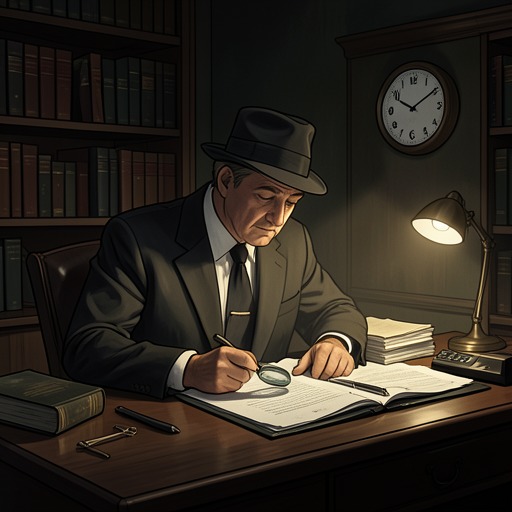
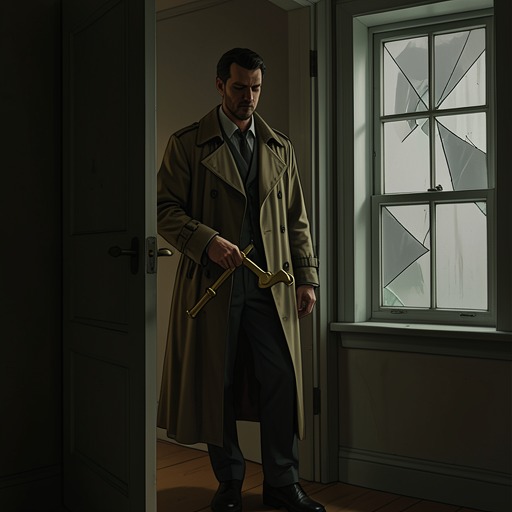
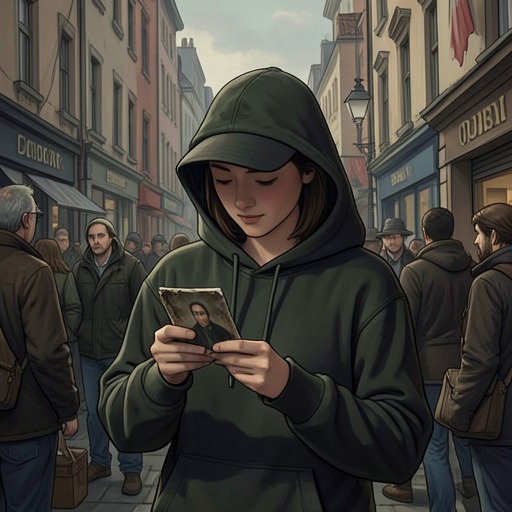
The Cuckoo's CallingLula Landry, also known as Lula Bristow and nicknamed Cuckoo, is a famous model whose apparent suicide sets Cormoran Strike’s investigation in motion. Her death is initially made to fit the story already told about her: a troubled celebrity with a history of mental illness and self-destructive behavior. The investigation overturns that reading, uncovering a woman whose adoption, search for her biological family, friendships, and final attempts to make a will all bear on the circumstances of her death. Her life is pieced together from fragments—photographs, emails, testimony, and objects—and the result challenges both the public image that surrounds her and the assumptions used to dismiss the possibility of murder.
Identity and Background
Lula was adopted by the Bristow family when she was four, after spending a couple of years in care. Her adoptive brother John Bristow recalled that he was nearly fifteen when their father carried her up the drive to the family home. Lula wore a little red knitted hat, which their mother kept. John’s memory supplies an intimate counterpoint to the celebrity images that later circulated: she entered the family as a small child, long before her fame and the scrutiny that came with it.
The family’s adoption followed the death of John and Lula’s older brother, Charlie. Their adoptive father, Sir Alec Bristow, founded the electronics company Albris and died of a heart attack while Lula was in early adolescence. After his death, her difficulties became increasingly visible. Online accounts describe her running away from two private schools and being expelled from a third. She also attempted suicide, was sectioned under the Mental Health Act, and was diagnosed with bipolar disorder. These facts were central to the public explanation of her death, but they do not, on their own, establish what happened on the night she died.
Barely a year after her diagnosis, Lula’s life changed dramatically when a modeling scout approached her while she was shopping with her mother on Oxford Street. The encounter marked her entry into a world where her image would become widely reproduced and discussed. Yet she did not appear to maintain a public social-media presence: Strike could find no Facebook page for her, and she seemed never to have joined Twitter. The absence of her own online account did not protect her privacy. Websites filled the gap with photographs and obsessive commentary, making the public version of Lula plentiful even as it remained incomplete.
Fame, Mental Health, and the Public Story
When John hired Strike, he insisted that Lula had not killed herself. He believed the detective originally in charge had been convinced from the outset that the death was suicide because Lula took lithium, and he pointed to details he thought had been overlooked. Strike initially regarded John’s envelope of information with suspicion: its contents appeared to him like the products of a fixation, while John’s trembling hands, jerking knee, and flickering eyelid suggested acute agitation. The initial tension is not simply between a family member and the police; it is between evidence and the credibility assigned to the person presenting it.
Public accounts of Lula’s life strengthened the suicide narrative by emphasizing a history of self-destructive behavior. Strike’s online research suggested that John had offered only a partial, sanitized version of that history. The more complete record included her childhood crises and psychiatric treatment, followed by her sudden success in modeling. Such facts make her vulnerability real, but the investigation also shows how easily a past diagnosis can become a ready-made explanation for a death. In John’s account, the first detective’s conclusion preceded a full examination of the circumstances.
The same process of labeling affects people around Lula. One acquaintance dismissed the investigation with a fatalistic assertion that she had killed herself. When another witness claimed that Tansy Bestigui had opened her windows, police checked the story against the physical scene: they found no fingerprints on the latches, learned that a cleaner had wiped the windows the morning before Lula died, and found them locked and bolted when officers arrived. The investigator concluded that Tansy was lying. The contrast is consequential: the case does not become clearer through confidence or reputation alone, but through testing claims against material conditions.
Lula’s fame also shaped how her death was seen. Her photograph entering her flat was widely published after she returned home at about twenty past one. The circulation of that image made her last movements familiar to the public, but familiarity was not the same as understanding. Strike’s review of her emails brought a different kind of recognition. Rather than another image of a model, he encountered traces of a person who had laughed, cried, and maintained private exchanges; the fragments made her interrupted life feel more substantial than the mass of photographs had done.
Family, Friendship, and the Search for Origins
Lula’s search for her biological roots introduced a new and painful dimension to her adopted identity. She had managed to trace her birth mother, whom the information available to Strike described as an unsavory person, though he recognized that press sensationalism might distort the account. He suspected that the revelations could have troubled Lula and her adoptive family. He also considered whether John’s fixation on the Runner and his reaction to a Black man near Lula were connected to anxieties about her origins. These are Strike’s suspicions, not established facts about John’s motive, but they show how the search for biological kin unsettles the family’s existing story of belonging.
The investigation also identifies a friend Lula had met in therapy. Strike asks for help locating a woman whose name began with R, perhaps Rachel or Raquelle, who had been living at St. Elmo’s Hostel in Hammersmith when Lula died. The request connects Lula’s friendship to a setting far removed from her glamorous public image. Her life crossed between celebrity and vulnerability, professional success and personal hardship; the inquiry must find people from both worlds to reconstruct it.
Photographs from Lula’s laptop present her through relationships rather than as an isolated star. Several show her with Evan Duffield, sometimes apparently intoxicated, while pictures with Guy Somé depict a more formal, subdued Lula beside the designer. Other images show her embracing Ciara Porter in bars, dancing in clubs, or laughing on a sofa in a crowded flat. Taken together, the images offer different registers of intimacy and public presentation. They resist any single portrait: Lula could appear at ease with friends, altered by drink or drugs, or restrained in a professional setting.
Lula’s relationship with Evan revived shortly before her death. After returning from an Antigua job for Vogue, Ciara said, Lula and Evan got back together and held a commitment ceremony. She remembered Lula as happier than she had ever seen her during that final week, describing the reunion as a source of great excitement. This testimony complicates the assumption that Lula’s final days followed a simple downward course. It does not erase her earlier difficulties, but it records renewed attachment and hope close to the end of her life.
The Final Day and the Will
On the day before she died, Lula met Rochelle Onifade for about fifteen minutes in a shop in Notting Hill. Strike later established that Lula took Rochelle into a changing cubicle and telephoned someone, begging them to meet her at her flat in the early hours of the next morning. A shop assistant named Mel, who was in the neighboring cubicle behind a curtain, overheard the call. The circumstances matter: Lula was not merely leaving an unexplained note or making a casual plan; she was arranging a meeting and seeking Rochelle’s help with a document.
Strike argues that the writing Lula had done was a will, not a suicide note. Its timing and the rest of her movements were central to his reasoning: he rejected the idea that she would write a suicide note eight hours before her death and then go dancing. He believed she had taken the document to Vashti so Rochelle could witness it. The interpretation connects Lula’s recent search for her birth family with a deliberate legal decision, rather than treating her actions as signs of a settled intent to die.
The will was eventually found hidden beneath the detachable lining of Lula’s white handbag. It was handwritten on her mother’s blue notepaper and witnessed by Rochelle. Lula left her entire estate to her half-brother, Lieutenant Jonah Agyeman of the Royal Engineers. The concealed document changes the meaning of the inheritance at stake: Lula had identified another brother and made a choice about what should happen to her estate. That decision also supplies the immediate context for the confrontation that led to her death.
Death and Narrative Significance
Lula returned to her flat at about twenty past one and was photographed going inside. The post-mortem indicated that she died on impact with the road, from a broken neck and internal bleeding. Bruising was found on her upper arms, and she wore only one shoe. Photographs also showed that she had changed clothes after returning from the nightclub: she was wearing a sequined top and trousers rather than the dress in which she had been photographed entering the building. These details complicate the public account of her final movements and become part of the evidentiary record against the assumption of suicide.
The investigation ultimately reconstructs an encounter in which John arrived at Lula’s flat bearing white roses. Lula had been watching from her balcony for her long-lost brother, Jonah, and opened the door in her excitement. John came inside instead. Strike’s account holds that Lula told him she would not give him anything and revealed that she had another brother on the way and had already made a will in his favor. John called her a liar and threw her from the balcony. The discovery of the will and the sequence of events make the inheritance motive legible: the man who had presented himself as a grieving brother had murdered Lula after learning that the estate would go to someone else.
Lula’s role in the novel is therefore both personal and evidentiary. She is not reducible to the celebrity image, the psychiatric diagnosis, or the family’s account of her; each is a partial version that the investigation tests against the next. Her emails, photographs, clothing, phone call, and hidden will restore a life in pieces, while also revealing how incomplete impressions can harden into supposedly settled truth. The case’s decisive reversal—from presumed suicide to murder—depends on taking seriously the details that the public story and the initial investigation had failed to resolve.