Lula Landry–Marlene Higson relationship
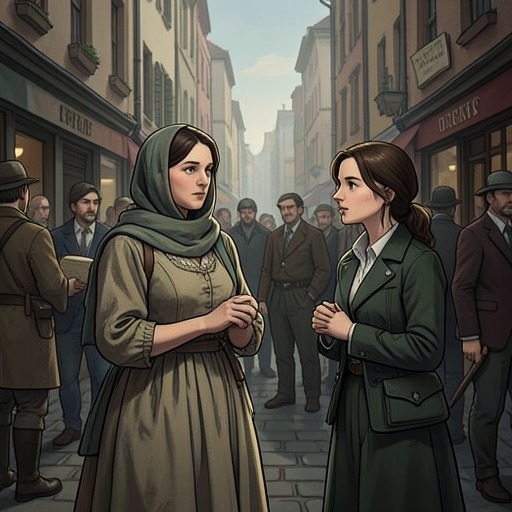
The Cuckoo's CallingLula Landry and Marlene Higson are birth mother and daughter, separated when Lula was an infant and connected again only years later, after Lula began searching for her origins. Their relationship is never presented as a settled reconciliation: it is filtered through conflicting reports, incomplete family knowledge, and Lula’s efforts to approach the past without causing further hurt. The search also unsettles the family that raised her, making biological kinship both a personal question and a source of suspicion in the investigation of Lula’s death.
Separation and the account of Lula’s infancy
Lula was adopted by the Bristows after being removed from Higson’s care as a baby. In an old neighbor’s account, Higson’s home was unstable and Lula’s paternity unknown; the neighbor remembered the infant as neglected and regarded adoption as a positive change. This is a reported recollection, not an independently confirmed account, and its harshness contrasts with the romantic version of the mother-daughter reunion later circulated in the press.
Strike’s own childhood memories connect Lula’s story to the Bristow household that took her in. He remembered Charlie Bristow’s large, comfortable home, with its lawn, tree house, and family routines. The contrast between that remembered household and the neighbor’s description of Lula’s infancy helps explain why adoption could be represented as rescue, while also leaving open what Lula herself might make of the circumstances of her birth.
Searching for her birth mother
Lula traced Higson and reunited with her before her death. Press coverage described the reunion as a romantic story, but Robin found an older article that quoted Higson’s former neighbor and presented a far more damaging account of Higson’s life. The article had been written before Lula died and anticipated that the revelations would shock her. The sharp difference between the two narratives underscores how little of the relationship is available directly: the public story and the neighbor’s remembered testimony offer competing frames, not a complete record of what mother and daughter said or understood between themselves.
Lula’s search for her biological roots also acquired significance within the investigation. Strike considered whether learning about Higson’s past might have troubled Lula and her adoptive family, and whether John Bristow’s fixation on a black man near the scene had been influenced by his ideas about Lula’s origins. This remained Strike’s suspicion about Bristow’s thinking, not a fact established about Lula’s motives or her relationship with Higson. The distinction matters: the investigation shows how family anxieties can turn a search for identity into a story of danger without proving that the search itself caused Lula’s death.
Family knowledge and inherited silence
The Bristows’ knowledge of Lula’s origins was itself uncertain. When Strike asked Yvette Bristow what she had known at the time of the adoption, she said that she knew nothing about Lula’s background; Alec might have known, she allowed, but he had never told her. Her answer leaves an important gap between the birth family and adoptive family, and between what different members of the household may have known.
A parallel history of concealed parentage emerges when Lieutenant Jonah Agyeman explains that his father had once told him of a possible child with a white woman, but had never told his wife. He had not known whether Higson’s claim of pregnancy was true, and Jonah had not intended to disclose the information. Lula’s unexpected call changed that: she had found him, and, according to Jonah, said she would have hung up if his mother had answered because she did not want to hurt anyone. This account establishes that Lula’s search reached beyond Higson to a possible paternal branch of her family, while showing that she approached the revelation with concern for the people it might affect.
Reunion, inheritance, and the meaning of kinship
The uncertainty surrounding biological family becomes concrete in Lula’s will. Ciara Porter recalled that Lula had been low and anxious that afternoon and had said she intended to leave everything to her brother. John Bristow insisted that Lula would never have excluded their mother, Yvette, in that way. But the will named her entire estate for her brother, Lieutenant Jonah Agyeman, a half-brother whose existence John did not know. The discovery overturns John’s understanding of Lula’s intentions and reveals that her idea of family extended beyond the household that adopted her.
That choice gives Lula’s search consequences beyond private knowledge. For John, a will leaving everything to a newly identified brother would have conveyed a painful message about their mother; for Lula, the document records a kinship John had failed to anticipate. The relationship with Higson therefore stands at the beginning of a wider family history: adoption separated mother and daughter, the search for origins opened a route to another sibling, and concealed parentage shaped what each generation could know about the one before it. The evidence establishes the separation and the renewed contact, but leaves the emotional terms of Lula and Higson’s reunion unresolved.