Lula Landry's adoption by the Bristows
The Cuckoo's CallingLula Landry's adoption by the Bristows made her part of a family reshaped by loss, but it did not settle the question of belonging. Adopted at four after Charlie's death, she entered a household still marked by grief; years later, her brother John Bristow's account of her estate and a hidden will naming her biological half-brother as heir revealed how fragile the family's claims of intimacy could be.
Adoption into a Bereaved Family
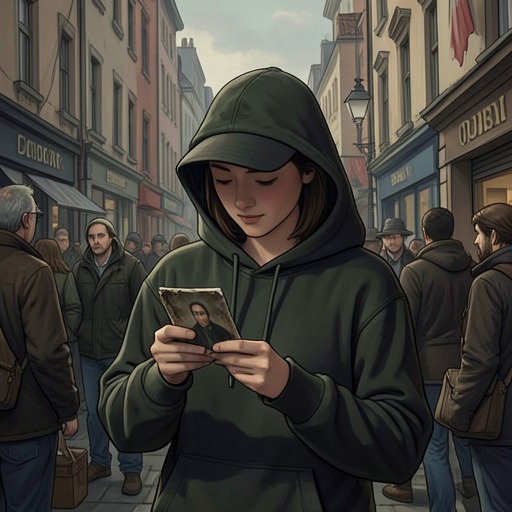
John explains that all three Bristow children were adopted, but Lula joined the family later than he and Charlie. She had spent a couple of years in care before the Bristows adopted her at four. John, then nearly fifteen, remembered standing at the front door as his father carried her up the drive in a little red knitted hat, which his mother had kept. The precise, tender detail becomes a family keepsake, preserving the moment of arrival even as the story around it grows more complicated.
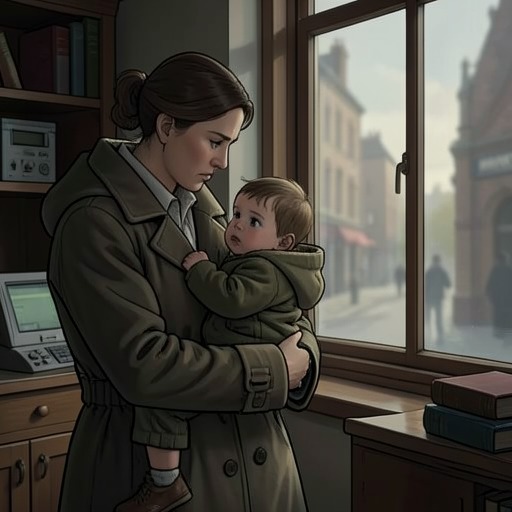
The adoption followed Charlie's death. John's account is that his mother had suffered a breakdown after losing Charlie, and his father believed that another child might help her; the couple had always wanted a girl. Because Lula was mixed race and, in John's words, harder to place, the Bristows were able to adopt her. His recollection therefore joins an act of care to the household's effort to live with bereavement, without making the adoption a simple cure for that grief.
Belonging and Difference
John was eleven years older than Lula and remembered feeling protective, sometimes bossy. He admits that she often told him he did not understand. When asked what she meant, he identifies the issues she faced as being adopted and being Black in a white family. She had said that he had it easy; he can only concede that she may have been right. The gap between them is not merely age or temperament: John belongs to the family without sharing the particular questions of identity that Lula carried within it.
That tension also unsettles the family's protective story about her. John opposed her return to Evan Duffield, whom he regarded as a dangerous choice because of her own history with drugs and his addiction. Lula was furious and had told the building security staff not to let John past the front desk the next morning, though Derrick Wilson let him through. John's concern may have been sincere, but Lula's boundary shows that kinship and protection did not give him unquestioned authority over her decisions.
Family Grief and Public Success
In John's account, Lula's beauty, modelling career, and wealth made her both conspicuous and widely presumed to be known. Discovered while shopping with her mother on Oxford Street, she was taken on by Athena and modelling full time by seventeen. By the time she died, John estimated her worth at around ten million pounds. He recognizes that everyone knew—or thought they knew—about her, a public image that sits uneasily beside the private history of adoption, family grief, and disagreement.
Her success also made her valuable to Guy Somé's fashion business. Somé recalled a five-million-pound contract for a range he had largely designed around Lula, whose earlier breakthrough had come in his Jagged dress for Vogue. His account of their dispute over the deal connects her professional stature to her personal search for attachment: he described her as someone always looking for people to love and for a surrogate family, and accused the Bristows of adopting her as a toy for Yvette. That is Somé's hostile interpretation, not a neutral account of the adoption, but it exposes the competing meanings others attach to Lula's place in the family.
The Will and the Limits of Kinship
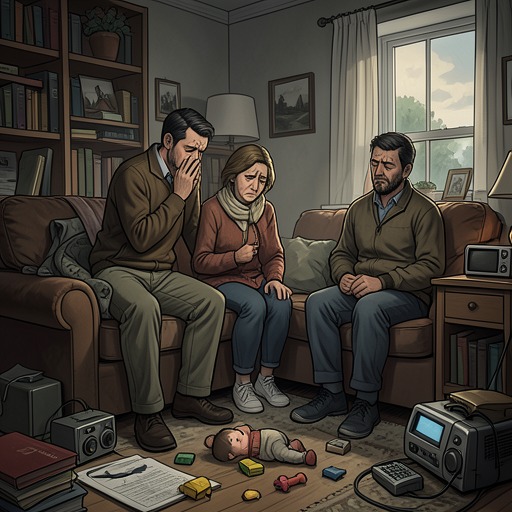
After Lula's death, John's estate claims complicate his grief. Ciara Porter had told Strike that Lula intended to leave everything to her brother, a detail John had not volunteered. When challenged, he insisted that Lula would never have left everything solely to him, because excluding their mother would have sent a hurtful message. He stressed that money was not the point: his father had left their mother well provided for, and he had seen wills cause family pain. His explanation makes inheritance a language of recognition and exclusion as much as a transfer of wealth.
The concealed will overturns the assumption that John was the intended heir. While searching Yvette's wardrobe, Strike found pale blue paper hidden beneath the rigid board in the base of Lula's white handbag, inside its patterned African-print lining. The will named her entire estate to Lieutenant Jonah Agyeman of the Royal Engineers. John's startled question—who Jonah was—makes the discovery more than a legal reversal: the person Lula chose was a half-brother outside the Bristow household, redirecting the meaning of her inheritance and exposing how little her adoptive family knew about the kinship she had chosen to recognize.