Uterine cancer
The Cuckoo's CallingYvette Bristow’s uterine cancer is a central family crisis in the account of Lula Landry’s last days, shaping both Lula’s search for her birth family and the way her relatives interpret that search. The illness gives concrete weight to the conflict between Lula’s desire to understand her origins and the Bristows’ expectation that she attend to her gravely ill adoptive mother; it also makes Lula’s distress after a visit to Yvette legible without resolving what that distress meant.
Diagnosis and treatment
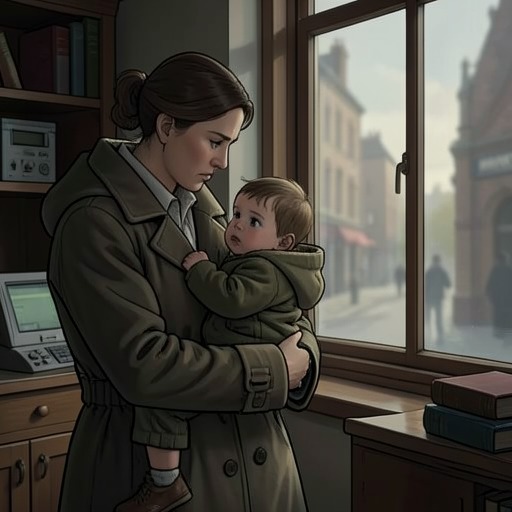
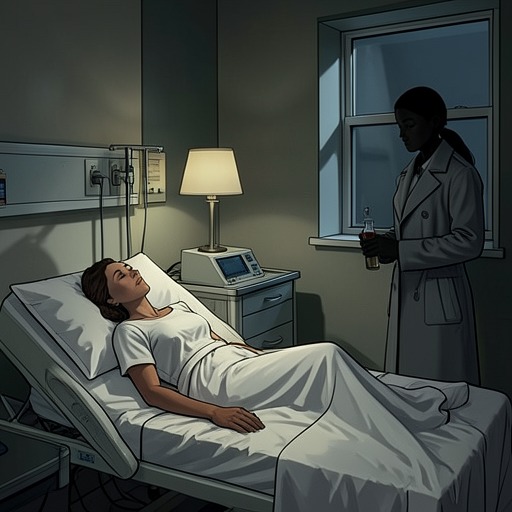
Yvette had recently been diagnosed with uterine cancer when the family learned of it. By the time the tumor was found, it was already advanced, and she had to begin chemotherapy. She also underwent a hysterectomy; when Strike asks whether the operation was supposed to have cured her, John confirms the procedure but makes clear that Yvette was in pain afterward. The illness was therefore not a distant possibility or a single operation: it involved serious disease, treatment, and the visible consequences of recovery.
The seriousness of Yvette’s condition is reflected in the family’s practical response. John drove her to and from the hospital and stayed with her during the worst periods of treatment. Tony, too, rallied around her. The account makes caregiving a concrete part of the crisis, while also showing how it became a measure by which the family judged Lula’s attention and priorities.
Conflict over Lula’s search for her roots
Lula began searching for her birth mother, Marlene Higson, around the time Yvette was diagnosed. John recalls that he and Tony were angry: they believed it was an insensitive moment for Lula to start tracing her roots, with their mother so ill. He says he and Lula loved each other, but that their age difference got in the way; he describes her as having tunnel vision about her own wishes. His account presents the search not as a neutral genealogical inquiry but as a painful family dispute over where Lula’s obligations lay.
John nevertheless recognizes what Lula wanted from the search. He says she hoped to find her black roots and a sense of identity, and believes she was trying to find her biological father as well. The importance of that aim sits uneasily beside the family’s concern for Yvette: Lula’s search asserted a need for self-knowledge at a time when her adoptive family wanted her to center its illness. John says he would have been the last person Lula told about the search because of their rows over it; he also reports that contact between Lula and Marlene was intermittent, and suspected Lula was trying to cut the connection.
Yvette’s own recollection confirms both the conflict and its emotional cost. She says John and Tony were very angry with Lula for trying to find her biological mother while Yvette was so ill. She does not know how much Lula learned about her birth family, and thinks Lula understood how upsetting the subject was to her. Yvette knew Lula had found Marlene because of the publicity, judged Marlene as the kind of person Tony had predicted, and says Lula continued seeing her even while Yvette was undergoing chemotherapy and losing her hair. Her memories do not erase Lula’s continuing search; instead, they show how the illness made that persistence painful for her adoptive mother.
The illness in the investigation
The cancer also bears directly on the reconstruction of Lula’s final day. Strike tells John that the chauffeur who drove Lula back from Marlene’s flat thought she seemed distressed. John answers that this was unsurprising because Marlene had cancer. He then corrects the premise: it was Yvette, not Marlene, who had just undergone a hysterectomy. He believes Lula was disturbed by seeing her mother in pain. The exchange ties Lula’s observable distress to a particular visit and to Yvette’s physical condition, while leaving open how that distress related to the rest of the day.
The illness complicates John’s claim that Lula had no reason to take her own life. He emphasizes that she had seemed well, was taking the medication prescribed for bipolar disorder, and had promising career prospects; he also says she had been fine since receiving appropriate medication, provided she kept taking it. But his own account of the family includes Lula’s conflict over Marlene, her distress about Yvette, and the pressure of a mother’s advanced cancer. None of these facts establishes Lula’s state of mind or explains her death. Their importance is that they resist a simple account in which an apparently successful morning settles the question of what she might have felt later.
That tension is sharpened by the different ways mental health enters the testimony. John rejects the police and coroner’s conclusion that Lula was depressed, arguing that her history of poor mental health caused them to misread her. Rochelle, by contrast, says Lula was depressed and compares illness with her own experience of taking medication. Strike’s recollections also lead him to distrust the assumption that an outwardly cheerful person cannot later become suicidal. Against these disputed explanations, Yvette’s cancer supplies a confirmed circumstance, not a diagnosis of Lula’s motives.
Family care, grief, and interpretation
Yvette’s recollections frame the illness through both suffering and guilt. She describes John as very good to her during treatment and says that, after losing Charlie, she could not do enough for Lula. This creates a family history in which attention to Lula and care for Yvette were not simply separate duties: Yvette’s devotion to the daughter she had adopted was entangled with grief for the child she had lost. Her suggestion that spoiling Lula may have been her own fault is a retrospective judgment, not an objective explanation for Lula’s choices.
The cancer thus functions in the investigation as more than background medical history. It explains why the search for Marlene provoked anger, why seeing Yvette after surgery could distress Lula, and why Yvette’s treatment remained a recurring subject in the family’s accounts. At the same time, it exposes the limits of those accounts: John, Yvette, and the investigators interpret Lula’s actions through different loyalties and assumptions. The illness clarifies the pressures surrounding Lula without turning those pressures into proof of a particular motive or outcome.