
Literal Language and Social Meaning
The Curious Incident of the Dog in the Night-TimeChristopher’s literal interpretation reveals the gap between words and intention, while moments of learning show how he navigates that gap.
increasing Bearing strength in each event
 decreasing
Bearing strength in each eventdecreasingMetaphors as Confusion
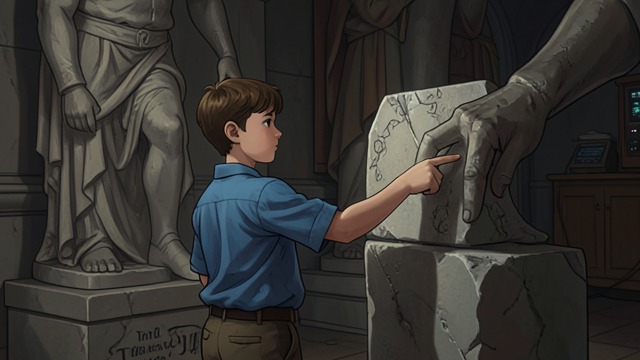
Words Taken Literally
Images That Distract
Christopher dislikes phrases such as “stone dead” because the words suggest physical images that do not clarify what the speaker means. Metaphors feel like confusing substitutions.
He prefers a direct statement that says what happened.
Language as a Puzzle
His explanation makes ordinary speech newly visible as a system of conventions. What other people treat as natural can require deliberate interpretation.
The Joke Explained

Three Meanings at Once
Father’s Wordplay
Father(Ed Boone) tells a joke based on the different meanings of “drawn.” Christopher understands how the wordplay works intellectually.
Experiencing the meanings simultaneously feels like several conversations or pieces of music at once.
Understanding Without Enjoyment
The episode distinguishes knowing why others laugh from finding a joke pleasant. Christopher’s explanation resists treating his response as a failure of intelligence.
Chatting with Mrs. Alexander

Conversation Without Questions
A Social Convention
Mrs. Alexander makes comments that are not questions and do not require factual answers. Christopher recognizes this as chatting but struggles to know what response is expected.
He tries to participate by giving precise information about his age and Toby.
A Partial Connection
Their exchange gradually becomes comfortable enough for Mrs. Alexander to invite him for tea. Directness does not prevent connection, but it does make each step explicit.
The Affair Named Plainly

A Direct Question
Asking What He Means
Mrs. Alexander tells Christopher that Mother and Roger Shears were very close. Christopher asks whether she means they were having sex, and she confirms it plainly.
The direct question removes euphemism but reveals a painful truth.
Misunderstanding and Disclosure
Christopher initially wonders whether Roger harmed Mother. The conversation shows how missing context can make one fact suggest several alarming possibilities.
Understanding Without Guessing
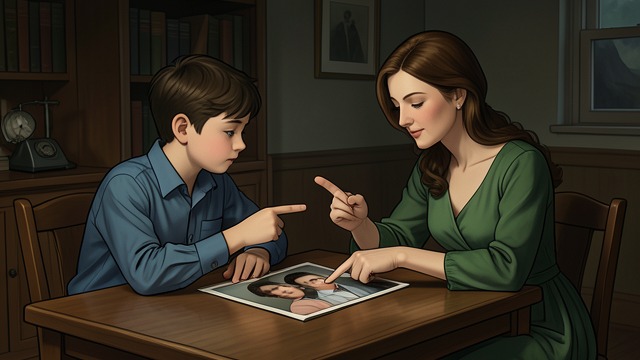
Learning Through Patterns
A Solvable Puzzle
Christopher recalls being taught that someone might believe a Smarties tube contains sweets even when it holds a pencil. He says he learned to treat other minds as a puzzle with an answer.
He studies expressions, memories, and repeated phrases to infer what people mean.
Limits Remain
Inference can help, but it does not make other people fully predictable. The novel leaves social understanding as ongoing work rather than a skill mastered once.
Early in Christopher’s explanation of himself
Early in the book, while discussing humor
During Christopher’s neighborhood investigation
On the Super Good Day in the shop
In the closing stages of the book
