
Rules and the Need for Order
The Curious Incident of the Dog in the Night-TimeChristopher’s systems make an uncertain world manageable, but the story repeatedly shows that rules can guide him without guaranteeing outcomes.
increasing Bearing strength in each event
 decreasing
Bearing strength in each eventdecreasingPrime-Number Chapters
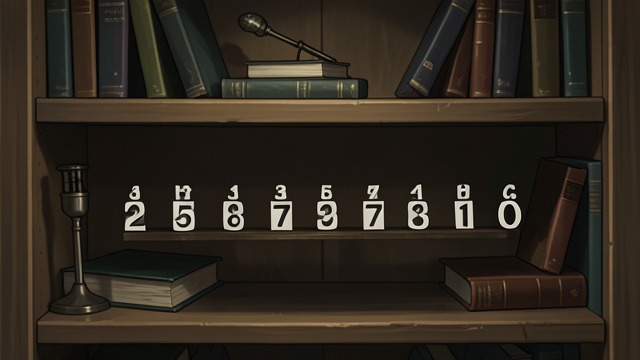
Order in the Structure
A Chosen Pattern
Christopher numbers chapters with prime numbers rather than the ordinary sequence. He likes primes because they form a pattern governed by clear conditions yet resist a simple formula.
The choice gives the book a structure that reflects how he thinks.
Rules and Mystery
Christopher compares prime numbers to life: logical, but not fully predictable. The form signals that order and uncertainty can exist together.
Cars as Categories

Days Made Predictable
A Personal System
Christopher assigns meanings to sequences of colored cars. A pattern can make a day Good, Super Good, or Black before he reaches school.
He understands that the connection is not logically causal, yet the classification makes decisions easier.
Security in Routine
The system provides a stable way to approach the day. It is a personal tool rather than a claim that the world obeys his categories.
A Promise Made

Commitment as a Rule
Literal Obligation
Father(Ed Boone) asks Christopher to promise he will stop investigating Wellington. Christopher understands a promise as an absolute commitment never to repeat an action.
He agrees, even though he still believes solving the murder matters.
Conflict Between Systems
Christopher’s strict interpretation clashes with the flexible, emotionally motivated demands of adults. He tries to follow the words while testing their precise boundaries.
The Timetable Disrupted
Time Without Its Map
A Fixed Appointment
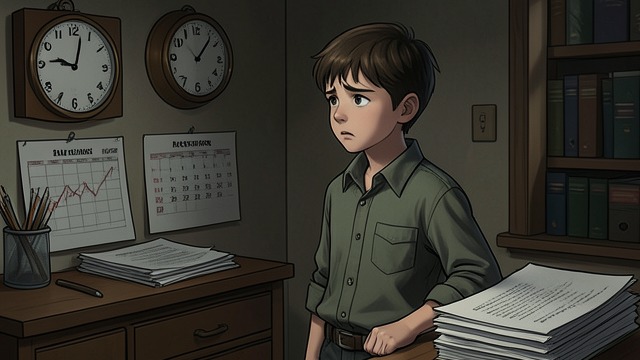
Christopher has planned to sit his mathematics examination on particular days. Mother’s decision to postpone it makes the future feel unstructured and frightening.
He explains that a timetable helps him avoid feeling lost in time.
A New Choice
When Siobhan offers the chance to sit the exam after all, Christopher must decide rather than simply follow the original schedule. A routine can support agency, but cannot substitute for choice.
Rules Meet Uncertainty

Order Without Control
Patterns That Help
Christopher’s maps, routines, and stepwise plans help him travel, study, and manage frightening places. They turn large problems into smaller actions.
Yet the car system fails in London, the journey remains unpredictable, and relationships do not provide formulaic answers.
A More Flexible Confidence
Christopher’s achievement depends not on controlling every event but on continuing when the plan changes. Order remains valuable without becoming a guarantee.
At the start of Christopher’s book
On the bus after Wellington’s death
After Father forbids the investigation
During Christopher’s stay in London
Near the ending, after Christopher’s examination
