Christopher John Francis Boone
The Curious Incident of the Dog in the Night-TimeChristopher John Francis Boone is the novel’s first-person narrator and the organizing intelligence behind its account of investigation, family upheaval, and travel. He introduces himself through what he knows—every country and its capital, and every prime number up to 7,057—while his response to a dead dog gives the narrative its first mystery. His exact-minded habits are not incidental characterization: they shape what he notices, how he makes decisions, and the form his story takes.
Identity and Narrative Voice
Christopher states his full name and presents knowledge as a concrete inventory. The scale and specificity of his claim establish a voice that prefers verifiable particulars to vague impressions. The novel’s account proceeds through his narration, so the reader encounters events through the facts he records and the conclusions he draws from them.
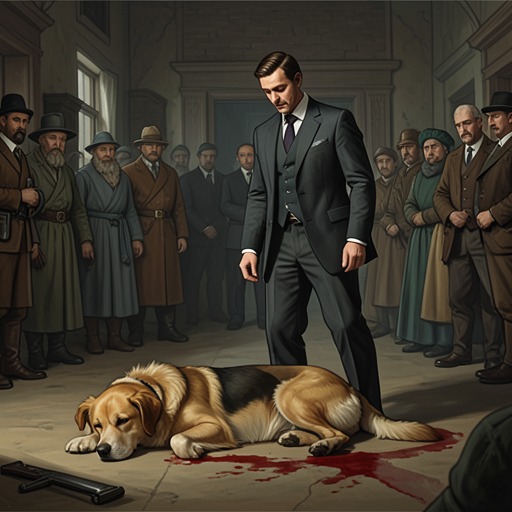
His attention to Wellington’s death brings that voice to an emotional as well as investigative subject. Christopher strokes the dog and wonders who killed him and why; he also identifies sadness as the feeling he had when he found the body. The scene connects an inquiry into evidence with an emotion he can name, rather than separating his careful observation from his response.
Projects and Investigation
Christopher’s approach to action is closely tied to his Good Day system. Because the day is a Good Day, he decides that he will find out who killed Wellington: Good Days are for projects and planning. The decision turns curiosity into a deliberate undertaking, with the investigation providing a structure for what he will do next.
When Christopher tells Siobhan of his plan, she suggests that he write a story about finding Wellington and going to the police station. Christopher says that this is when he started writing. The book’s form is therefore bound to the investigation: writing is not merely a later record of his project but the activity through which its account begins.
The Discovery of His Mother’s Letters
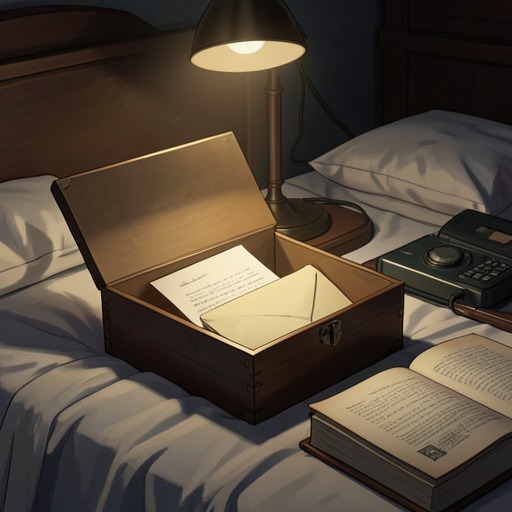
A later letter changes Christopher’s understanding of his family. He stops reading because he feels sick, then recognizes the implications: his mother did not die of a heart attack, but remained alive, and his father had lied about her. He tries to find another explanation but cannot, and says that his brain is no longer working properly. The discovery is both a revelation about his mother and a collapse in the trust on which his previous understanding depended.
The change is consequential because it leaves Christopher facing a choice about where he can live. He rules out Uncle Terry because he does not know how to reach Sunderland and does not like his uncle’s smoking or hair-stroking. He also rules out Mrs. Alexander: despite her dog, he does not regard her as a friend or family member, and he cannot stay overnight in a stranger’s house or use her toilet. These practical, personal conditions make the search for a safe destination specific rather than abstract.
Choosing a Frightening Journey
Christopher decides that his mother is the viable alternative because she is family and her address appears in the letters: 451c Chapter Road, London NW2 5NG. Yet knowing the address does not make the journey feel manageable. He has never been to London, has never travelled anywhere alone beyond the shop at the end of the road, and remembers only trips to Dover, Sunderland, and Manchester made in other circumstances.
The alternatives all feel unsafe. Going home, staying where he is, or hiding in the garden each leaves him afraid, and he feels as if he may be sick again. Christopher realizes that none of the available choices feels safe. His response shows how the discovery turns a private crisis of trust into a practical decision about movement: the known address of a family member offers a direction, but not an easy or reassuring one.
Narrative Significance
Christopher’s character is defined here by the interplay of precise knowledge, planned projects, and vulnerability when the facts disrupt his expectations. Numbers and categories give him ways to order experience; they do not prevent grief, shock, or fear. The investigation of Wellington and the journey he considers after learning the truth about his mother are distinct projects, but both begin when he tries to establish what has happened and decide what to do next.
His narration also makes the reader experience revelation as a change in the available facts. Christopher states what he knows, encounters evidence that contradicts the story he had been told, and tests possible explanations before acting. The resulting portrait is not of a detached observer: his painstaking attention is a way of engaging with an uncertain world, and the lie about his mother exposes how much that world depends on trust as well as information.