Father(Ed Boone)
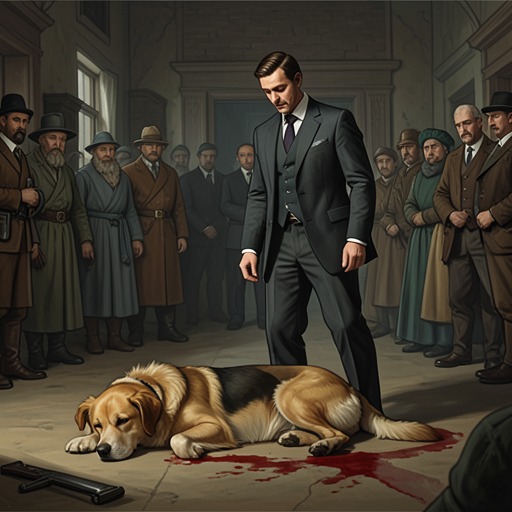
The Curious Incident of the Dog in the Night-TimeFather(Ed Boone) is Christopher Boone’s father, a parent whose efforts to care for his son coexist with a decisive betrayal: he killed Wellington and had concealed the truth. Christopher’s investigation initially identifies Mr. Shears as a suspect, but the later confession overturns that conclusion and makes the question of whom Christopher can trust more consequential than solving the crime alone.
Identity and Family Role
Father is the name Christopher uses for his parent. His relationship with Christopher is presented through specific domestic encounters and through what Christopher can observe, rather than through an independent account of Father’s inner life. When Father arrives at the police station after Christopher has been detained, Christopher hears him shouting that he wants to see his son and asking why he is locked up. A policeman tells him to calm down, after which Christopher hears nothing for a long while. The scene establishes Father’s forceful concern at a moment when Christopher is separated from home, but it does not yet disclose the secret that will later redefine their relationship.
At home, Father’s grief is visible but initially ambiguous to Christopher. At 2:07 a.m., Christopher goes downstairs for orange squash and finds Father on the sofa watching snooker and drinking scotch, with tears in his eyes. Christopher asks whether he is sad about Wellington. Father answers that he is, in words that confirm the apparent explanation without explaining what lies behind his grief. Christopher leaves him alone because that is what Christopher wants when he is sad. In retrospect, the exchange sits uneasily beside the later confession: Father’s sorrow is real in the scene, but its full significance is not then available to Christopher.
The Investigation and Its First Suspect
Christopher’s inquiry into Wellington’s death makes Father’s household an important setting for the emerging mystery. Christopher sees a fork in Mrs. Shears’s locked shed that resembles the fork found in Wellington, and notes that it has been cleaned. He infers that the weapon may have belonged to Mrs. Shears and considers whether she killed the dog, but her earlier reaction at the scene makes him doubt that conclusion. His reasoning leaves open who had access to the shed or whether the fork had been left somewhere accessible.
Christopher’s next line of reasoning points instead to Mr. Shears. He considers possible reasons for killing a dog, including hatred, madness, or a wish to upset Mrs. Shears. Since he does not know anyone who hated Wellington or anyone mad, he reasons that those possibilities suggest a stranger; the possibility of deliberately upsetting Mrs. Shears, however, points to the one person he knows who disliked her. He therefore names Mr. Shears as his prime suspect. Christopher also knows that Mr. Shears had been married to Mrs. Shears, left two years earlier, and was the reason Mrs. Shears had more time to help Christopher’s family after Mother died. The early suspicion is grounded in the facts available to Christopher, but it is not the answer.
Father has already told Christopher to keep his nose out of other people’s business. When Christopher tells him that he thinks Mr. Shears probably killed Wellington, Father does not answer. This silence gives the exchange a sharp later significance: Christopher openly states the wrong suspect to the person who knows the truth, while the investigation remains framed as disobedience to Father’s instruction rather than as a direct challenge to Father himself.
The Letters and the Hidden Truth
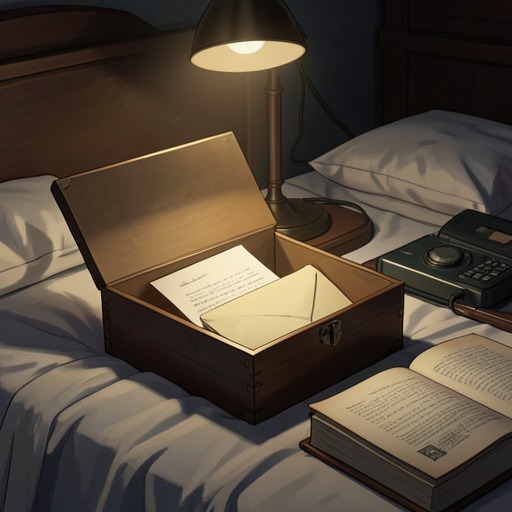
A second discovery changes the apparent history of Christopher’s family. In a shirt box under Christopher’s book, he finds an unopened envelope addressed to him at 36 Randolph Street. The lack of a date on the letter makes him wonder whether someone else wrote it while pretending to be Mother. The postmark, however, supplies a date: 16 October 1997, eighteen months after Mother was said to have died. The envelope therefore contradicts the account Christopher has been given and establishes that a letter from Mother was posted long after her supposed death.
The timing of the discovery heightens its force without resolving everything at once. Father opens Christopher’s bedroom door and asks what he is doing; Christopher tells him he is reading a letter. Father replies that he has finished drilling and mentions a David Attenborough nature program on television. In that moment, the exchange is ordinary on its surface, even as Christopher has encountered evidence that calls his family’s account of Mother’s death into question. The letter’s postmark makes Father’s silence and Christopher’s earlier dependence on him newly significant, while the later confession will reveal a further, distinct deception.
Confession and Rupture of Trust
Before confessing, Father tells Christopher that he wants him to be able to trust him. He acknowledges that he does not always tell the truth, says he is trying, and promises to tell the truth about everything from then on. He explains that delaying the truth can make the hurt greater later. Then he says plainly, “I killed Wellington, Christopher.” The admission resolves the murder mystery at the same time that it breaks the trust his preceding promise was meant to restore.
Father begins to explain the history behind his actions by recalling Mother’s departure and Mrs. Shears’s help. He says that Mrs. Shears supported the family, especially him, during a difficult period, and that he had thought she might eventually move in with him or that the two of them might move into her house. He says he believed they were friends and then recognizes that he had been wrong. The account connects Father’s hopes concerning Mrs. Shears to the people and relationships Christopher has been investigating, but it does not undo the central fact of the confession: Father killed her dog.
The revelations recast earlier scenes rather than simply adding a final clue. The fork in Mrs. Shears’s shed, Christopher’s mistaken suspicion of Mr. Shears, Father’s silence when that suspicion is voiced, his tears over Wellington, and his promise of future honesty now form parts of a single, painful pattern of withheld knowledge. Father is not merely the parent who urged Christopher to stay out of other people’s business; he is the concealed answer to the question Christopher was trying to solve. His decisive significance lies in this double role: he is the person Christopher looks to for protection and the person whose actions make that protection difficult to trust.