Honesty, Lies, and Trust
The Curious Incident of the Dog in the Night-TimeTruth, lies, and trust are not abstract moral categories for Christopher: they are rules for describing reality and conditions for deciding whom he can rely on. His insistence that he does not lie is rooted in a literal, exacting account of what happened; the discovery that Father has hidden Mother’s survival makes that commitment collide with the painful fact that a person he depends on has lied to him.
Truth as an Exact Account
Christopher rejects the idea that his honesty is simply a sign of goodness. He says that he does not tell lies because he cannot tell them. A lie means saying that something happened when it did not, but at any particular time and place only one thing happened, whereas an infinite number of things did not. Thinking through those unreal alternatives can proliferate beyond control, leaving him overwhelmed and afraid. His account makes truth a stabilizing boundary: it fixes events to what actually occurred rather than opening them to an unbounded set of imagined possibilities.
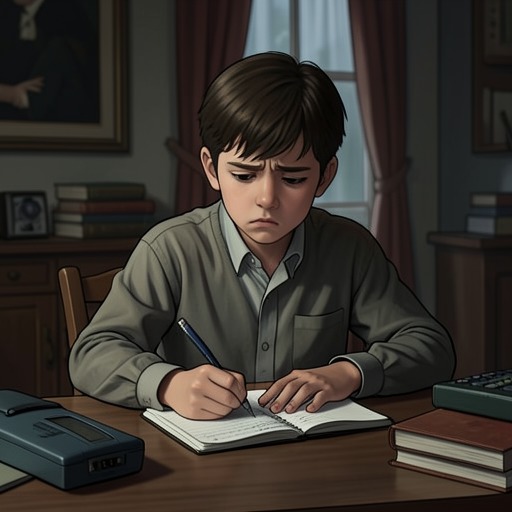
That reasoning also shapes the form and purpose of his book. Christopher says that everything he has written is true, and explains that fictional novels make him feel unsettled because they describe things that did not happen. The claim is more than a personal preference for factual writing: it is a declaration of what his narrative promises. His account presents truth as a discipline of accurate description, one that resists invention because invention can unsettle his grasp of what is real.
Partial Truth and the White Lie
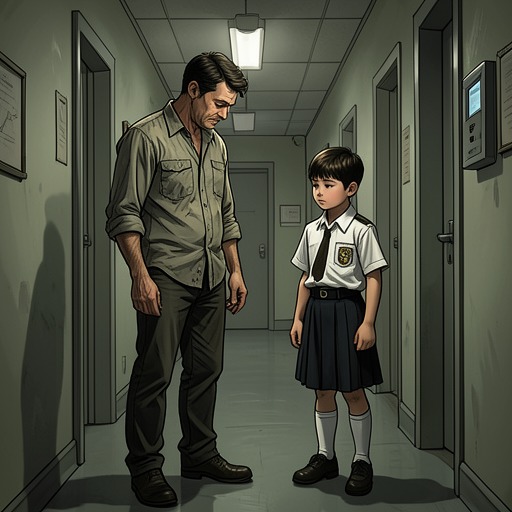
The distinction between truth and deception becomes less secure in an ordinary exchange at home. After being out, Christopher tells Father that he has been out, then identifies his answer as a white lie: it is not false, but it leaves out the full truth. He generalizes the idea through everyday questions, where a short answer necessarily omits other things a person wants or plans to do. A statement can therefore be factually true without being complete.
In this instance, the omission has a specific purpose: Christopher knows Father does not want him to act as a detective. The scene complicates Christopher’s absolute account of truth without making his answer a straightforward falsehood. It shows him withholding information to avoid disclosing an activity Father opposes, while also carefully classifying the kind of statement he has made. Honesty remains important to him, but communicating the whole truth and communicating a true fragment are not the same thing.
Letters and the Collapse of Trust
Mother’s letter unsettles Christopher because its contents contradict the life he has been told. It describes a job and a home in London that do not fit what he knows: Mother had worked as a secretary at a garage and had lived with the family. He initially wonders whether someone else wrote the letter while pretending to be her. The postmark supplies a decisive piece of evidence: it shows that the letter was sent on 16 October 1997, eighteen months after Mother was said to have died.
Reading the letter becomes intolerable before he has finished it; he stops because he feels sick. The conclusion is nevertheless plain to him: Mother did not die of a heart attack and had been alive all along, while Father had lied about her death. He tries to think of another explanation but cannot, and then finds that he cannot think clearly at all. The reversal is not simply new information about Mother. It reveals that Christopher’s understanding of his family has been organized around a false account, and that the person responsible for giving him that account is Father.
Confession and the Meaning of Trust
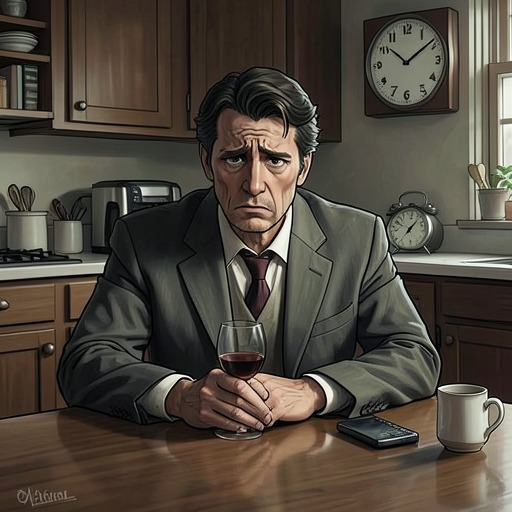
Later, Father presents honesty as an effort he has struggled to maintain. He tells Christopher that life makes truth difficult, says he is trying, and promises to tell the truth from then on. The promise is framed as an answer to the harm concealment causes: in his account, failing to tell the truth now makes matters hurt more later. Yet the promise arrives after Christopher has already discovered the lie about Mother, so it cannot restore trust by itself.
Father then tells Christopher that he killed Wellington. He links his actions to the period after Mother left and to the support he received from Mrs. Shears, explaining that he had hoped she might eventually move in with him or that they might move into her house. The confession gives the concealed murder a personal context, but context does not undo the betrayal. Christopher first wonders whether the statement is a joke; when he understands that it is not, he becomes frightened. Father’s admission thus turns the earlier dispute about truth into a direct crisis of safety as well as confidence.
Significance
The concept holds together several different kinds of truth: exact factual description, incomplete but technically true speech, and the damaging concealment of facts by someone trusted. Christopher’s own narration insists on accuracy, yet the events he recounts show that accurate statements can omit important information and that a false account can shape a family’s reality for a long time. The contrast is especially sharp between Christopher’s inability to invent what did not happen and Father’s deliberate concealment of what did.
Trust, in turn, cannot be separated from the consequences of disclosure. Father’s promise to be truthful comes alongside a confession that makes Christopher afraid, while the earlier letter has already shown him that the story of Mother’s death was untrue. The principle that truth matters is not presented as a guarantee that truth will be easy or comforting. Instead, the events demonstrate how concealment damages reliance, and how revealing the facts may clarify what happened without immediately repairing the relationship.