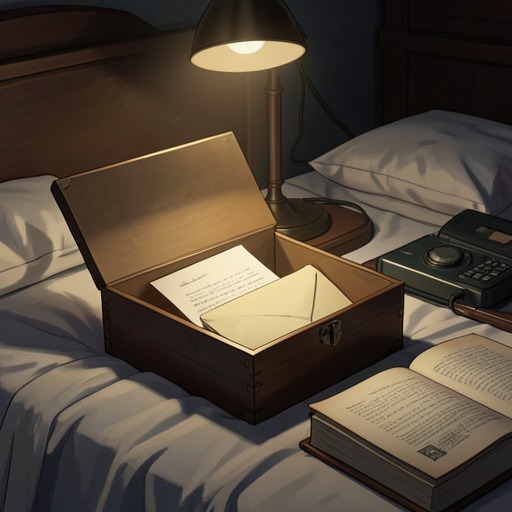
Mother's letters to Christopher kept in the shirt box
The Curious Incident of the Dog in the Night-TimeMother's letters to Christopher kept in the shirt box are the material proof that Mother was alive and had repeatedly tried to reach her son after leaving the family. Hidden by Father alongside Christopher’s confiscated book about Wellington, the letters turn a private act of correspondence into evidence of a larger deception and a rupture in the family’s trust.
Discovery and Disclosure
Christopher finds the letters in a shirt box in Father’s bedroom while searching for the book he was writing about Wellington’s killing. Father had taken the book from him and hidden it there; the letters, which Christopher then discovers, reveal that Mother’s absence was not the death Father had described. Their concealment links two concealed truths: Christopher’s investigation had been interrupted, and his understanding of what happened to his mother had been shaped by a lie.
What the Letters Reveal
When Christopher tells Mother that Father said she had died after going into hospital with a heart condition, she learns for the first time that Christopher had been given this account. She responds with shock and then falls silent before making a loud wailing sound. Her reaction underscores the distance between her efforts to write and Christopher’s belief that she was dead: he had not ignored her letters knowingly, while she had feared that something dreadful had happened to him or that he had moved away beyond her reach.
A Dispute Over Contact and Care
At the later confrontation, Mother says she wrote to Christopher every week. Father counters that letters could not substitute for the practical care he says he provided: cooking meals, cleaning clothes, looking after Christopher on weekends and when he was ill, taking him to the doctor, worrying when he wandered off at night, and going to school when he got into fights. The exchange sets the regularity of Mother’s attempted contact against Father’s account of day-to-day caregiving, without erasing the decisive fact that he told Christopher she was dead.
Narrative and Family Significance
The letters matter both as messages and as physical evidence. They give Christopher a way to learn that Mother is alive, while their concealment in Father’s bedroom makes the truth inseparable from the place where it was withheld. When Mother asks whether Father thought it was acceptable to tell Christopher that his mother was dead, the letters’ absence from Christopher’s life becomes an explicit charge against him. Their discovery therefore changes the meaning of Mother’s silence: what seemed like abandonment to Christopher was also the result of letters he never received.