Planetary Defense Council
The Dark ForestThe Planetary Defense Council is the central international body through which humanity organizes planetary defense during the Trisolar Crisis. Its decisive importance lies in the contradiction it must manage: the Council is responsible for coordinating a civilization-wide response, yet the Sophons make ordinary communication and planning visible to the Trisolarans. The Council therefore becomes both the administrator of conventional defense and the legal guardian of a strategy founded on secrecy, deception, and individual mental autonomy.
Formation and Institutional Role
The Planetary Defense Council emerged from the emergency political order created at the beginning of the Trisolar Crisis. Secretary General Say explains that the permanent members of the former Security Council conceived the Wallfacer Project during emergency negotiations, after humanity recognized that the arrival of additional Sophons had made Earth a completely transparent world. Every meeting room, file cabinet, computer, plan, and deployment could be observed and transmitted to the Trisolarans almost as soon as it took shape. Under those conditions, an international institution designed to exchange information could also become an instrument through which information leaked to the enemy.
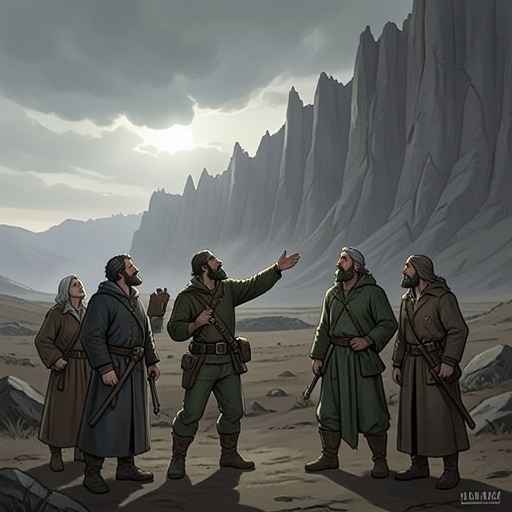
The Council’s response was not to abandon organized defense, but to supplement the mainstream program with plans that could remain inaccessible to the Sophons. Say presents the Wallfacer Project as the only feasible proposal among several alternatives. Its central premise is that the Sophons can read language, printed texts, and computer storage, but cannot read human thoughts. The Wallfacers would therefore construct and direct their strategies entirely within their own minds, while their public actions could serve as false signals, misdirection, and deliberate deception.
The Planetary Defense Council gives this extraordinary arrangement a legal and administrative structure. Wallfacers receive extensive powers to mobilize and exploit portions of Earth’s military resources, and they are not required to explain commands whose purposes appear incomprehensible. The Council is the sole institution authorized to veto those commands under the Wallfacer Act. This makes it more than a committee for consultation: it is the final institutional check on individuals whose authority depends precisely on being unaccountable in ordinary political and military terms.
Oversight of the Wallfacer Project
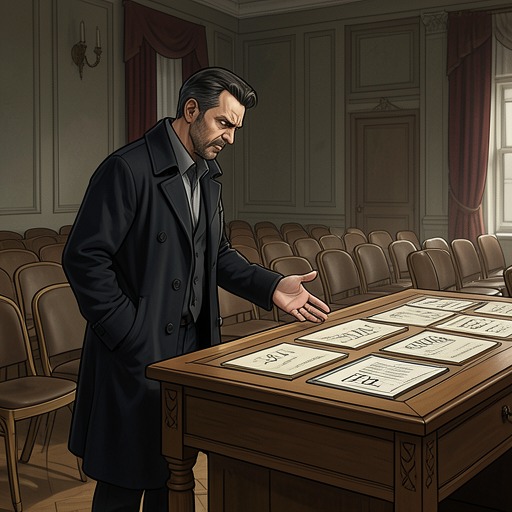
At the nineteenth meeting of the Planetary Defense Council, Secretary General Say places the disclosure of the Wallfacer candidates and the beginning of the Wallfacer Project at the final item on the agenda. Her speech gives the project a public rationale before the candidates are revealed. The Council must persuade the assembly that apparent irrationality is not necessarily failure, because the enemy can see every openly communicated intention while remaining unable to penetrate an isolated inner world.
The project also extends the Council’s authority across time. The Wallfacers are expected to use hibernation technology to bridge the centuries leading to the Doomsday Battle. They decide when they will awaken, under what circumstances, and for how long, but their continuity is guaranteed by international law. For the next four centuries, the Wallfacer Act is placed on a level equal to the UN Charter and is intended to operate together with national laws. The Council thus supervises a project whose horizon exceeds the lifespan of ordinary governments and whose decisions may be executed by institutions that have not yet been created.
This arrangement produces a permanent tension between public legitimacy and strategic opacity. The Council must defend the project before humanity while accepting that its most important content cannot be disclosed. Its oversight is therefore deliberately narrow: it may veto a Wallfacer command, but it cannot demand the reasoning that produced it. The institution is entrusted with judging consequences without possessing access to intentions.
Leadership and Political Authority
The Council is chaired by Garanin, a Russian described as a burly, white-bearded old man. His office is located one floor below the Secretary General’s, placing the Council’s chair within the same governing structure as the broader international administration. When Luo Ji asks to see him, Garanin is sending visitors away, including several people in uniform, before receiving the newly appointed Wallfacer. The encounter shows that the Council remains an active political and military center rather than an abstract legal body.
The Council’s authority also depends on the wider prestige of the Wallfacer system. As the Wallfacers come under increasing public scrutiny, a cult forms around them. The United Nations and the Planetary Defense Council issue repeated explanations, but popular legends portray the Wallfacers as figures with supernatural abilities and as humanity’s sole hope. That mythology gives them enormous political and popular capital, making it easier for them to command vast resources. Luo Ji is the exception: he remains hidden, never appears publicly, and leaves the public unable to connect the Council’s authority with any visible program of his own.
The Council consequently operates within a political culture that turns strategic uncertainty into spectacle. Public faith can smooth the allocation of resources, but it can also magnify the danger of failure. The institution must preserve confidence in a project whose participants may be acting out elaborate falsehoods, while the very absence of explanation that protects the project from the Trisolarans makes it vulnerable to rumor, worship, and suspicion.
Defense Decisions and Planetary Engineering
The Planetary Defense Council is involved in concrete technological and military decisions as well as constitutional supervision. It narrowly passes Rey Diaz’s plan to test a Stellar Hydrogen Bomb on Mercury after the completion of the space elevator opens the way to large-scale exploration of the Solar System. Human landings on Mars and the moons of Jupiter are treated primarily as steps toward establishing defensive bases, while the strategic value of the inner planets leads to intensified exploration of Venus and Mercury.
The Mercury project reveals the material difficulty behind the Council’s decisions. Excavation can proceed only during Mercury’s eighty-eight-Earth-day nights, and the shaft takes three years to construct, ultimately reaching only one-third of its planned depth because workers encounter an unusually hard mixture of metal and rock. The project is terminated when further excavation proves too slow and expensive. Testing at the existing depth would eject surrounding rock, produce a crater, and reduce the experiment to something like a weakened atmospheric test, while the crust would interfere with observation of the result.
Even after the excavation fails, the Council authorizes a more dangerous mechanism. Rey Diaz displays a black transmitter whose signal travels directly to Mercury. Rather than sending the detonation command, it sends a continuous non-detonation signal. The system, code-named Cradle, detonates the hydrogen bomb immediately if the signal is interrupted. This dead-man’s switch turns the Council’s authorization into a standing threat: the weapon remains inactive only while the signal continues, making the possibility of catastrophe depend on the maintenance of a technological link.
The Council also approves the mosquito swarm plan associated with Frederick Tyler. The plan eventually receives PDC approval, allowing development of space fighters despite the slow progress caused by a lack of advanced technology. Tyler’s supplemental study of Europa, Ceres, and various comets is sufficiently strange that some observers suspect it exists partly to add mystery to his more direct public plan, but it is permitted because it can be incorporated into the mainstream defense program. Through such decisions, the Council turns speculative and potentially destructive proposals into officially supported components of planetary strategy.
Limits, Consequences, and Significance
The Council’s projects unfold against a civilization increasingly willing to sacrifice present conditions for future survival. The construction of a space defense system consumes enormous resources and threatens to reduce quality of life by a century. Leaders recognize that the space elevator and controlled fusion are only the beginning: humanity has reached the seashore with tools, not yet built the shipyards, and still faces the unprecedented work of spacecraft construction, space weapons, recirculating ecosystems, and space ports. The Council’s authority therefore rests on asking populations to endure deprivation for a battle that may lie centuries away.
That burden contributes to environmental destruction. Heavy industry accelerated by the space forces makes pollution increasingly difficult to stop, while environmental protection is treated as close to treason because many people believe Earth will eventually belong to the Trisolarans anyway. Desertification, climate anomalies, and the collapse of agricultural production culminate in the Great Ravine. The Council’s defense priorities do not simply respond to an external danger; they help create a system in which ecological preservation is subordinated to military survival.
The Council’s decisions also belong to a wider security dilemma. In a universe where even a benevolent civilization cannot determine at the beginning of communication whether another civilization is benevolent, defensive preparations can be interpreted as threats and concealment as hostility. The logic behind the Wallfacer Project, the Cradle system, the Mercury test, and later proposals such as the Snow Project all reflects the same condition: uncertainty forces institutions to act before intentions can be verified, and every attempt to secure survival may increase the danger perceived by others.
By the later stages of the crisis, the Council’s work extends from conventional defense to projects involving stellar hydrogen bombs, Neptune’s oil film, and clouds of space dust intended to mark the paths of the droplets. The Council thus becomes an emblem of civilization’s transformation into an engineered defensive system. Its legitimacy comes from collective necessity, but its methods repeatedly expose the costs of survival: secrecy replaces transparency, extraordinary powers replace ordinary accountability, and planetary or ecological resources become instruments in an interstellar contest. The Planetary Defense Council is therefore neither a simple government nor a purely military command. It is the institutional form taken by humanity’s attempt to govern danger when the enemy can see almost everything except the mind.