Stark’s ultimatum to Thad
The Dark HalfStark’s ultimatum to Thad is the point at which a threat becomes a set of binding instructions: keep silent, evade the police, reach Castle Rock before dark, and collaborate on a new book. Stark makes the lives of Liz and the twins the leverage for each demand, turning Thad’s choices into a race against a deadline he cannot safely disclose.
The threat made explicit
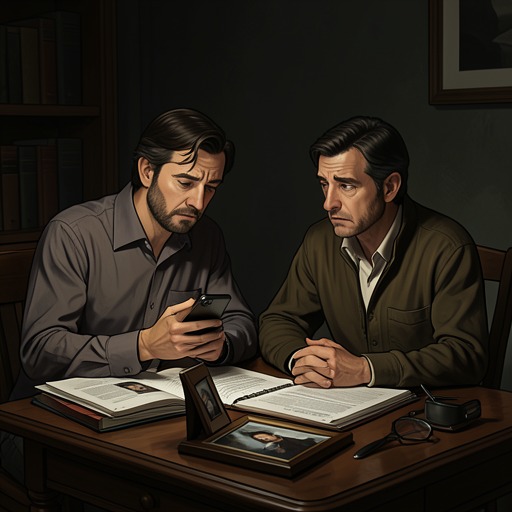
At the university, Thad’s hands type a message without his conscious control: “GUESS WHERE I CALLED FROM, THAD?” The words reveal that Stark has called from Thad’s home. Thad immediately understands the implication: Liz and the twins are there with Stark. Before the trance ends, his hands type a second message, “TELL ANYBODY AND THEY DIE.” The warning is both a threat to the family and a prohibition on seeking help. When the automatic writing stops, the birds and the entranced feeling disappear, but the danger the messages disclosed remains.
Thad tears the threatening sheet from the typewriter and crumples it before Steve Harrison can see what it says. His secrecy is not merely a response to the words on the page: he is already thinking of Frederick Clawson, who, in Thad’s view, was killed after revealing what he knew. When the warning later glares up from the typewriter sheet, its recurrence links Stark’s supernatural communication to a practical rule of silence. Thad must conceal the threat even from people who might otherwise help protect his family.
Liz’s call and the stakes
Liz reaches Thad by telephone and confirms that Stark has seized the family. She tells him that Stark says he killed the two officers assigned to watch the house. Liz says she does not know how he did it, but believes him. The report changes the threat from a frightening possibility into an immediate crisis: the police protection around the house has failed, and Stark is willing to kill those who stand between him and his captives.
Stark also dictates what Liz is to tell Thad about the plan. He intends to take her and the twins away and expects Thad to understand where they are going. His reference to Aunt Martha is part of that coded direction; he tells Liz that Thad should lose the men accompanying him because Stark himself managed to do so. The demand is therefore not simply that Thad travel to Castle Rock. He must first break away from his police escort without alerting the people who might intervene.
A forced journey and collaboration
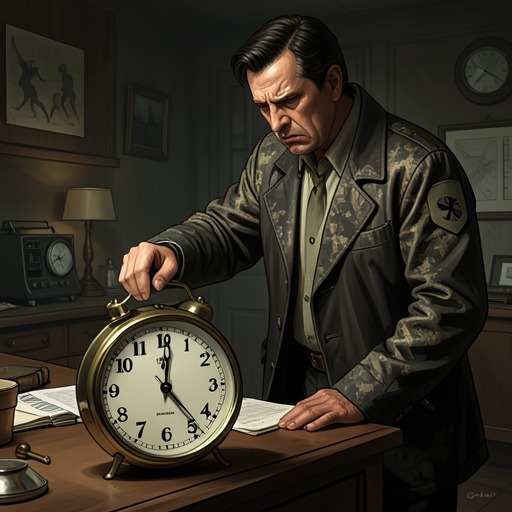
Stark’s telephone instructions establish a deadline and leave the means of escape to Thad. He tells him to get to Castle Rock as quickly as he can without attracting attention, suggests that he may need to change cars, and orders him to arrive before dark if he wants to find the family alive. The threat is made deliberately conditional: any delay or conspicuous move may bring the outcome Stark has promised. Thad answers that he will not try anything, accepting the immediate obligation because Liz and the twins are at risk.
The destination is tied to Stark’s larger objective. Liz reports that he expects Thad to collaborate with him, claiming that the two of them working together could make the best book ever. Stark repeats the demand directly, describing the proposed work as something they will do together, at least at first. The invitation is not a freely chosen artistic partnership: it is imposed under threat of murder, and its promised creative achievement is inseparable from Stark’s control over Thad’s family.
The ultimatum’s wider pattern
Stark’s threat draws force from the identity he has already made for himself through crime fiction. Thad chose the name George Stark in part because he wanted an identity separate from his own and admired the contrast between Donald E. Westlake’s work under his real name and the Parker novels published as Richard Stark. Those novels center on a professional thief with a narrow, relentless purpose; Thad compares Parker to a killer robot programmed toward a single goal. In the ultimatum, Stark’s own demands acquire a similar mechanical clarity: obey, arrive, and write.
The threat also echoes the conventions Dodie Eberhart values in crime novels, where men rob, shoot, and use violence to demonstrate power. Stark’s fictional criminal world has crossed into the lives of its author and family, while the actual killing of Michael Donaldson shows that his threats are backed by violence beyond the telephone. Thad’s imagined explanation to Alan Pangborn—a twin moving between Castle Rock, a Connecticut rest stop, New York, Washington, D.C., and Ludlow—also shows how the case’s uncanny facts can be recast as an elaborate criminal alibi. Stark’s ultimatum strips away such room for speculation: Thad knows where the immediate danger lies and what Stark requires, but speaking openly could endanger the people he is trying to save.