Thad Beaumont—Frederick Clawson conflict
The Dark HalfThe conflict between Thaddeus “Thad” Beaumont and Frederick Clawson centers on the exposure of Beaumont’s pen name, George Stark. Clawson discovers the connection and tries to turn that knowledge to his advantage; Beaumont and Elizabeth “Liz” Beaumont respond by going public on their own terms. The confrontation links private authorship, commercial success, and blackmail to a murder investigation in which the timing of the disclosure makes Beaumont look suspicious even as it undercuts the apparent motive.
The secret and the discovery
Beaumont had built two different careers. His work under his own name included The Sudden Dancers, nominated for the National Book Award in 1972, while the far more commercially successful crime novels appeared under the name George Stark. Beaumont chose that separate identity while struggling with writer’s block, drawing on the example of Donald E. Westlake’s Richard Stark books and their hard-edged criminal protagonist, Parker. The Stark persona gave him a way to write in a register distinct from his own, and its novels eventually became bestsellers.
Clawson was unusually well placed to recognize the connection. He was a law student, a part-time bookstore clerk, a dedicated Stark reader, and one of the few fans who had also read Beaumont’s novels. After deciding that Stark and Beaumont were the same person, Clawson contacted Darwin Press and asked the editor directly whether George Stark was really Beaumont. The editor denied the suggestion and refused to provide the address of the man pictured on the Stark books. Clawson’s suspicion thus preceded the public revelation, but his inquiries did not give him legitimate access to Beaumont’s private information.
The secret had remained intact through a network of people who knew the truth: Beaumont’s agent, the agent’s business partner, senior Darwin Press staff, and the company comptroller. Stark’s copyright was registered under the pen name, but practical matters—including endorsing checks—meant that those handling the business knew who stood behind it. Beaumont and Liz waited about a year and a half for someone to expose the arrangement; nobody did. Clawson’s threat changed that balance, making the concealed identity a matter of immediate pressure rather than a secret they could continue to manage quietly.
The decision to go public
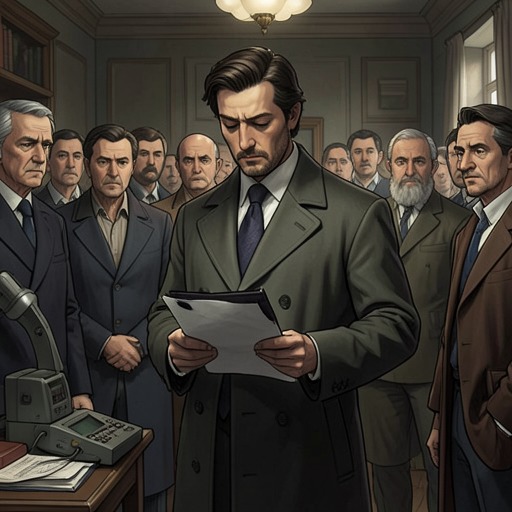
Beaumont and Liz did not present Clawson as the central subject of their disclosure. Beaumont’s agent gave the story to Publishers Weekly with Beaumont’s approval, and the Associated Press’s Jerry Harkavay then widened its circulation. The resulting account did not tell the whole story: Beaumont was determined not to give Clawson a mention. As he explained to Liz and his agent, Clawson was not the story; he was the person forcing them to tell it.
The public version framed Beaumont as a respected writer whose real-name career was comparatively modest beside the popular success of George Stark. In an interview, Beaumont described Stark as not a very nice man. That line appeared at the top of Harkavay’s article and later inspired the false gravestone commissioned in connection with the revelation. The remark condensed the uneasy public performance: Beaumont could acknowledge the persona as a creation while also speaking of Stark as though he were a separate, disreputable figure.
Going public also answered the blackmail threat without granting Clawson control of the timing. Beaumont could have continued the profitable arrangement, but he wanted to write his own books again and believed Stark was running out of material. The separate name had brought financial freedom: Stark’s earnings gave Beaumont what he called “f—you money,” making it possible to leave teaching if he wished and continue paying the mortgage. Yet that same income made continued secrecy tempting. Beaumont reasoned that only a decisive public disclosure could close off the prospect of writing another Stark novel simply because the money remained attractive.
Clawson’s leverage and the apparent motive
Clawson’s exposure attempt acquired force because he had recognized a marketable secret, not because he had created the identity he threatened to reveal. His position as a Stark enthusiast gave him a personal stake in the discovery, while his connection to the bookstore world and his legal studies provided circumstances in which he could pursue it. His suspicion became leverage when he chose to press Beaumont rather than leave the connection private.
After Clawson was murdered in Washington, D.C., Sheriff Alan Pangborn told Beaumont and Liz that Clawson was the second murder under investigation. Liz reacted sharply to the news. Pangborn already regarded the timing as suspicious: Beaumont had recently disclosed the secret, Clawson had been the reason the disclosure happened, and then Clawson was killed. Pangborn asked Beaumont who Clawson was to him, bringing the personal conflict directly into the investigation.
Beaumont acknowledged how the circumstances could be made to look like a motive. His public identity seemed financially precarious beside Stark’s success, and Clawson’s threat could be interpreted as a direct danger to the lucrative pseudonym. But Beaumont argued that killing a would-be blackmailer after exposing the secret himself would make little sense. He also pointed out that Stark’s career was already nearing its end: perhaps one more book remained, and the publicity had improved sales rather than damaged them. The People article helped revive interest in the Stark books, while Beaumont’s earlier novels were also set for reissue. In his account, the disclosure had deprived Clawson of his leverage and had produced commercial benefits, not the kind of loss that would explain revenge.
Aftermath and significance
The public revelation redistributed the consequences of the secret. Beaumont and Liz kept Clawson’s role out of the initial story, while the press turned the pen-name revelation into a celebrity narrative. Beaumont later asked Liz whether they had been wrong to omit Clawson. She answered that they had not lied; they had simply left his name out. She considered the outcome fair: Beaumont had received his share of the exposure, the magazine had received its sensational story, and Clawson had gained nothing from the attention. Her response makes clear that the couple regarded the omission as a boundary on what Clawson could claim, not as a denial that his actions had precipitated the disclosure.
The conflict also exposes a tension in Beaumont’s relation to authorship. George Stark began as a deliberate, commercially effective separation from Beaumont’s own literary identity, shaped in part by the example of Richard Stark and Parker. Over time, that separation became a profitable arrangement sustained by publishers, agents, editors, and readers. Clawson’s attempt to collapse the distinction turned a private fact about authorship into leverage, while Beaumont’s decision to go public reclaimed control of when and how the identities would be joined. Clawson’s later murder makes that choice look incriminating within the investigation, but it does not erase the central reversal: by disclosing the secret before Clawson could profit from it, Beaumont had already changed the terms of their conflict.