Thad Beaumont—George Stark relationship
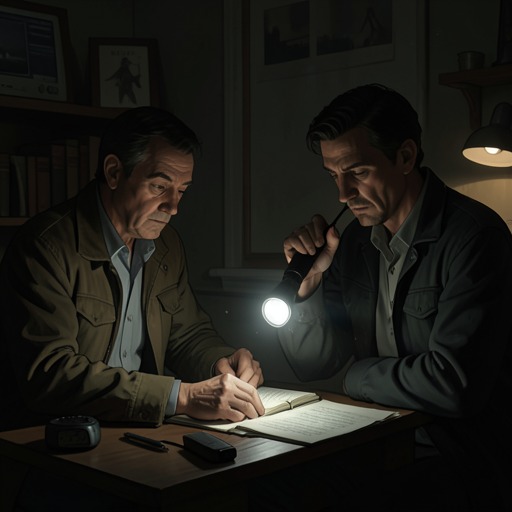
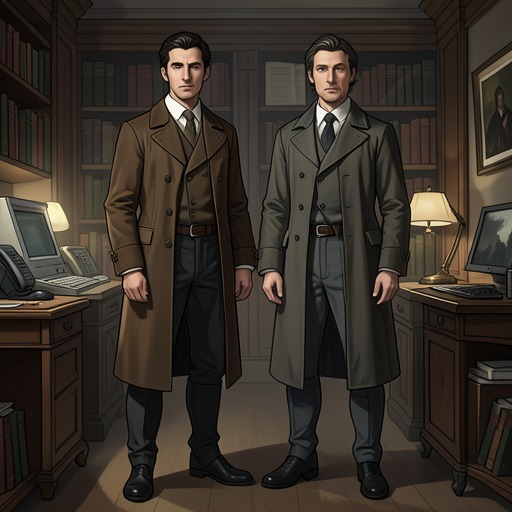
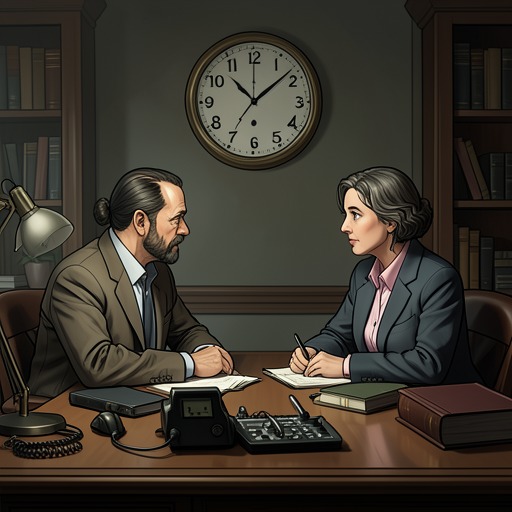
The Dark HalfThad Beaumont’s relationship with George Stark is at once a pen name, a commercial arrangement, a division of artistic identity, and—within the novel’s supernatural action—a bond with a figure who seems to exist independently of his creator. The name George Stark first gives Thad a way out of writer’s block and lets him write crime novels for a different audience. But the success of the disguise makes it difficult to treat Stark as merely a name: he earns money, develops a readership, and ultimately becomes the dangerous double Thad had publicly declared finished.
A Name Apart
Thad’s explanation of the pseudonym begins with a practical problem: he was struggling to write and believed that a separate identity might break the block. Choosing the right name mattered because he wanted a boundary between the writer he presented as himself and the writer who would produce the Stark books. The split began as a conscious artistic device, not as a claim that another person had literally authored the work.
The name also carried a literary model. Thad recalls Donald E. Westlake’s distinction between his comic social novels under his own name and the harder crime books published as Richard Stark. Those novels feature Parker, a professional thief without much apparent life beyond robbery. Thad was particularly struck by the rainy-day image associated with Westlake’s pseudonym: it suited the difficult period he identifies as lasting from 1973 into early 1975. Richard Stark thus supplied both a naming pattern and an example of how a different authorial identity could make a different kind of book possible.
Thad’s description of Parker clarifies what he carried into his own crime-fiction persona. Parker can seem less like a rounded man than a killer robot fixed on one aim: getting his money. The interviewer recognizes the resemblance to Alexis Machine, the central character of the first and last George Stark novels. The fictional criminal and the pseudonymous author are linked by a stripped-down, relentless mode of expression; Thad acknowledges the interviewer’s suggestion that Stark seemed to wake and begin speaking as he worked on the novel. His earlier draft of Machine’s Way had felt too close to its model to publish, but roughly a quarter of the way through it found its own rhythm. The change is important to the relationship: Thad made the choice to create a separate identity, yet the work did not remain a simple exercise in imitation or conscious control.
Success and the Public Secret
Published by Darwin Press in June 1976, Machine’s Way became a coast-to-coast number-one bestseller and was adapted into a hit film. Its success established a sharp contrast between the public profiles attached to Thad and Stark. Thad’s first novel, The Sudden Dancers, had been nominated for the National Book Award in 1972, but he had published only one further novel under his own name. George Stark, by contrast, had produced a major bestseller and then three successful follow-up novels. The market knew the work and the name, while the person behind the name remained concealed.
The secret was not literally known to no one. Thad says that his agent, Rick Cowley, Rick’s then-wife and business partner, and senior figures at Darwin Press knew the truth; the publisher’s comptroller also had to know because Stark’s books could be written in longhand but checks still had to be endorsed. Thad and Liz spent about a year and a half waiting for someone to expose the arrangement, but no one did. The silence continued for another ten years as Stark published three more novels. None matched the exceptional success of Machine’s Way, though each made its way onto bestseller lists.
The pseudonym’s success changed the material stakes of the split. Thad calls the income his “f—you money”: it meant he could leave teaching if he chose and continue paying the mortgage. The money was not incidental to the relationship. It made the separate identity liberating, even as it gave Thad a reason to keep producing work under it and made secrecy harder to relinquish.
Ending the Arrangement
Thad eventually decides that the benefits no longer outweigh the cost. He wants to write his own books again, and he believes Stark is running out of things to say. Liz, his agent, and apparently Stark’s editor at Darwin Press share that assessment. Thad also recognizes his own vulnerability to the money the persona brings in: if the secret remains intact, he expects the temptation to write another Stark novel to become too strong. Going public is therefore his chosen way to end the profitable arrangement, which he describes as driving a stake through Stark’s heart.
The disclosure is publicized through a chain of publishing and news contacts. After Thad’s agent gives the story to Publishers Weekly with Thad’s approval, the Associated Press’s Waterville reporter carries it more widely. Thad refuses to make Frederick Clawson the focus; Clawson is the person forcing the disclosure, not the story Thad wants to tell. That distinction also frames Thad’s view of his choice: he presents it as his decision to reclaim his own writing, rather than as a tale about the blackmailer who precipitated the announcement.
The exposure produces an ironic commercial aftermath. The People article and its staged presentation seem to Thad both ridiculous and familiar: photographers arrange scenes to meet readers’ expectations, but interview subjects also shape what they show. He recognizes his own skill at arranging the story as a novelist’s skill at telling lies. Meanwhile, the publicity helps Stark’s backlist: Riding to Babylon has a chance to return to the bestseller list, sales rise across the Stark novels, and Dutton plans to reissue The Sudden Dancers and Purple Haze. The attempt to end Stark’s public life therefore briefly renews commercial interest in both identities.
The Double Becomes Dangerous
The public claim that Stark is finished does not settle the matter in Thad’s private experience. A nightmare places the two together, though Stark appears not as a writer but as a real-estate agent who remains just behind Thad, present only as a voice and shadow. The dream also corrects a detail Thad had supplied on Stark’s author sheet: he had described Stark as driving a 1967 GMC pickup, but now knows that the vehicle is a black Toronado. The discrepancy makes the double seem to possess a continuity and knowledge not wholly governed by Thad’s earlier descriptions.
Later, the sound of sparrows and an accompanying image of birds draw Thad into the remembered crisis of 1960, when he hears himself speak in a low voice that does not feel like his own. The episode ends with his awareness returning to 1988 and to his study, where a Remington typewriter is present. When Liz says that someone is back, Thad immediately thinks of Stark. He knows Stark has been publicly buried and, in the ordinary account of events, never existed as a separate person; nevertheless, the possibility of his return feels real to him. The contrast between public fact and inward terror shows why announcing the end of a pseudonym cannot, by itself, resolve the relationship the book has made supernatural.
The criminal fiction associated with Stark also crosses into the plot’s physical world. Dodie Eberhart, a devoted reader of hard-edged crime novels, regards Stark as the best of the writers she follows and has read his books from Machine’s Way through Riding to Babylon. In an attack on Michael Donaldson, Stark uses the straight razor in a manner consistent with the decisive violence and instrumental logic of the crime fiction attached to his name. The scene makes the border between a writer’s invented criminal world and actual violence perilously thin.
Thad can also imagine the case against himself in the form of a hypothetical identical-twin explanation: one version of him could have hosted a party while the other committed murders and traveled between locations, with Liz potentially implicated. The scenario is presented as an inference rather than an account of what happened, but its elaboration captures the investigative problem the Stark relationship creates. Once authorship and identity have been divided, the apparent facts can be arranged around the possibility of another Thad.
Meaning of the Relationship
The Thad–Stark divide is not simply a contrast between respectable literature and popular crime fiction. Thad’s own account connects the split to genuine differences in style, an escape from writer’s block, the economic rewards of publishing, and a desire to return to work under his own name. The same arrangement that gives him artistic room and financial independence also teaches him to treat identity as something that can be designed, circulated, and kept secret.
The relationship turns on a reversal of authorship. Thad chooses the name and writes the books, yet he describes the work as finding its own rhythm and concedes the image of Stark waking into speech. When he finally announces that Stark is only a paper identity, the story refuses to leave that distinction secure: in the supernatural plot, Stark appears to outlast the public burial, while Thad experiences signs that seem to announce his return. The result is a double who is at once a marketable invention, a displaced artistic self, and a threat that the author’s act of naming cannot reliably contain.