The Dark Half and the Psychological Twin
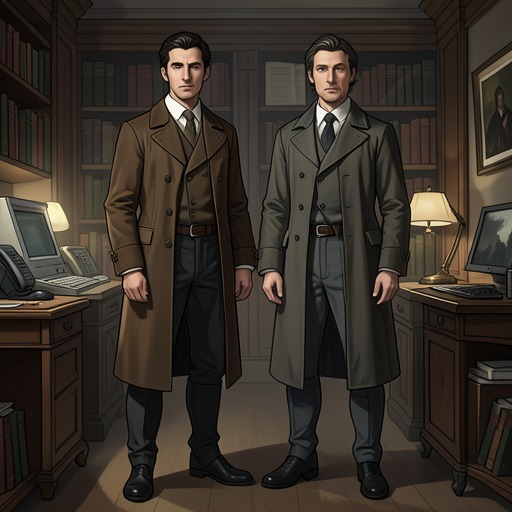
The Dark HalfThe Dark Half and the Psychological Twin is the novel’s framework for joining a writer’s divided identity to an uncanny biological and supernatural history. George Stark is at once a pen name Thaddeus “Thad” Beaumont created to escape writer’s block and a killer who acts in the world; the later revelation that a twin was removed from Thad’s head as a child makes their connection literal without making it simple. The story’s deepest disturbance lies in that overlap: Stark is separate enough to threaten Thad and his family, yet close enough that the two men recognize a shared past and laugh together.
A Separate Identity Becomes a Double
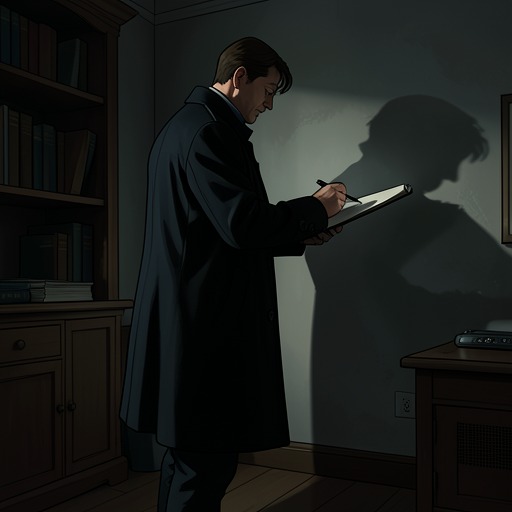
Thad’s choice of a name for his crime-writing persona was not incidental. He says he needed an identity separate from his own, one that might break a difficult stretch of writer’s block. The name George Stark drew on the example of crime novelist Donald E. Westlake, who wrote very different books under the name Richard Stark. Thad remembered Westlake’s account of writing under his own name on sunny days and letting Stark take over on rainy ones, a distinction that resonated with Thad’s own troubled period between 1973 and early 1975.
The borrowed model also helped define the fictional work associated with Thad’s pseudonym. Richard Stark’s Parker, as Thad describes him, is a professional thief with few interests beyond robbery, and the books’ central pattern is the robber being robbed. In their best form, Thad says, the character acts less like an ordinary man than a machine fixed on one objective. The interviewer recognizes Alexis Machine, the central character of the first and last George Stark novels, in this description. What begins as a literary inheritance thus supplies Stark with a recognizable criminal logic: a narrowed purpose, forceful action, and little room for reflection.
Thad’s first attempt at a Stark novel did not simply reproduce that model. He says that if Machine’s Way had continued as it began, he would have put it away, since publication would have amounted to plagiarism. About a quarter of the way through, however, the work found its own rhythm. The persona was designed to be distinct, but the novel’s account of its creation also stresses that the writing developed beyond its initial imitation.
The Criminal Fiction Crosses into Reality
The divide between Thad’s authorship and Stark’s criminal identity becomes perilous because the world of crime fiction supplies more than a name and a style. Dodie Eberhart, a landlord and devoted reader of hard-edged crime novels, regards George Stark as one of the best writers in the field. She has read the books from Machine’s Way and Oxford Blues through Riding to Babylon, apparently the last in the series. Her taste helps establish Stark’s novels as a distinct body of work with a readership, even as her involvement in the story brings that fictional identity into contact with ordinary life.
At one point, Thad imagines the elaborate account that might explain the murders attributed to him: an identical twin could have hosted a gathering in Castle Rock while Thad himself murdered Homer Gamache, used Gamache’s truck, abandoned it at a Connecticut rest stop, taken another car to New York, and then traveled to Washington, D.C., to kill Frederick Clawson. In this invented defense, the twin would return to Ludlow and resume his own life, with Liz Beaumont possibly included in the deception. Thad’s scenario is a wry reconstruction of the suspicion surrounding him, not evidence that this itinerary happened. Its force comes from how neatly the impossible double could seem to solve the practical problem of placing one man in two places.
The crime-fiction pattern is also echoed in Stark’s attack on Michael Donaldson. Waiting in the hallway outside Donaldson’s apartment, Stark plans the assault as a controlled sequence: he expects to incapacitate his target quickly and prevent him from calling out. Donaldson’s unexpected movement disrupts that plan. The episode shows the lethal gap between the clean, goal-driven criminal logic associated with Parker and the unpredictable resistance of a real person. Stark may carry the conventions of hard-boiled crime into reality, but reality does not reliably obey the script.
The Childhood Operation and the Unabsorbed Twin
The biological history behind the double is disclosed when Alan Pangborn reports what he learned from Dr. Pritchard. The doctor remembers Thad and Stark because Thad underwent an unusual childhood operation: what was removed from Thad’s head, Alan tells him, was Stark. This revelation recasts the relationship as more than the conflict between an author and an invented persona. It connects Stark’s emergence to a twin presence in Thad’s early physical history, while the exact relationship between that removed presence and the later, independently acting Stark remains part of the story’s uncanny logic.
Alan does not pass on every part of the account. He withholds the episode in which sparrows attacked the hospital, because Thad has said nothing about the birds. Alan reasons that Thad must have passed the Williams place on his way to the house, leaving open whether the sparrows were already gone or whether Thad does not want Stark to know they were there. The omission makes the disclosure cautious rather than complete: even as the childhood operation explains a great deal, the sparrows remain an unresolved element in the account Alan chooses to share.
Thad responds to the revelation by calling Stark a ghost and describing the gathering as more than a psychic incident. Stark, by contrast, treats their connection with ease, asking Thad to tell an anecdote about William Burroughs and saying that he remembers it because he was inside and listening. When Liz asks whether Thad understands the reference, Thad answers that he and Stark think alike. The exchange makes the double’s shared memory intimate and unnerving: Stark is not merely a name Thad once used, but a presence that claims access to experiences from within Thad’s life.
Shared Guilt and Unsettled Separation
The twin explanation does not absolve Thad of the consequences of Stark’s violence. After the crisis, Alan thinks of Homer Gamache, who was beaten to death with his own prosthetic arm, and feels the pull of assigning blame to Thad. Yet Alan recognizes the unfairness of that response: Thad did not choose to be a twin, did not destroy his brother in the womb out of malice, and did not know what would emerge when he began writing as George Stark. The novel holds causal entanglement and moral responsibility in tension rather than treating them as interchangeable.
Alan remains troubled by the image of Thad and Stark laughing together. The twins laugh along with Stark during the exchange about shared knowledge, and Alan later cannot forget the strange laughter and the look in their eyes. That moment resists an easy reading of the two as wholly separate enemies: their resemblance is not only a matter of origins or memory, but also of behavior witnessed by others. At the same time, the laughter gives Alan reason to fear what the connection might mean for Thad’s family. He wonders whether Liz will be able to forget it and whether she will ever again want to understand or love Thad.
The psychological twin therefore remains a relationship as much as an explanation. The operation reveals a hidden history, and the pseudonym explains how Thad gave the other identity a name and a literary voice; neither fact makes the aftermath emotionally clean. Stark’s crimes leave Thad bound to a violence he did not knowingly set in motion, while the moments of shared memory and laughter keep the double from being reduced to a stranger. The title’s division is real, but the story insists on its unsettling closeness.