The Unabsorbed Twin
The Dark HalfThe Unabsorbed Twin is the remnant of a weaker fetus that remained inside Thad Beaumont after his stronger twin absorbed most of it in the womb. A fragment lodged in Thad’s prefrontal lobe and, after apparently dormant growth, began developing again. Dr. Pritchard removes it as a benign tumor; the operation explains Thad’s headaches and convulsion, while leaving unexplained why the remnant began growing at all.
Biological Explanation
Pritchard describes fetal absorption as a fairly common occurrence: a child born singly may have begun as one of a twin pair, with the stronger fetus absorbing the weaker. He estimates that this may happen in as many as two births out of ten. The account distinguishes that ordinary process from Thad’s much rarer case, in which part of the weaker twin remained unabsorbed.
The remnant’s location was accidental rather than inherent to the condition. It had ended up in Thad’s prefrontal lobe, Pritchard says, but could just as readily have been in the intestines, spleen, spinal cord, or another part of the body. Such foreign tissue is usually encountered by pathologists during autopsies, and Pritchard has never heard of it causing death. Thad’s case is unusual not simply because tissue survived, but because it became active again in a living child.
Growth and Operation
Pritchard believes the mass was probably submicroscopic a year earlier. The absorbed twin’s developmental clock should have run down before Thad’s birth, yet somehow it restarted, and the remnant began growing. The resulting intracranial pressure, rather than any mysterious force directly acting on Thad, was enough to account for his headaches and the convulsion that brought him to the hospital.
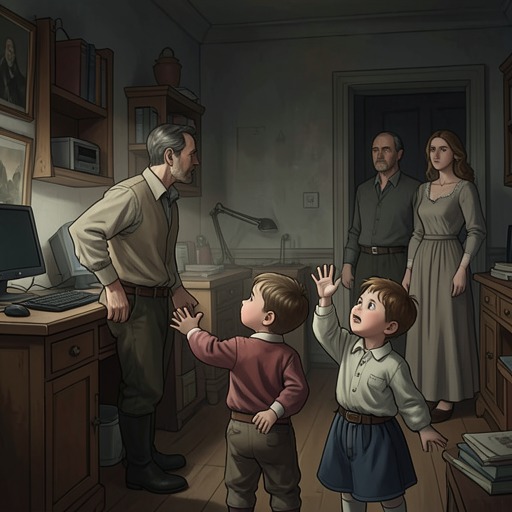
In the operating room, Pritchard characterizes what he has located and excised as a specialized, very rare, benign tumor. He expects that, barring complications, this is all Thad’s parents need to know. His decision to use the familiar medical description rather than explain that he has effectively removed part of the boy’s twin reflects both the difficulty of communicating the discovery and his assessment of Thad’s father, whom he regards as unlikely to understand it.
Unanswered Cause and Significance
Pritchard can describe the mechanism of Thad’s symptoms, but not the cause of the remnant’s renewed growth. When asked why it happened, he admits that he has no answer and speculates that even decades of further practice might not provide one. The medical explanation is therefore precise about the pressure and its effects, yet stops at the point where the dormant twin tissue starts to grow again.
That gap makes the remnant more than an anatomical curiosity. It establishes a literal bodily double in Thad’s history: another life began alongside his, was mostly absorbed, and left a surviving fragment inside him. The operation resolves the immediate childhood crisis, but the unexplained revival of the tissue leaves the episode open to the novel’s larger concern with doubles and the uncertain boundary between physical fact and the uncanny.