Brittany
The Darling Buds of MayBrittany is both a precise childhood memory for Cedric Charlton and a longed-for holiday destination for the Larkin family. Recalled through the Atlantic tide, warm sand, a little coastal train, vivid blue water, and good food, it offers a sensory counterpoint to Pop Larkin’s world of bargains, paperwork, and suspicion of expense; when the trip becomes practical, Charley’s careful budgeting and the Brigadier’s hopes of eating well bring that remembered coast into the family’s present.
A remembered coast
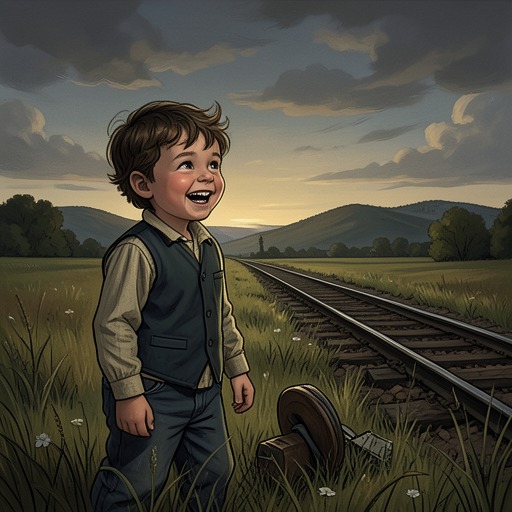
Cedric describes the view from his childhood bedroom as extending along a quay to the Atlantic. At low tide the sea withdrew for miles, leaving warm sand where he could paddle, while a small train ran along the coast between places. The recollection is so absorbing that he forgets the breakfast before him, including sausages, bacon, fried bread, and mushrooms. The train, in particular, stands for the whole country in his memory: it is not merely a feature of the landscape but his own concentrated image of France.
His account of Brittany adds heat, sultry air, inexpensive living, and marvellous food to that first coastal picture. He remembers summers when no rain fell and a sea so vividly blue that its colour seemed like that of a travel poster. The details make Brittany less an abstract foreign destination than a place lodged in memory through weather, fare, shoreline, and movement.
Pop’s unfamiliarity and the family’s plans
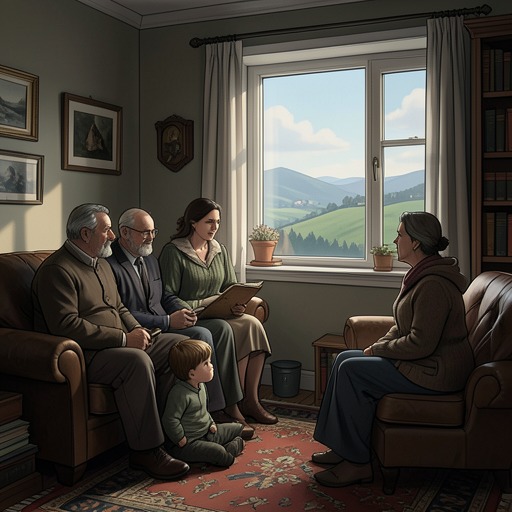
Cedric’s recollections expose how little foreign travel figures in Pop’s experience. At the word France, Pop stops eating sausage and looks startled; he asks whether Cedric went abroad for holidays and whether his parents wanted him. His questions turn Cedric’s ordinary childhood holiday into a surprising disclosure for the man who will become his father-in-law. Pop then asks whether France was healthy, while Ma responds to the mention of hot weather. Their practical, almost domestic questions meet Cedric’s affectionate evocation of a distant coast.
Brittany later becomes a concrete prospect rather than only a place in Cedric’s past. Charley says he will have the Beau Rivage quote every charge in advance, including taxes, the tourist tax, and service, because he believes it is best to settle everything beforehand in France. His attention to itemised costs makes the journey legible within the family’s habits of calculation, even as the destination promises a different climate and cuisine.
Food, thrift, and contrast
The Brigadier’s hopes give Brittany another role in the family’s imagined journey. He is going only to the shop for a little mouse-trap cheese because his budget cannot stretch to a more imaginative kind, but he anticipates beautiful, delectable cheeses in Brittany. The contrast links the destination to abundance while making present constraint tangible: the promised holiday is measured against the modest cheese he can afford now.
Across these recollections and plans, Brittany gathers several meanings without losing its physical specificity. For Cedric it is an intimate childhood landscape, remembered through the train and the blue Atlantic; for Pop it is initially a startling idea of going abroad; for the Brigadier it promises better cheese; and for Charley it calls for costs to be fixed in advance. The distance between those responses gives the place its narrative force: Brittany is at once memory, novelty, appetite, and a family undertaking to be managed.