Mariette's pregnancy and uncertain paternity
The Darling Buds of MayMariette's pregnancy and uncertain paternity place an unresolved question inside the Larkin family’s otherwise matter-of-fact domestic life. The pregnancy is announced plainly, but its father is not identified: Mariette cannot decide between two men, and the possibilities carry different complications. The uncertainty recurs as the pregnancy advances, while the family responds less with alarm than with practical questions about timing, riding, work, and what comes next.
Disclosure and the Two Possibilities
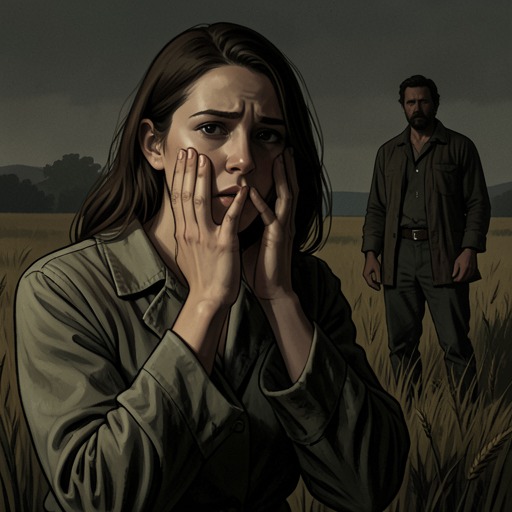
Ma tells Pop that Mariette is going to have a baby. Pop initially receives the news with easy approval, calling it good, and Ma herself does not seem unduly worried. His next question is who the father is. Ma answers that Mariette cannot make up her mind, establishing uncertainty not as a rumour but as the central unresolved fact of the pregnancy.
Ma names the alternatives: Charles, who had worked at the farm, and Harry, who works on the railway line. Pop knows Harry and immediately points out that he is married. Charles, meanwhile, is overseas, somewhere around Tripoli. Pop assumes he will get leave, but Ma counters that he will not be back for a year, perhaps longer if he hears the news. The two possibilities therefore remain open for different reasons: Harry’s existing marriage complicates one, while Charles’s distance and uncertain return complicate the other. The account does not resolve the paternity.
A Question That Returns
The question returns later in Pop and Ma’s conversation. Pop asks when Mariette expects the baby, and Ma again says she cannot make up her mind. The repetition shows that time passing has not produced a clear answer, even as the pregnancy becomes part of the family’s ongoing plans. Pop’s insistence that Mariette will have to decide eventually contrasts with Ma’s calm acceptance of uncertainty.
The pregnancy also shapes how Pop thinks about Mariette’s immediate future. With the family gymkhana only a fortnight away, he remembers that she is devoted to jumping and may have her last opportunity to ride in the jumps before the baby arrives. He tells the Brigadier that Mariette can hold the event in his meadow. In this moment, the pregnancy is not treated only as a private or medical matter: it changes the timing of an activity that matters to her and becomes part of the practical arrangements around the family gathering.
Mariette and Mr Charlton
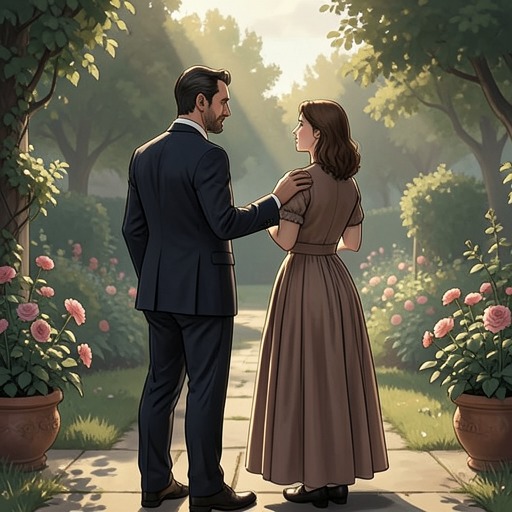
Mr Charlton’s place in the story develops amid the uncertainty, but the evidence does not identify him as the father. Mariette’s attentiveness to him is conveyed through her direct, decisive approach: she reads his expression, touches his cheeks, and raises her lips to his. Their intimacy is not a resolution of the earlier question. The two men Ma named were Charles and Harry, and the account leaves the paternity unsettled rather than tying it to Mr Charlton.
Mr Charlton is also drawn into the Larkins’ informal reasoning about obligations and work. Pop urges him to take advantage of what he calls the National Elf lark and go sick, treating the service as something Mr Charlton has paid for and may as well use. That advice belongs to Pop’s broader irreverence toward public systems; it does not settle the pregnancy or assign Mr Charlton a role in it. Later, Mr Charlton’s concern with forms, pensions, and tax becomes important to the family’s decisions, but the narrative still keeps the question of Mariette’s child’s father distinct from his relationship with her.
Family, Work, and Marriage
The pregnancy eventually appears beside another family announcement. Pop tells the family that he and Ma have decided to marry and that Ma is going to have another baby. Mr Charlton responds by raising the tax implications of marriage, beginning to say that it pays to live in sin before Ma stops him. The scene sets the family’s expanding circumstances against the formal categories of marriage and taxation: a pregnancy can be announced plainly, while the legal and financial consequences of marriage remain a matter for calculation and debate.
That tension continues when the family discusses travel documents. Mr Charlton reminds them of the delicate situation concerning Pop and Ma, and Pop admits they could still marry, though without enthusiasm. Ma says that, if everyone is to have their rights, she remains Flo Parker. Her statement gives a name to her unmarried identity as the family considers passports, without changing the distinct uncertainty surrounding Mariette’s pregnancy. The episode shows how a household can be organized through shared life and children even as official paperwork presses for names and relationships in more formal terms.
What Remains Unresolved
The pregnancy’s narrative force lies partly in what the account declines to settle. The possible fathers are identified, and the practical circumstances around each are given, but no final answer is supplied here. Meanwhile, the pregnancy continues to affect the family’s sense of time: Mariette may have only one more chance to compete in the jumps, and the family’s conversations turn repeatedly toward births, work, marriage, and the future.
The surrounding episodes make the Larkins’ approach to responsibility legible without making the paternity question disappear. Pop calls himself a farmer when Ma rejects the label of dealer, and he urges Mr Charlton to use public provision rather than return promptly to his office. Later, after marrying Mariette, Mr Charlton leaves the tax inspector’s office for other work; Pop gives the couple five hundred laying pullets, and their egg business grows. Yet Charley continues to submit proper income-tax returns, a habit Pop dislikes. These later developments show the family’s practical and comic engagement with work, government, and obligation, but they do not retrospectively answer who fathered Mariette’s baby. The pregnancy remains a condition of the family’s changing life and an open question within it.