The Times
The Darling Buds of MayThe Times is the newspaper that gradually acquires a place in Pop’s household, becoming both a sign of changing habits and a conduit between private memory and family plans. Its meaning is deliberately mixed: Pop finds that it offers him something he values, though he cannot quite say what, while keeping his attachment to the Daily Mirror’s popular appeal and to familiar food. Later, a picture in its pages brings Charley’s childhood recollections of France into the family’s present and helps set a holiday in motion.
Arrival and Adoption
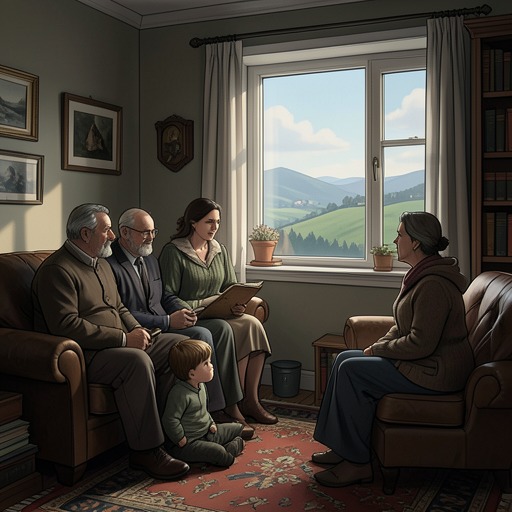
At first, taking The Times is, for Pop, an unlikely and almost revolutionary change. Charley had suggested that he replace the Daily Mirror with it; Pop initially regarded the idea as surprising and unthinkable. His resistance softens when he notices that others in the village read it too: Miss Pilchester, the Brigadier, and Sir George Bluff-Gore. Their example matters because they are the aristocracy, yet their finances are hardly effortless. Miss Pilchester is described as poor, the Brigadier has gone twenty years without a new suit and wears mismatched socks, and Sir George has been so burdened by taxes that he could not maintain Gore Court, sold it to Pop for demolition, and moved into a stable. If they could afford the paper, Pop reasons, so could he.
The decision does not amount to a conversion into an admirer of elite taste. Pop no longer regrets subscribing: The Times gives him something, even if its precise appeal remains difficult for him to define. Ma likes it as well, particularly its Saturday advertisements for rich and exotic foods, and sends away for lists and catalogues. She continues to take the Daily Mirror too, because otherwise she would not know what was in her stars. The two newspapers coexist rather than one simply displacing the other: The Times adds a new kind of pleasure, while the Mirror retains its own household use.
What the Newspaper Means at Home
Pop’s response to The Times is measured against the foods he already considers best: roast beef and Yorkshire pudding, rice pudding, lamb with mint sauce, and Sunday roast goose with apple sauce. The paper’s advertisements may attract Ma, but they do not immediately remake Pop’s preferences. He allows that he might have to change someday, then questions why he should. That qualified openness echoes his earlier reluctance to adopt the paper: he can add something new to his life without surrendering the habits through which he understands it.
The newspaper also sits inside a home where media rarely command a single, quiet attention. On Charley’s first visit, jazz plays loudly on the kitchen radio while a television flickers in the next room, its changing light falling across the crowded family table. The television’s contrast is turned up as the room darkens; its image and voices compete with conversation, eating, and the animals at the door. Later, television offers both a discussion about the responsibility for women’s situation and a programme about free speech, but the family’s domestic bustle continues around it. Against this busy, shared media environment, The Times is not merely a badge of refinement: it is something the family reads, discusses, and uses amid ordinary household life.
Charley’s Memory of France
The paper’s most consequential appearance comes when Charley, reading it at the breakfast table, points to a picture he finds extraordinary. It shows St Pierre le Port, the seaside place where he spent every summer holiday as a boy, taken there by his aunt and uncle. He recognizes the view from his bedroom window and traces it in words along the quay. His response changes the newspaper from a record of current affairs into an opening onto a remembered landscape.
Charley recalls an Atlantic coast where the sea goes out for miles at low tide, leaving warm sand to paddle on, and a small train that comes inland and trundles from place to place along the coast. The details gather into an intensely personal definition of the country: he hopes the train still exists, because that little train is France for him. In the middle of breakfast, the recollection is so absorbing that he forgets the sausages, bacon, fried bread, and mushrooms, as well as Oscar’s cries. A printed picture has arrested the meal and brought a place from Charley’s childhood vividly into the family’s conversation.
From Reading to Practical Planning
Once the family’s French holiday is under discussion, The Times provides another kind of information. Charley remembers reading in it that tea in France might cost a pound per pound, perhaps twenty-five shillings, and raises the price as a concern while holding Oscar. The remark meets Ma’s discovery of hot milk, which she treats as an astonishing provision; the family has little time to discuss the supposed expense before Mariette and Victoria return. The episode makes the paper’s information practical, but also shows how figures and warnings become part of the Larkins’ lively, immediate negotiation with travel.
The newspaper’s influence on Pop is clearest in retrospect. He compares his initial reluctance to take The Times with the surprise of Charley’s suggestion, after his marriage to Mariette, that Pop should switch from the Daily Mirror. Having made the change, Pop finds value in the paper without claiming it has replaced his established tastes. In the later holiday sequence, its photograph and reported prices serve different purposes: one releases Charley’s remembered attachment to St Pierre le Port, while the other helps the family imagine the costs of going there. The Times thus becomes a modest but active part of domestic change—neither an emblem of complete social transformation nor a passive background object, but a source whose contents enter memory, preference, and decision.