“Land of Eternal Spring”
The Deer King“Land of Eternal Spring” is the afterlife Van hopes will receive his dead wife and son, and its promise stands against the alternative fate he fears for a person who chooses death in despair. The belief is not presented as something the living can verify; its importance lies in how it guides Van’s choices and his care for the dead.
Belief and Its Boundaries
In the account Van recalls, the Land of Eternal Spring welcomes people who die of illness, accident, or old age. By contrast, those in the prime of life who give in to sorrow and take their own lives are denied that welcome. The imagined afterlife therefore draws a moral boundary around death: the manner of dying determines whether the departed can reach the place of reunion.
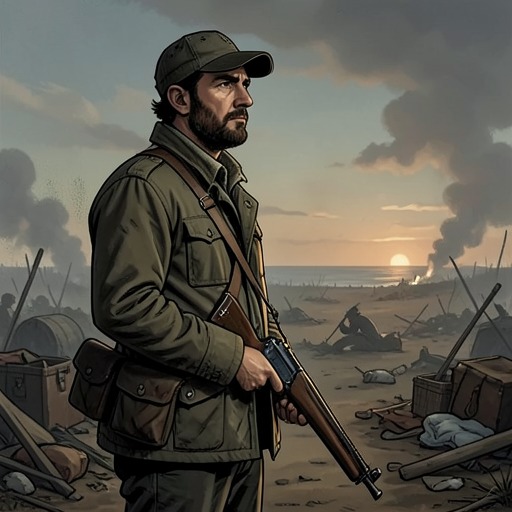
That boundary has particular force for Pyuika Riders, who are sworn to spend their lives for the glory of their comrades. If Van broke that vow by taking his own life, he believed he would instead be condemned to walk the Road of Constant Day. He had sometimes regarded that endless journey as a fitting fate, but the possibility that his family awaited him changed the meaning of the choice.
Van’s Grief and Decision
Van’s parents, grandparents, and elder brother had all died, while life without his wife and child had long seemed empty and meaningless. When he thought that he finally had a legitimate reason to make the last journey to them, he did not treat the afterlife as certain: the living had no way to know whether the Land of Eternal Spring existed. Even so, he chose to face death with his loved ones in mind, rather than risk causing them the pain of disappointment.
His conduct toward the dead women he encounters gives the belief a public, ritual form. Though overwhelmed and physically shaken, Van cannot ignore their corpses. He presses his palms together, closes his eyes, and prays that their souls will be welcomed in the Land of Eternal Spring. The brief prayer connects his private hope of reunion with compassion for strangers, making the afterlife more than an explanation for his own suffering.
Narrative Significance
The imagined destination and the Road of Constant Day offer opposing answers to grief: one promises reunion, while the other represents a lonely consequence for abandoning the Riders’ vow. Neither is confirmed as fact. Instead, uncertainty sharpens the belief’s influence: Van’s hope is enough to alter how he thinks about his own death and to prompt him to honor people whose fate he cannot know.
The phrase thus gathers together mourning, duty, and care. Van’s prayer does not resolve his loss or prove that the dead are received, but it shows how the possibility of a welcoming afterlife can sustain humane action amid despair.