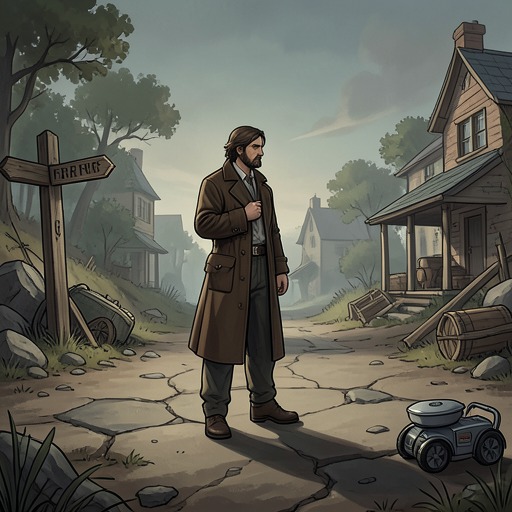
“The forest survives because we let some game get away”
The Deer King“The forest survives because we let some game get away” is a teaching attributed to the Kuleh that recasts limits on hunting as a condition of the forest’s continued life. In Mulyo’s account, restraint is not simply a loss of potential prey: letting some animals escape is part of how the forest survives.
Context and Meaning
Mulyo explains the saying during a conversation with Makokan about hunting customs that distinguish which kinds of game women and men may hunt. She notes that women often hunt alongside their husbands or brothers, so a division of hunting roles does not mean that no one catches anything. Makokan, however, points out that restricting game by gender must allow some prey to get away, and that hunters might catch more if both sexes pursued the same animals.
Mulyo accepts the practical force of his observation, then turns it toward a larger principle. She suggests that the gods may have taught her people to follow these customs precisely because they leave some game uncaught. The maxim links a concrete limit on hunting to the persistence of the environment that sustains it.
Transmission and Narrative Function
Mulyo recalls hearing the teaching from the Kuleh when she was young. The saying therefore appears as inherited knowledge, passed on through instruction rather than presented as a formal rule or abstract theory. Its authority in this exchange comes from a way of life that has made room for limits on what hunters may pursue.
Makokan’s response marks a change in his understanding: he admits that he had not considered women’s participation in hunting, and his reasoning about missed prey leads him toward the same ecological implication Mulyo describes. The exchange gives the maxim its force through conversation and reconsideration. A restriction that first looks inefficient can also be understood as leaving space for prey—and, in Mulyo’s formulation, for the forest itself—to endure.