Battle of the Caspian Sea
The Deer KingThe Battle of the Kashuna River was the final catastrophe of the Lone Antlers’ resistance to Zolian expansion: the Gansa warrior band was wiped out, while its commander, Van, survived alone among the dead and was captured. The battle closes the account of a campaign designed to win better terms for the mountain clans through resistance, but its aftermath leaves Van with no clear knowledge of what that struggle achieved for his people.
Background: Conquest and the Gansa Strategy
The battle belongs to the last stage of Zol’s conquest of Aquafa. The mountain clans of the Toga region had fought to protect Aquafa’s borders from incursions by the Kingdom of Mukonia, but they were not treated as Aquafaese under the new imperial order. Although they spoke the same language and had once maintained a measure of autonomy under the King of Aquafa, Zol refused to recognize them as citizens. The clans therefore faced a forced move from their homelands and an uncertain life elsewhere in the empire.
The Gansa elders hoped to change that outcome by making resistance useful to the conquerors. They planned to present the clans as formidable fighters who might, after a show of defiance, negotiate a place in the imperial frontier system. Their aim was to persuade Zol that the Gansa’s knowledge of the mountains and their ability to act as a buffer against Mukonia were worth more than relocating them. The Lone Antlers, a band of men who had given up ordinary lives to serve as the clan’s shield, made that strategy possible. Their ranks had grown as war and epidemics drove bereaved men to seek a place among them.
The Campaign and Its Defeat
For almost two years, Van and the Lone Antlers fought in the steep, rugged terrain of Toga. They used their swift pyuika to outmaneuver Zolian horsemen, emerging from forest shadows or descending cliffs without warning. Their attacks made the riders a source of fear for Zolian troops. The pressure was sufficient to make enemy commanders consider retreat and offer favorable terms for a truce to the tribal elders.
The negotiations did not end the Lone Antlers’ part in the plan. While the elders negotiated, the warriors continued to act as if they defied the elders and would fight to the death. Once they had fulfilled their mission, they fell. The Battle of the Kashuna River was the destruction of the band: Van later recalled the battlefield as the place where Zolian forces crushed him and his men, and the account of his capture identifies the riverbank battle as the point at which he was taken.
Van’s Survival and Capture
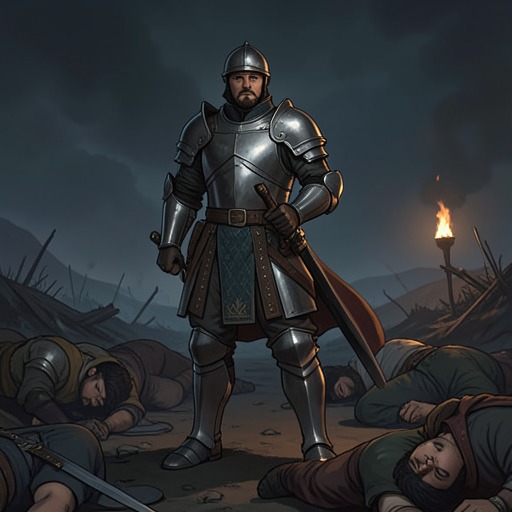
Van alone survived the battle. In the later recollection of the defeat, he is described as standing among a mound of bodies while the Lone Antlers were wiped out. Zolian commander Yotalu confirms the scale of the loss when he identifies Van as the band’s leader and recalls that he had been told Van stood like a dead tree amid the fallen. Yotalu also had personal cause to remember him: Van had killed two of his best commanders.
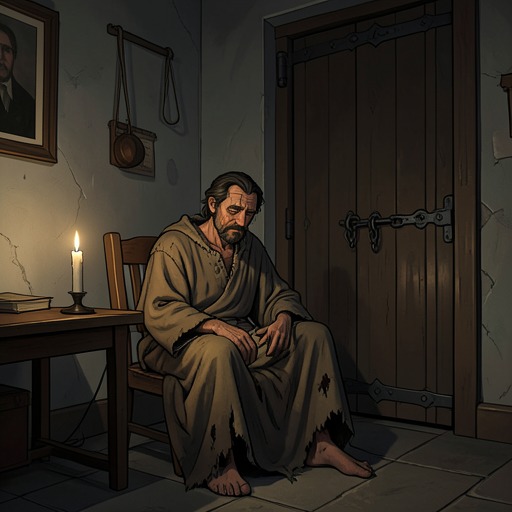
The battle left Van in enemy hands. Records examined by Yotalu state that he was seized during fighting on the banks of the Kashuna River; a damaged chain found later in the salt mine helps connect the prisoner once held there to the defeat. Yotalu recognizes him as Broken Antler Van, named for the missing left branch of the antlers on his helmet. The name that marks Van out as a leader thus also becomes a clue to his identity after the battle, long after his comrades have died.
Aftermath and Meaning
The Lone Antlers’ defeat was not simply the loss of a fighting band. Their sacrifice had been the military part of the elders’ attempt to secure a more acceptable settlement for the Gansa, and Van believes the elders would not have allowed their lives to be spent without extracting whatever advantage they could. Yet he does not know what became of his homeland. He also fears that returning would expose his people to capture and further suffering, since his guerrilla campaign had won him powerful enemies among the Zolians.
The battle’s significance is sharpened by the contrast between its intended ending and its actual survivor. The Lone Antlers were meant to give their lives as the clan’s shield; Van did not choose survival, and his escape from the battlefield does not restore the comrades he loved or tell him whether the Gansa gained the protection they sought. During waking hours he vividly remembers his men being cut down, but he does not dream of the Kashuna River battle. Instead, dreams return him to the first man he killed, a young Zolian officer whose face unsettled his earlier image of the enemy. The battle therefore stands both as the end of the Lone Antlers and as a wound Van carries into the life that follows: he survives the destruction of his band, but cannot simply return to the world for which they fought.