Inner Circle
The Deer KingThe Inner Circle is an elite institution whose authority is expressed both through strict control over access and through an investigative reach extending beyond the academy. When Hohsalle and Tomasolle bring their inquiry into a possible link between the attacks and the surviving escaped slave, they enter a world whose hidden leadership is more consequential than its formal appearances suggest: Cheehana Okiraul commands its servants from behind the scenes and helps assess the political danger surrounding the investigation.
Place and Access
The Inner Circle’s house is marked by black flagstones at its entrance, which remain safe to walk on even when wet with snow. Makokan hands his umbrella to the doorman and receives several pairs of indoor slippers in exchange, distributing them to the visitors before they remove their boots. This small, regulated passage from the winter road into the house introduces an institution attentive to form and procedure.
The nearly hundred-year-old building is not dark inside: lanterns fitted with reflectors illuminate its high-ceilinged entrance. A broad hallway runs ahead between gently curving staircases. Hohsalle knows the stairs, but Makokan, who has never visited the second floor, appears nervous there. Upstairs, the setting changes markedly: a carpet embroidered with spring flowers glows in ceiling light, and its plush weave muffles the visitors’ footsteps as they approach the room at the corridor’s end. The contrast between snow, cold, and the meadow-colored interior gives their arrival a controlled threshold quality without obscuring the house’s practical hierarchy.
Leadership and Hierarchy
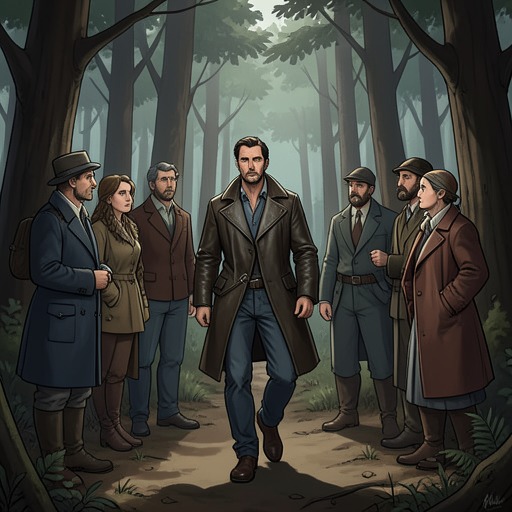
The visitors meet Director Rotoman Okiraul and Lady Cheehana Okiraul together in a spacious room warmed by aromatic wood burning in the fireplace. Hohsalle and Tomasolle bow deeply to the director, then bow again to Cheehana, who answers with a gracious inclination of her head. The forms of greeting acknowledge both figures, but the balance of authority is not obvious to an uninformed visitor.
Hohsalle notices Makokan tense at the sight of Cheehana. Lower-ranking people are not permitted an audience with her, and most do not even know that the person directing the Inner Circle is a woman. The director’s title and visible presence therefore conceal an arrangement in which Cheehana runs the academy from behind the scenes and commands the Servants of the Inner Circle. Her authority is real, but deliberately less visible than the formal office through which visitors are received.
Investigation and Institutional Reach
The Inner Circle’s role in the crisis is evident in Cheehana’s response to Hohsalle’s reports. After receiving his first report, its leadership immediately sent someone to the Toga Mountains to investigate. That inquiry did not uncover clear signs of a coordinated plan: the Gansa and neighboring clans were shrewd and remained on their guard. Cheehana’s account makes the limits of the effort explicit. Watching every stretch of mountain and forest is impossible, while a sustained program of training dogs or wolves to attack should, she reasons, have changed a group’s behavior enough to leave signs.
When Makokan is asked to recount what happened, he describes the pursuit after the mine attack and the fate of Sae. The account gives Cheehana and the director a concrete basis for reconsidering the attacks. The beasts had struck from a cliff, an approach the director finds unnatural. If that assault was deliberate, someone may be trying to prevent the investigators from finding the escaped Gansa slave—the sole man to survive the disease. The possibility connects the attack on the falcon hunt with the massacre in the salt mine, raising the prospect that both were premeditated rather than random animal violence.
Political Stakes
The director does not treat suspicion of the Gansa as a purely local matter. The Toga Mountains form the last barrier against invasion from Mukonia, and many Zolian troops are stationed there. From Governor Ohan’s perspective, rebellion beginning in that region would be especially dangerous; he has warned the King of Aquafa outright. Cheehana’s caution about the clans’ guarded behavior and the time required to train attacking animals thus meets the director’s alarm about what an organized attack could mean politically.
The Inner Circle is consequently shown not just as an academy’s hidden command structure but as an investigative authority operating where medicine, security, and imperial politics meet. Its inquiry starts with evidence about disease and animal attacks, yet the possibility that a sole survivor is being deliberately kept out of reach turns that evidence into a question of conspiracy. The institution’s secrecy shapes who can approach its leadership; its reach brings reports from distant regions into a room where their implications can be assessed.