Izam
The Deer KingIzam, the eldest son of the falconer Mazai, is a slender young man whose injury and sudden illness draw Hohsalle and Limuelle into a medical emergency. Though he appears only briefly, his place in the ruling family and his vulnerable condition bring the story’s courtly world and its dangerous uncertainty about disease into close proximity.
Identity and Family
Izam is Mazai’s eldest son and is two years older than Olimu, the son of Yotalu. At the royal hunt, Izam and Olimu stand beside Mazai. Their closeness unsettles Makokan: Izam is the royal offspring of a conquered country, while Olimu is the son of the conquerors. Olimu is not yet old enough to take part in the hunt and has likely been placed with his uncle to learn falconry, but the boys’ position together remains politically charged.
Injury and Medical Crisis
When Mazai enters the king’s room with Izam, the boy’s bandaged ankle is visible. He is already as tall as his father, though still slender. Hohsalle has been discussing how diseases can remain harmless for ages and then suddenly become enemies; Mazai and Izam arrive just as that warning gives way to an immediate case of illness. Hohsalle examines Mazai’s wound, but Izam’s condition soon demands the physicians’ attention.
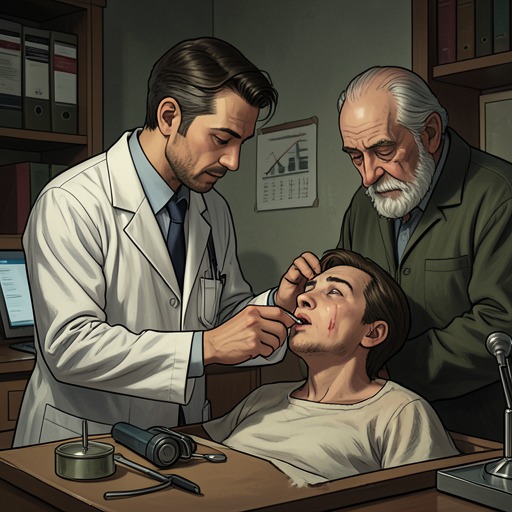
Limuelle examines Izam by candlelight, gently raising his eyelids to inspect his pupils, and asks whether he has begun convulsing. Hohsalle says he has not. Limuelle then proposes injecting Kokalu, a suggestion that visibly startles Hohsalle and prompts a small exclamation from Milalle. Izam’s grave state is thus marked through the careful examination of his eyes and the urgency of a proposed treatment, rather than through any account of his own words or actions.
Narrative Significance
Izam’s brief appearances link the falcon hunt’s display of noble skill and inherited political divisions with the precarious work of medicine. His presence beside Olimu makes conquest visible in a family arrangement; his illness then brings that privileged household into the same uncertainty about disease that Hohsalle has just described. The available scenes establish the seriousness of Izam’s condition and the physicians’ response, but do not disclose his eventual outcome.