Jikalu Wood Treatment Breakthrough
The Deer KingThe Jikalu Wood Treatment Breakthrough is the experimental use of sedation and anti-mittsual medicine to treat Black Wolf Fever, a turning point in the clinic’s effort to keep patients alive through the disease’s dangerous convulsions. Its promise lies not in a guaranteed cure but in a change of course: instead of allowing fatal symptoms to overtake patients, Limuelle, Hohsalle, and Milalle try to suppress those symptoms while the body fights the infection.
Background and Medical Reasoning
In the Zolian Pure Heart Creed, physicians served as priests, and medicine was expected to follow divine teaching. If priest-doctors judged an illness incurable, the accepted practice was to leave the patient in the hands of the god and offer only medicines that would allow a peaceful death. The treatment developed at Jikalu Wood represents a different account of disease and a different obligation to the sick: illness can be investigated, its agents resisted, and treatment attempted even when its outcome is uncertain.
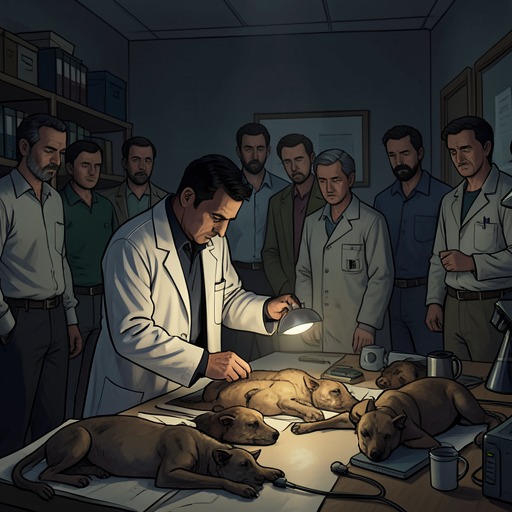
That investigation begins with the bodies of the mine workers. Hohsalle identifies dog-bite marks and rashes across the corpses, evidence that the deaths were not caused by poisoned food. He explains that Black Wolf Fever can be transmitted by wolves and wild mountain dogs called ossam, and can spread even more dangerously through fleas or ticks that have bitten infected animals or people. In frost, fleas are mostly dormant, though they can survive through winter in warm places, including a dog’s body or near a hearth. These observations connect the visible evidence on the dead to a possible route of transmission.
The treatment strategy also rests on an emerging account of immunity. Milalle describes infected bodies as possible sources of disease agents that might be weakened to create resistance, substances that suppress or eliminate the illness, or antibodies that could be used to make a serum. Hohsalle explains the idea through the body’s internal defenders: like soldiers who must learn to recognize an enemy and acquire weapons to fight it, the body needs to be prepared to identify a specific disease. Limuelle, Hohsalle’s grandfather, had discovered that weakened disease agents could teach that recognition. The new remedy therefore belongs to a larger program of learning how illness works, rather than a single attempt to mask its symptoms.
Sedation and the Trial in Izam
Milalle’s immediate reasoning draws on a prior case. A few years earlier, Limuelle had treated a young girl with rabies—the only successful case known—by using bossa, which had the same effect as Kokalu. By rendering the patient unconscious, he suppressed convulsions and stopped the brain’s commands from driving the body into them. At Jikalu Wood, Milalle believes a similar method might restrain Black Wolf Fever’s tremors, which had stopped patients from breathing, and give their bodies time to combat the disease agents.
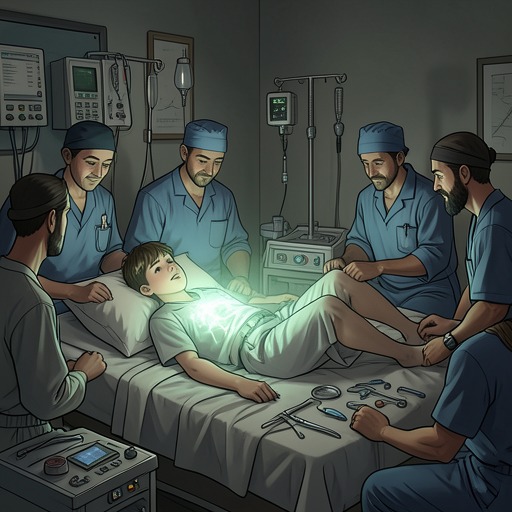
Kokalu is useful precisely because it acts quickly without interfering with respiration, but it is powerful enough that a patient might never wake. Its use is therefore a risk, not a routine intervention. Once Limuelle administers it to Izam, the boy falls into a coma; his breathing is shallow, but it continues. That continued breathing establishes the immediate condition the treatment is trying to preserve.
Hohsalle reports that the new drugs had so far suppressed symptoms for only about a day and had not saved any of the patients treated previously. When Limuelle asks about supplies, Hohsalle says Milalle has prepared plenty of the anti-mittsual drug. Limuelle tells him to keep giving it to Izam. The plan, as Makokan understands it, is to inject the anti-mittsual drug while the boy is sedated, giving him strength to fight the illness without being overcome by the convulsions.
The treatment remains a gamble: Izam’s slight body may not withstand the battle. But he does not succumb to convulsions during the night. With Limuelle taking responsibility for his care, Hohsalle and Milalle can finally return to their beds and rest. The immediate result is modest but decisive: the boy survives the night without the symptom that had proved fatal to the other patients.
Testing the Medicine and Its Risks
The experimental remedy is tested beyond Izam. After Yotalu approves the next step, Limuelle gathers supplies in case Sulumina has an allergic reaction and returns to the room where she and Olimu are staying. Although Sulumina has asked to be injected first, the sight of the syringe makes her tense; Olimu also looks close to tears. Limuelle reassures the boy by appealing to his descent from a Zolian commander and the King of Aquafa, framing his brief endurance as a small test of courage. He injects the carefully measured serum into Olimu’s arm.
Olimu shows no signs of an allergic reaction. The injection site swells more than Mazai’s, but the swelling does not develop into pronounced symptoms. Sulumina, by contrast, changes color soon after receiving the new medicine. The different responses make clear that the same treatment does not produce the same reaction in every patient, and that the team must remain alert to possible complications.
Mazai develops a rash that Hohsalle identifies as probably a drug rash and a likely allergic reaction. His loss of consciousness is the greater concern. That night he has convulsions, but they are less severe than those suffered by the other patients, end quickly, and never become life-threatening. The treatment has not made the reactions disappear; it has changed their course and severity.
The next morning, Olimu and Sulumina also lapse into a stupor and then convulse. Again, the episodes are not critical. After they subside, both fall into a long, deep sleep and wake about half a day later, disoriented, as if returning from a distant journey. Milalle tells them they will be fine and pats Olimu’s shoulder, unable to contain her joy. He looks embarrassed and cannot put what he wants to say into words. When she asks whether he had strange dreams, he nods. Their recovery gives the trial a human measure: not merely a change in symptoms, but patients waking after an alarming interval and being told they are safe.
Significance and Limits
The breakthrough depends on several kinds of evidence being brought together: bite marks and rashes on the dead, knowledge of animals and parasites that transmit the disease, a prior successful use of sedation against rabies, and an explanation of how the body might be trained to resist infection. The approach does not erase the dangers. Kokalu may prevent breathing-threatening convulsions but can leave a patient unable to wake; the new medicine can provoke allergic reactions, and patients still experience stupor and convulsions. What changes is that those reactions prove noncritical in the cases described, while Izam survives a night without convulsions.
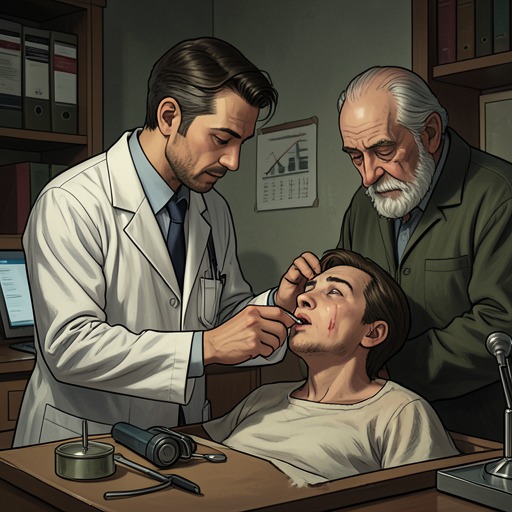
The clinic’s work also brings competing ideas of healing into focus. Mana, a priest-doctor of the Pure Heart Creed, declines Hohsalle’s offer to show him the tiny organisms that cause disease. He considers direct observation of the patients sufficient: what matters, in his view, is recognizing defilement through the body and removing the obstacles it creates, not identifying the particular organism. He intends to devote himself to studying the human form and helping the sick live good lives. The contrast is not simply between concern and indifference: Mana remains committed to care, but understands its object and method differently from Hohsalle and Limuelle. Against the older practice of accepting an incurable diagnosis, the treatment at Jikalu Wood makes experimentation itself part of care—while leaving its uncertainty visible in every patient’s reaction.