Kangsa tribe
The Deer KingThe Gansa clan is a people of the Toga Mountains whose fate was shaped by a gap between cultural belonging and imperial citizenship: although they spoke Aquafa’s language and had defended its borders, the Zolian Empire did not recognize them as Aquafaese. Faced with conquest and the prospect of forced relocation, the clan’s elders turned to a strategy of feigned resistance, relying on the Lone Antlers and the Gansa’s knowledge of their homeland to make continued residence seem useful to the empire.
Identity and Political Status
The Gansa lived in the mountainous Toga region on Aquafa’s western edge, a frontier long exposed to incursions from the Kingdom of Mukonia. Under the King of Aquafa, the mountain clans had been treated as independent communities, allowed loose autonomy in their affairs in exchange for allegiance. Aquafa’s later accommodation with Zol secured ordinary-citizen status for its people, but that arrangement did not extend to the Gansa and other clans scattered through the mountains. Shared language and a history of defending Aquafa’s borders did not make them citizens in the new regime.
That distinction carried material consequences. Zolian policy relocated people placed in lower castes to other conquered territories. Without ordinary-citizen status, the Gansa faced removal from their homeland and an uncertain livelihood elsewhere. Their predicament arose not simply from military defeat but from the empire’s classification of populations: incorporation into Aquafa did not guarantee equal inclusion for communities whose former political relationship to the kingdom had been autonomous.
Conquest and the Lone Antlers
After establishing a stable government in central Aquafa, the Zolians turned to the remaining task of subjugating Toga. The King of Aquafa sent messengers to the clans to offer negotiations, but as ruler of a land reduced to an imperial province, he could only seek to spare their lives. He could not determine their standing under Zolian rule or guarantee that they would remain in their territory.
The elders of the Gansa therefore chose to present resistance as a means of negotiation. They hoped that a determined show of strength would demonstrate that the clan would be difficult to defeat but could become a useful ally. If Zol recognized the Gansa’s command of the mountain terrain and their potential to guard the new western frontier against Mukonia, the clan might be allowed to remain. This was a calculated attempt to turn military usefulness into a claim to place.
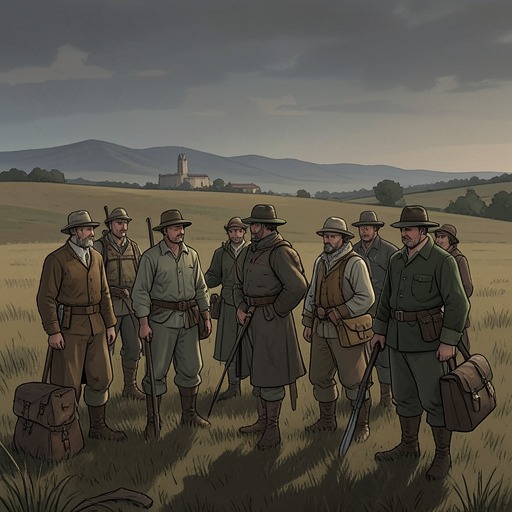
The Lone Antlers made that strategy possible. The band consisted of men who had been deprived of ordinary lives and who swore to serve as the Gansa’s shield, giving their lives if needed to protect the clan. Its origins were described as ancient, reaching back to the time the gods first appeared in the form of pyuika, or flying deer. Members were exempt from the rules binding the rest of the Gansa so long as they upheld this protective vow; outsiders fleeing calamity could also be welcomed as clansmen by joining. The elders could contemplate resistance because this standing body of warriors already existed.
The mountain frontier’s history of war and disease helped swell the band. Incursions brought epidemics as well as conflict, and repeated outbreaks over several decades had devastated some communities. Men who had lost families to war or illness came to the Gansa and joined the Lone Antlers, whose ranks grew to unprecedented numbers. When the elders approached Van, its leader, with their proposal, he and his men accepted eagerly, each carrying sorrow and despair of his own.
Warfare and Reputation
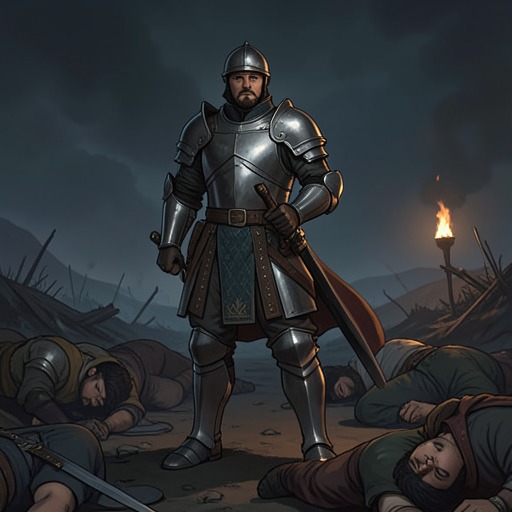
The Gansa’s resistance became closely associated with its pyuika riders and the Lone Antlers’ unpredictable attacks. Zolian accounts remembered the clan as small but difficult to subdue. Its warriors attacked not only in the mountains they knew intimately but also at imperial fortresses in forests and on plains, where their speed and tactical cunning unsettled the occupying forces.
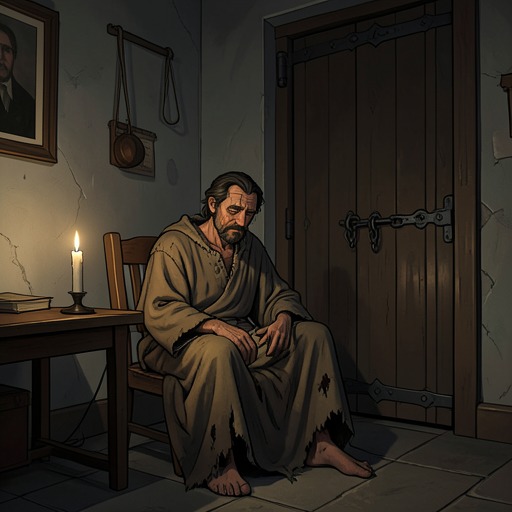
The campaign’s reach extended beyond the clan’s homeland: Van was captured at the Kashuna River. A damaged chain identified by Zolian officials was recognized as the restraint used on him, leading Yotalu to identify the prisoner as Broken Antler Van, leader of the Lone Antlers. The recognition turned a physical remnant into evidence of the struggle between the frontier warriors and the empire, and made the Gansa’s resistance legible to officials who had not themselves served in the western campaign.
Livelihood and Local Knowledge
The clan’s identity also rests on practical knowledge of pyuika, animals that could not be managed like ordinary livestock. They were more affectionate than people unfamiliar with them expected: once bonded, they remembered human companions and became lonely when separated. Their habits varied with season. In autumn, a doe could wander in search of a mate; during the mating and calving seasons, her care required attention to behavior and food as well as freedom of movement.
Gansa herders used mohoki, a lichen from old trees, to guide pyuika without relying only on fences. The animals avoided it, so dried mohoki braided into ropes could help keep them within a corral; placed along familiar routes, it could also influence where they traveled. Enclosure was a poor substitute for roaming, however: pyuika might leap a fence or decline if penned too tightly. Their wider herds had no sharply defined unit beyond a doe and her fawns, while personal bonds—formed when an animal was young—could last throughout its life. Gansa children learned by accompanying adults into the forest and observing the animals, acquiring the ability to select and train pyuika through experience passed down over generations.
That knowledge later proved useful beyond the clan’s original territory. Van persuaded a struggling herding family to let pyuika roam freely in spring rather than restraining them, explaining that the animals were wilder than reindeer and resisted livestock-like confinement. The key was to accustom them to people early and nurture individual bonds; although wild adults would not become accustomed to humans, connections formed from birth could endure. Their comparatively narrow range and habitual paths also made their movements more predictable to those who knew their habits.
The knowledge had economic stakes for families trying to combine pyuika with reindeer herding. Reindeer needed summer pasture where sea winds dispersed biting insects, while the seasonal migration coincided with the pyuika calving period. A household that had previously tied pyuika and led them after the migrating reindeer may have disrupted their breeding. Van’s advice, and the decision to keep some family members with the animals while others moved the reindeer, showed how local animal knowledge could shape the prospects of households far from Toga.
Displacement, Migration, and Significance
The Gansa’s exclusion from ordinary citizenship belongs to a wider system of frontier settlement. Poor farmers and herders from the edges of the Zolian realm were ordered to settle newly conquered areas, build Zolian-style communities, raise preferred crops and livestock, and mingle with local people. They functioned as an unarmed vanguard, helping transform conquered territory into an imperial landscape. Lower taxes and ownership of cleared farmland could benefit settlers, but the policy also separated many from their homelands, and the grief of being unable to return remained part of their experience.
Tax administration made these frontier populations visible to the state as well as movable. Zolian collection officers gathered information about nomadic communities in outlying places such as Oki Valley and the Toga Mountains, recording local groups and the numbers and ages of their members. Some people could hide in the woods during visits, but officials believed the records were sufficiently accurate to help locate Van. The same capacity to enumerate scattered populations that supported administration could thus serve the search for a former enemy.
Across these accounts, the Gansa appear not only as a military opponent but as a community whose survival depended on maintaining a homeland, negotiating an imposed status, and transmitting ecological knowledge. The Lone Antlers gave the elders a way to resist without abandoning the hope of accommodation; pyuika husbandry expressed a different form of continuity, grounded in observation, restraint, and bonds cultivated over time. Both responses answer the same pressure: how to preserve a life and a place when an empire claims the authority to classify, relocate, and remake their inhabitants.