Kiya
The Deer KingKiya, Tohma’s mother and a Zolian who emigrated to Oki, is a link between displaced frontier settlers and the reindeer-herding families among whom she makes her home. Her history explains why she belongs to both communities without erasing the strain of that position, while her care for Yuna and support for her household give this history a practical, intimate presence in the story.
Identity and Background
Kiya came from a reindeer-herding family on the northern outskirts of Zol. As a young girl, she emigrated with her relatives after many Zolians had been compelled to leave the region and resettle. Disease and accidents gradually took members of her family, leaving the survivors struggling to maintain themselves far from their original home.
This family history belongs to a larger imperial policy of frontier settlement. Poor farmers and herders from the edges of the Zolian realm were moved into newly conquered territories to establish Zolian-style communities: raising familiar crops and livestock, building towns, and settling among conquered populations. Their work helped turn frontier territory into a more thoroughly Zolian land. Settlers could gain lower taxes and ownership of cleared farmland, but those advantages did not undo the loss involved in being unable to return home. Kiya’s own account of migration is part of this broader pattern, in which imperial expansion relied not only on armies but also on displaced families.
Family and Life in Oki
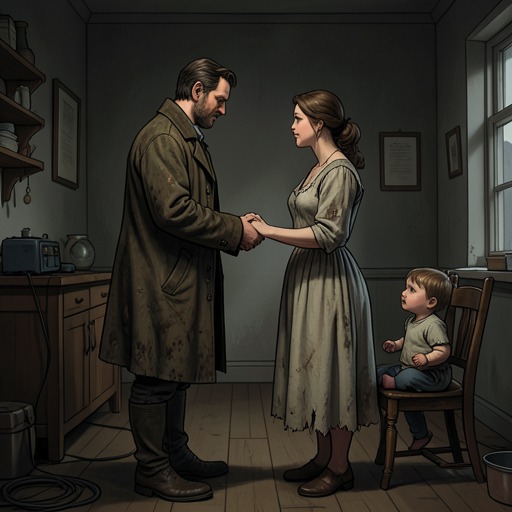
Ohma’s family came to Kiya’s relatives’ aid. Mutual assistance was familiar in both households’ cultures, and the families grew close; Kiya’s attachment to Ohma developed within that relationship. Her relatives continued to live nearby and the families still helped one another, though neither household was prosperous. Kiya eventually became Ohma’s wife and Tohma’s mother, making her Zolian background part of the northern family’s daily life rather than a distant history.
When Van reaches the family’s small settlement, Kiya appears at home among the northern people. The settlement consists of three tents within a stone windbreak. Van recognizes that she is Zolian, but her ease in this setting makes him think she must have lived there for a long time. Her apparent rootedness contrasts with her family’s beginnings as emigrants and with the continuing hardship shared by the households.
The family’s poverty is not simply a matter of having little food. They need at least twenty reindeer to support one family, and they must pay a head tax on every animal. The tax is lighter for those with Zolian ancestry, which applies to Kiya and Tohma, but that limited distinction does little to relieve the household’s pressure. Ohma has tried raising pyuika because they are taxed less heavily than reindeer, but the family lacks the knowledge to breed them successfully. Kiya’s household therefore lives at the intersection of two systems: the local demands of subsistence herding and the imperial classifications that determine taxes and settlement.
Work, Kinship, and Community
When the family confronts the difficulty of moving reindeer to summer pasture at the same time that pyuika are due to give birth, Tohma proposes seeking help from neighboring families. Kiya’s relatives and more distant kin respond enthusiastically. They too have been struggling to breed pyuika and are keen to learn from Van, who has experience with the animals. The families agree that Kiya’s nephews Mino, Chida, and Moki will stay with Van and Tohma to learn pyuika husbandry while the others take the reindeer to their regular summer pasture.
Kiya offers to stay behind to care for Yuna. Her decision enables the other relatives to undertake the seasonal herding arrangement while ensuring that the child has someone to look after her. The episode shows family assistance as practical cooperation: knowledge, labor, and care are distributed across households rather than treated as private responsibilities. It also places Kiya’s kinship network at the center of the family’s attempt to find a more sustainable livelihood.
The Attack and Protection of Yuna
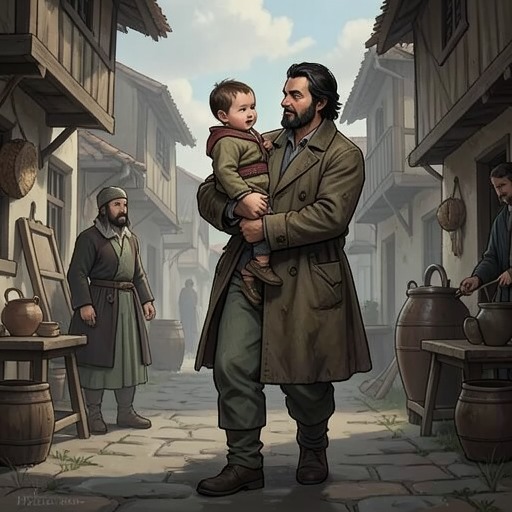
During a later attack, Kiya acts to protect Yuna. When the animals race toward the family’s tent, Yuna tumbles out and Kiya runs after her, bending to catch her. In the confusion, she manages to grab Yuna as the child heads toward the corral. Tohma sees his mother bend over the girl and hold her close while danger approaches, then runs toward them himself.
Van intervenes and drives the attackers away from Kiya and Yuna. The scene gives Kiya no speech or extended account of her thoughts; her role is conveyed through her movement toward the child and her effort to shield her. In a story that has traced how migration and imperial rule place ordinary families under pressure, her protection of Yuna brings the scale back to the household: survival depends not only on policy, herding, and shared resources, but also on immediate acts of care.