Lone Antlers
The Deer KingThe Lone Antlers are the Gansa’s death-bound warrior band: men with no ordinary lives left who served as their clan’s shield, and whose nearly two-year guerrilla war helped force Zolian commanders to offer the elders a truce. The band’s defeat was part of a calculated resistance strategy, but its members’ willingness to die also grew from private grief. For Van, who led them, that contradiction persisted after the fighting ended: he had set out expecting death, survived instead, and later heard his lost comrades’ song as a call to protect a child.
Identity and Place in Gansa Society
The Lone Antlers were an ancient Gansa institution, said to date to the time the gods first appeared as pyuika, or flying deer. Its members were men who had been deprived, for one reason or another, of ordinary lives. In exchange for pledging themselves as the Gansa’s shield—even at the cost of their lives—they were exempt from the rules binding the rest of the clan. Outsiders escaping calamity in their own lands could join and be accepted as clansmen. The band’s unusual place within the community made it possible for Gansa elders to contemplate resistance without committing the whole clan to an open war.
The band’s ranks had grown as successive epidemics and warfare devastated communities in the Toga Mountains. Men who had lost families to invasion or disease sought out the Gansa and joined the Lone Antlers; by the time of the Zolian campaign, the band had swelled to unprecedented numbers. Its members shared a history of loss, but that did not make their service merely personal: their vow made them a shield for the clan, turning individual despair into a collective military role.
Resistance to Zolian Annexation
The Zolians turned to the subjugation of Toga after securing a stable government in central Aquafa. The former King of Aquafa had offered the clans negotiations over allegiance and safety, but as a ruler of a province he could only try to spare their lives; he had no authority over their status. Zolian frontier policy threatened lower-caste clans with relocation if they did not receive ordinary citizen status, forcing them from their homelands into unfamiliar places. The Gansa elders therefore chose to feign resistance: they hoped to demonstrate both that the clan could not be easily beaten and that its mountain knowledge would make it a useful buffer against Mukonia. If the Zolians accepted the Gansa as an ally guarding the empire’s western flank, the clan might be allowed to remain.
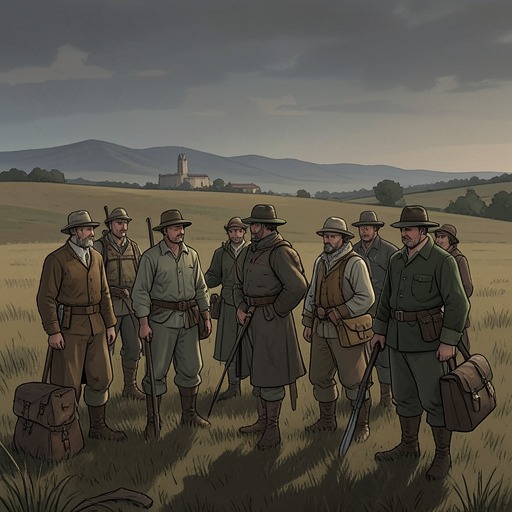
Van and his men accepted the elders’ mission eagerly. For nearly two years they drew Zolian forces into Toga’s steep mountains and forests, striking from the shadows of trees or descending sheer cliffs on fast, agile pyuika. Their mobility let them outmaneuver horse and rider in country the Gansa knew intimately. Yet the Lone Antlers did not confine themselves to that home terrain: Zolian officers later recalled surprise assaults on forest fortresses and attacks across the plains as well as in the mountains. The band’s reach and unpredictability helped earn it a reputation among its enemies as both fanatical and cunning.
The campaign’s purpose was not simply to win battles. The Pyuika Riders inflicted enough trouble to make Zolian commanders consider retreat and offer the tribal elders favorable terms for a truce. While negotiations proceeded, the Lone Antlers continued to act as though they defied the elders, fighting to the death. Once their part in the strategy was fulfilled, the band fell. The elders’ plan used the warriors’ expected defeat to create leverage for the clan, while the warriors’ apparent refusal to submit concealed the negotiation that their resistance had made possible.
Van and the Meaning of the Vow
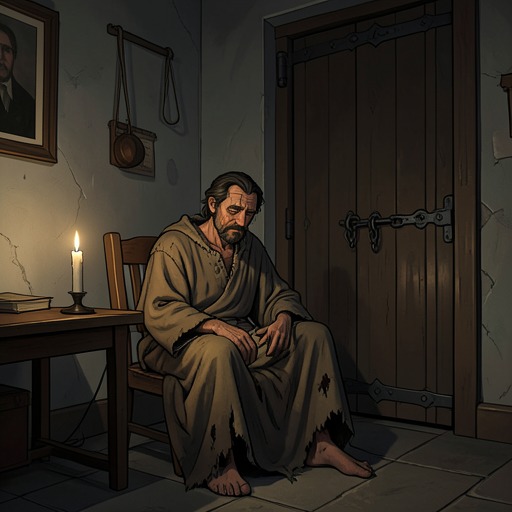
Van’s participation carried an intimate motive alongside the elders’ political objective. His parents, grandparents, and elder brother had died, and life without his wife and child had come to feel empty and meaningless. He thought that the mission gave him a legitimate reason to make a final journey to his family. In the Gansa belief he considered, those who died from illness, accident, or old age were welcomed into the Land of Eternal Spring, where his loved ones might be waiting. A person in his prime who yielded to sorrow and took his own life, by contrast, would be denied that welcome; a Pyuika Rider who broke his vow would be condemned to walk the Road of Constant Day.
Van had sometimes imagined that endless road as a fitting fate, wandering with his long shadow behind him. But the possibility that his wife and son might truly be waiting changed how he regarded his death: he did not want to disappoint them. He could not know whether the promised afterlife existed, but since he expected to die in battle, he chose to meet that death with his thoughts turned toward them. His commitment thus joined military obligation to grief and hope, without resolving the uncertainty on which that hope depended.
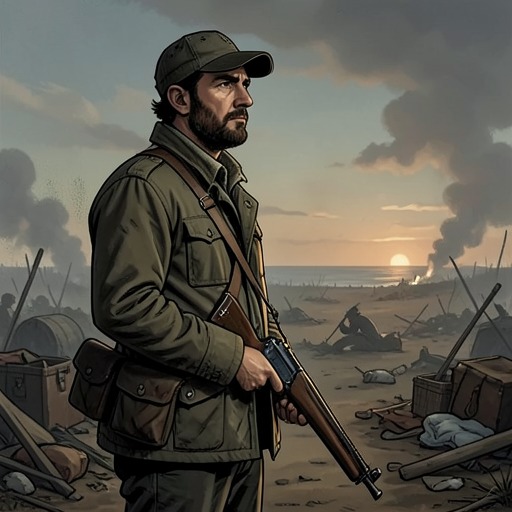
After the campaign, Van believed the elders would not have let the Lone Antlers’ lives be wasted and assumed they had gained whatever advantage they could. He nevertheless worried about what had become of his homeland. The guerrilla war had also won him enemies among the Zolians, so returning risked capture and further suffering for his people—an outcome he wished to avoid. His survival made the vow more complicated rather than erasing its cost: he was left to carry the dead band’s history while remaining separated from home.
The Fallen Comrades’ Return
Much later, Van’s former life as the Lone Antlers’ leader returned not as a military title but as a sharpened instinct. When he felt watched in the forest, the unease recalled his wartime sense that an enemy was near, waiting to ambush. He recognized the danger of dismissing intuition: in his experience, the subconscious could register a threat before conscious thought did. The old alertness—and the confidence that had come when he resolved to face attackers—stirred again, sending him toward the trees to look for a trace.
That protective role becomes especially vivid when Van enters a dark tunnel where poisoned-fanged Rochai move over the stone floor. Alone, with a hatchet in one hand and a hunting knife in the other, he adopts a fighting stance. He then hears the voices of the Lone Antlers, comrades who have died, singing from a place beyond the immediate scene. Their song remembers men who had neither children nor parents of their own, who had lost everything and nevertheless sang with their hearts fixed on those depending on them for protection. In Van’s mind, Yuna lies asleep, her cheek shining and her thumb in her mouth. The song’s image of the warrior shielding a young life gives his old vow a new, living object: the men who expected to die for their comrades return in memory as protectors, and Van’s survival allows that act of protection to continue.
The Lone Antlers therefore stand at the intersection of political strategy and intimate bereavement. Their elders used the band’s resistance to bargain for the Gansa’s future; its members entered battle burdened by losses that made death seem welcome. Yet the comrades’ remembered song does not end in death-seeking. When it comes back to Van in danger, its emphasis is on the life behind the shield. The band’s legacy is carried forward not only in the fear it inspired among Zolian troops, but in the obligation its fallen members left with the survivor who had once expected to join them.