Milalle
The Deer KingMilalle is Hohsalle’s assistant, partner, and an accomplished medical researcher whose work becomes especially important when mittsual reappears. She combines intimate knowledge of Hohsalle’s needs with independent judgment: she can insist that he rest, challenge his decisions, and contribute ideas that shape the investigation and treatment of the disease.
Identity and Work
Milalle is an Otawalle woman of common birth, three years older than Hohsalle, who belongs to the Sacred. The great difference between their social ranks does not govern their daily relationship. Milalle speaks her mind when she thinks deference would get in the way, and Hohsalle appears at ease with her in a way he is not with others. She is described as his assistant and bedmate of many years, as well as his partner in medical work.
Her professional standing rests on sustained study, not merely proximity to Hohsalle. She has studied lichens for many years, and the anti-mittsual drug made from ashimi extract is identified as her achievement. Her knowledge later informs the search for reasons some people may resist the illness, connecting a specific medicinal discovery to a broader line of inquiry about ecology and diet.
Care and Partnership
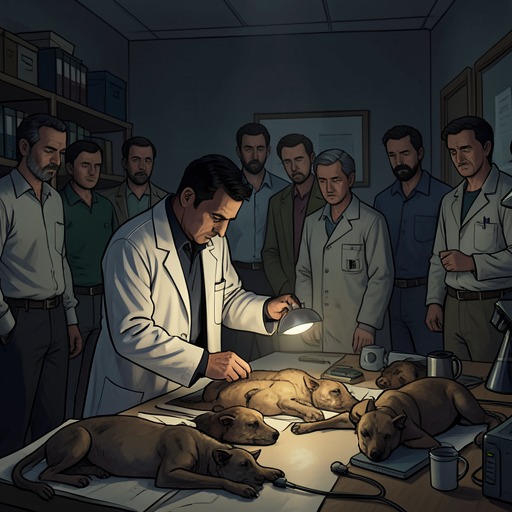
Milalle’s care for Hohsalle is practical and attentive. After a demanding journey to the salt mine and a return to Yotalu’s hall, Hohsalle went straight back to his clinic in Kazan rather than accept an invitation to rest. The corpses brought back from the mine awaited examination, and Milalle had already begun working on them with other aides. Yet when Hohsalle tried to go directly to the building where they had been delivered, she took him by the elbow and led him to the dining hall, where she had kept meat-and-onion stew warm over the hearth.
Makokan observes the effect of that intervention: as Hohsalle eats and drinks honey-sweetened tea, color returns to his face. The episode makes visible a relationship that is both intimate and functional. Milalle is not simply present beside a driven physician; she recognizes when his work is pushing him past his limits and acts to keep him able to continue. Her cheerful patience, likened to that of an older sister, coexists with the freedom to scold him. Their ease together appears precisely in this absence of required ceremony.
Their shared urgency over the returned mittsual also sets them apart from Makokan, who cannot initially follow their excitement. Milalle explains that disease, like a ghost, is frightening while it remains difficult to grasp; identifying it makes investigation and treatment possible. The recovered bodies, she says, are like treasure chests that might contain as many as three kinds of medical value. Her explanation turns the prospect of examining victims into a research opportunity, while making clear that her excitement arises from the possibility of understanding an illness that has been absent for two hundred and fifty years.
Research and Treatment
Milalle describes three potential paths from the infected bodies. Researchers might identify the agents that cause mittsual and weaken or kill them to produce a less potent infection capable of building resistance. They might isolate the agents and find substances that suppress or eliminate the disease, yielding an anti-mittsual drug. They might also identify antibodies formed in victims’ bodies and use them to develop a serum for people already infected. These are possibilities she sets out for Makokan, not results already achieved; her explanation shows how she frames the investigation as a search for several distinct kinds of treatment.
When patients bitten by infected beasts begin receiving care, Milalle anticipates that further cases may need to be gathered at an isolated infirmary. Hohsalle worries that this will make an already heavy workload worse, since they cannot be in two places at once. Doctors and nurses have been summoned from the Sacred Territory, but until they arrive Hohsalle’s apprentices must follow detailed instructions about daily examinations, meals, and morning routines. Milalle’s relief at having a place to gather patients reflects both the practical demands of the outbreak and her awareness that the clinic cannot shoulder every aspect of care alone.
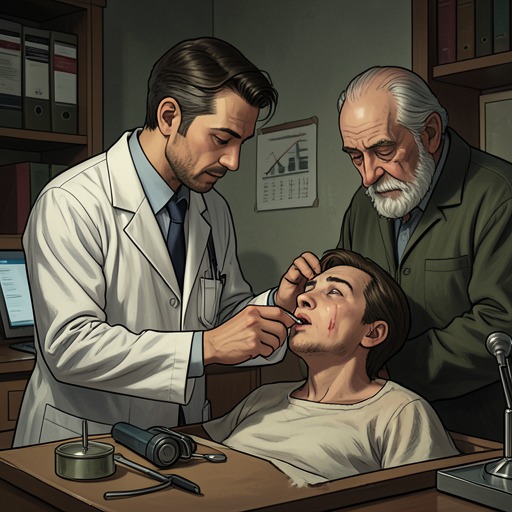
The sixth day after the royal hunt brings a change in the patients’ condition: a Zolian falconer develops a rash. Milalle and Hohsalle had been expecting this development. When Hohsalle heads to the patient, she takes a wooden box from a shelf and follows. She refuses Makokan’s offer to carry it, explaining that it is light but must be transported in a special way. Her pale expression and firm response show that she understands the significance of the moment and that preparations have already been made.
After Hohsalle judges that the attacking beasts may have carried black wolf fever, Milalle urges that all the patients receive the new drugs before a rash appears. The illness, she warns, can turn acute very rapidly; she fears that treatment may already be late and that giving it immediately after the bites might have produced a different result. Hohsalle agrees to administer the weakened version and the anti-mittsual drug to everyone, but restricts the serum to Zolian patients. Milalle’s recommendation and Hohsalle’s decision are distinct: she argues for prompt broad treatment, while the final allocation of the serum is made by him.
Later Findings and Significance
In a later discussion of the anti-mittsual drug, Hohsalle says it appears partially effective, although its precise effect has not yet been established. He credits Milalle with making it from ashimi extract and notes her long study of lichens. The director responds that regions with beneficial lichens may deserve attention, including possible connections to people who are immune to the illness.
Tomasolle develops the dietary possibility: ashimi and similar lichens may share disease-resistant properties, and people who regularly eat animals that feed on them might be resistant. Hohsalle confirms that Milalle suspects diet could contribute to resistance. Her proposed way to investigate is comparative and practical: look for foods favored by Aquafaese people and avoided by Zolians. Tomasolle praises her perceptiveness, and Hohsalle describes her as absorbed in comparing the foods Sulumina and Mazai like with those Izam does not. The account leaves the inquiry open, but establishes Milalle as the source of both the ashimi treatment and a testable hypothesis about diet, culture, and immunity.
Across these episodes, Milalle’s significance lies in the way care and research reinforce each other. She makes Hohsalle’s work sustainable by tending to the person behind the physician, and she advances that work through independent expertise in lichens and disease treatment. Her role is neither a silent assistant’s nor a substitute for Hohsalle’s: she contributes her own judgments, discoveries, and research questions, while working in close partnership with him through an unfolding outbreak.