Molfah
The Deer KingThe Molfah are a clan divided between mountain hunters and plains herders, distinguished by a tradition of learning the land and tracking its inhabitants. Once celebrated as the King’s Net for their service to Aquafa’s king, they were later required under Zolian rule to hunt escaped slaves. Their history brings together inherited ecological knowledge and the political pressure of changing rulers: the same expertise that once protected a kingdom became an instrument of imperial administration.
Identity and Historical Position
The Molfah are among the peoples of the northern lands associated with the Oki Valley, and their members live through specialized forms of work suited to a difficult environment. The narrative identifies them both as the Aquafa Slave Trackers and as the clan behind the older title King’s Net. That old name recalled a network of trackers whose reach seemed kingdom-wide and whose movements were so swift that they appeared almost invisible. The title expressed awe at their skill, but it belonged to a political order that had since disappeared.
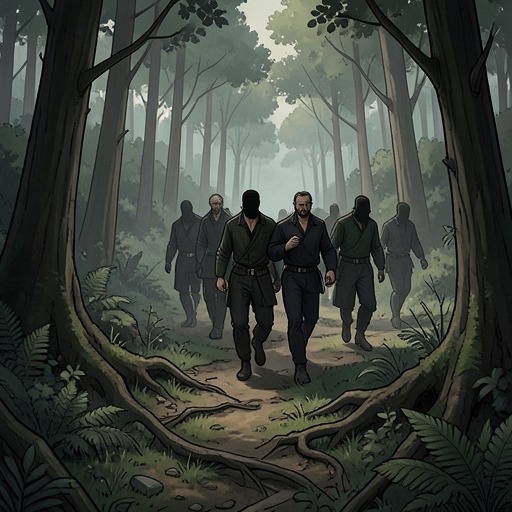
Their changed role followed the subjugation of Aquafa and Otawalle by the Zolians. The Molfah had once been the king’s trusted trackers; they also served the Otawalle, and many worked for the Inner Circle in the Sacred Territory. After Zolian rule, however, they were made to track escaped slaves. Hohsalle explains why the old title is unwelcome: calling them the King’s Net would recall a former allegiance while obscuring the work now imposed on them. Their skill persists across the political rupture, but its purpose and the power it serves have changed.
Training and Clan Structure
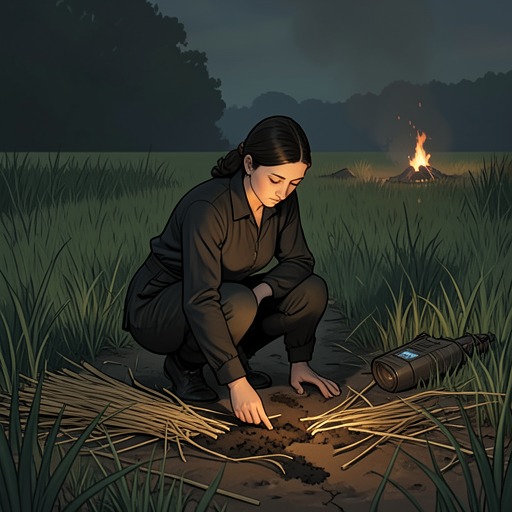
The Molfah divide into the Molfah of the Mountains and the Molfah of the Plains, whose work reflects different selections made during childhood. From the time they can walk, Molfah children are taken into the mountains by the Kuleh, elderly trackers who teach them how to survive in the wild. During this instruction, the Kuleh assess which children are best suited to hunting and which to herding. The former join the mountain Molfah, while the latter join the plains Molfah.
This sorting applies to girls as well as boys, though some girls selected for mountain life move to the plains when they reach marriageable age and marry herders. The account presents the division not as a simple separation between two unrelated peoples but as a shared clan system assigning members to complementary livelihoods. The Kuleh’s role is both practical and intergenerational: their experience is passed on through instruction in the landscape, while observation of each child guides the distribution of future work.
The Molfah of the Plains move with the seasons. When Hohsalle, Makokan, and Tohlim travel north, they encounter the plains community after it has descended from the summer highlands to winter pasture. Its settlement is sheltered by a stone windbreak. The residents greet Tohlim respectfully, while the children stare at his unfamiliar companions and the adults regard them with curiosity and caution. The settlement’s response reflects the Molfah’s attentiveness to the purpose of a visitor: they wonder what prey the mountain hunters have been asked to pursue.
Tracking Knowledge and Practice
The Molfah’s reputation rests on expertise that is learned, maintained, and applied in the field, rather than on a merely legendary title. When an escaped man cannot readily be found, Yotalu proposes two methods: an official notice and search party, alongside experts who can follow the trail from the point of escape. He identifies the Aquafa Slave Trackers as people whose superior hunting skills have often helped the authorities. In the same conversation, Makokan remembers his own father’s teaching that tracks are living things and that traces fade with time. His lack of recent practice makes him unable to track effectively, underscoring that the Molfah’s specialized work depends on sustained experience.
The mountain training of the Molfah is tied to a broader local understanding of the environment. The northern landscape requires people to master more than one occupation so they have another livelihood when one fails. In the seasonal cycle described in the narrative, reindeer herds move down from summer meadows before winter snows close the routes, while slow-growing lichen makes grazing patterns consequential. The Molfah’s division between hunting and herding answers to such conditions, and their education begins early enough for children to acquire practical familiarity before taking up their adult roles.
Power, Administration, and Significance
The Molfah’s forced work as slave trackers places their knowledge inside a larger system of Zolian rule. The empire classifies people and places, issues notices, dispatches search parties, and recruits specialists to locate those who escape. Elsewhere, Yotalu describes the tax administration’s records of remote groups in the Oki Valley and Toga Mountains, including the numbers and ages of their inhabitants. That information is intended to be accurate despite people sometimes hiding in the woods when tax officers arrive. Tracking and recordkeeping thus appear as distinct but connected means by which the state attempts to make distant populations legible and governable.
The book also contrasts the Molfah’s position with the precarious status of the mountain clans of Toga. Those clans spoke Aquafa’s language and had defended its borders, yet Zol did not recognize them as citizens after Aquafa became a province. Imperial policy threatened their removal from their homelands, prompting the Gansa elders to consider a show of resistance that might secure more favorable terms. The contrast clarifies that expertise and usefulness do not guarantee political standing: the Molfah’s valuable service is redirected by the new regime, while the Toga clans’ usefulness as frontier defenders is part of a desperate bid to avoid displacement.
The Molfah are therefore more than a celebrated body of trackers. Their childhood training and division of labor show how knowledge is cultivated within a community; the return of the name King’s Net shows how memory preserves an older allegiance; and their imposed work under Zolian rule reveals how conquest can retain local capacities while changing who commands them. Their story is shaped by continuity of skill alongside a decisive change in political purpose.