Sheep-Dancing Sickness
The Deer KingSheep-Dancing Sickness was a fatal illness in sheep associated with eating grain made toxic by an accidental hybrid of Aquafa wheat and settlers’ rye. Recalled during Hohsalle’s inquiry into mittsual, it connects crop crossbreeding and animal deaths to a disputed history of blame, while offering a possible—but unresolved—clue to how disease might have reached dogs and wolves.
Grain, Animals, and the Name
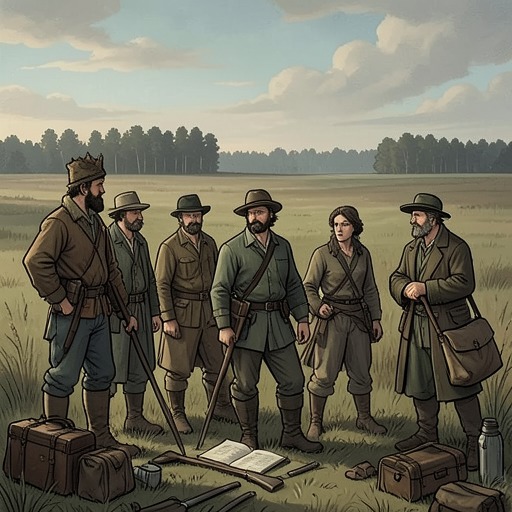
The illness arose after rye pollen was probably carried by wind into fields where the Ahfal Oma cultivated Aquafa wheat. The resulting hybrid grain was more likely to be toxic, and its poison was especially strong. The crossbreeding was accidental, not a deliberate attempt to create a new crop; its consequences nevertheless reached beyond the fields where the grain grew.
The fire horses of the Ahfal Oma ate the affected grain and died. Sheep also perished after eating it, but their symptoms gave the illness its name: they jumped and leaped as though dancing before going into convulsions. The disease was thus remembered through a striking contrast between its name and its fatal outcome.
Poisoned Grain and Its Aftermath
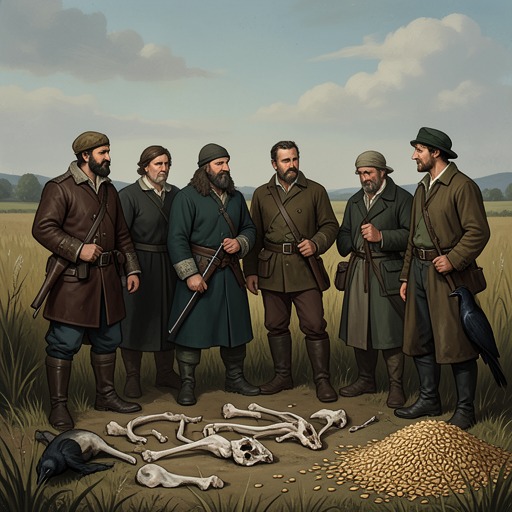
The Ahfal Oma buried fire horses that had died from the poisoned rye in a mound and later fed their carcasses to bitches in whelp. Tomasolle reported that the bitches did not bear pups; he had confirmed that they suffered and died. This detail distinguishes the episode from an older tradition about dogs fed buried horse carcasses, in which the pups survived, grew strong, and became valued hounds.
Settlers’ sheep also ate the toxic grain. After they died, dogs dug up and ate their carcasses; the settlers had, according to an elderly woman’s account, forced the dogs to eat them. The dogs subsequently died as well. The account explains why dogs had acquired a taste for sheep, but it does not by itself establish the precise cause of their deaths or prove that they carried mittsual.
After the Ahfal Oma were exiled, the settlers spent a long time burning off the Aquafa wheat before they could safely grow rye. The recollection therefore places Sheep-Dancing Sickness within a larger sequence of environmental and political consequences: an accidental crop hybrid poisoned livestock, and the effort to remove the dangerous wheat continued after the people who had farmed it were driven out.
A Clue in the Mittsual Investigation
Hohsalle’s investigation began with bodies found after the catastrophe at the salt mine. He noted dog-bite marks and a rash on the bodies, and concluded that the victims had died after being bitten rather than from food poisoning. His investigation considered several possible routes of transmission: bites from wolves or ossam, fleas or ticks that had bitten infected hosts, and transmission through the air. The absence of later cases among people working at the mine suggested that the illness had not spread readily from person to person, but its precise nature remained uncertain.
The broader case record complicated any simple account of spread. A map assembled by Tomasolle and Cheehana showed reports of mittsual-like symptoms across the former Kingdom of Aquafa, from the Yukata Plains in the south to the Oki forests in the north. The oldest reported case was eight years earlier. Yet the reports described separate attacks, usually infecting only one or two people, without recorded onward spread. Hohsalle reasoned that if infected wolves lived in packs, further cases should have appeared more frequently; if ticks or mosquitoes had become involved over several summers, the illness should likewise have spread more widely.
That pattern made the disease’s movement among animal hosts another mystery. Tomasolle observed that wolves from the north could not simply have mingled with those in the south; spread between neighboring packs was a possible natural route, but it did not resolve the unusual distribution. The old reports of poisoned animals offered a lead, not a conclusion. Tomasolle asked permission to investigate whether the first mittsual case near the site of the grain crisis was related to it, while Hohsalle’s inquiry continued to distinguish what the evidence supported from what remained conjecture.
Distinguishing Correlation from Cause
The narrative places Sheep-Dancing Sickness beside mittsual without treating them as interchangeable illnesses. The former is associated with toxic hybrid grain and the deaths of sheep; the later investigation concerns a suspected disease linked to bites and possible animal hosts. Dogs’ consumption of poisoned sheep creates a plausible historical connection between the episodes, but neither the remembered events nor the scattered mittsual reports confirm that the poison caused the later outbreak.
That uncertainty matters to the investigation’s method. Hohsalle sought to infer transmission from patterns of bites, symptoms, timing, and geography, rather than assuming that every animal death or old report belonged to one continuous epidemic. Sheep-Dancing Sickness makes the past relevant to that inquiry while also showing its limits: a chain of events can suggest where to look, but identifying a possible connection is not the same as demonstrating causation.