Takaluhalu
The Deer KingTakaluhalu was the last ruler of Otawalle, whose decision to leave its plague-stricken capital shaped the kingdom’s collapse and the founding of Aquafa. Faced with an epidemic that had devastated his people, he abandoned those who could not or would not flee, moved his capital to Kazan, and relinquished his crown to its young ruler. The account presents his actions as both a desperate attempt to save the uninfected and a rupture from the people he had ruled.
Rule and the Kingdom’s Decline
Otawalle had once flourished across the region that included the salt mine, the Yukata Plains, the Oki District, and the Toga Mountains. Its people were known for medicine, engineering, and the arts. About two and a half centuries before the present events, a strange disease killed many capable statesmen before spreading into a full epidemic, destabilizing the kingdom. Some attributed Otawalle’s decline to its having crossed the limits of human knowledge and provoked divine anger, but the truth had become obscure.
The surviving ruling class prepared for the kingdom’s decline with composure. Takaluhalu’s final actions emerged from that crisis: rather than preserve the old capital at any cost, he would move the seat of power to a place that had escaped the disease and pass rule to a new sovereign.
The Exodus from the Capital
According to the historical account Hohsalle recounts, the capital’s cities stood on three islands in a large inland sea. Their enclosed setting had provided strong defense against invasion, but was also thought to have helped make the epidemic especially lethal. At the same time, the islands and their connection to the mainland offered a means of isolation.
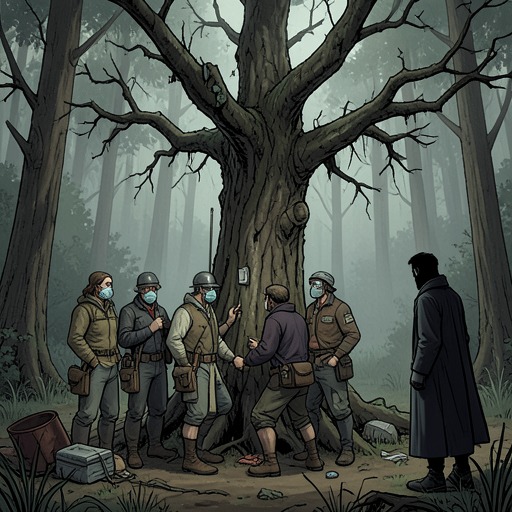
Takaluhalu left the sick and those who refused to depart behind, then destroyed the long bridge linking the capital to the mainland. The measure sealed off the epidemic, but it also cut off his own people. The historical account describes the departing Otawalle leaving in single file across the bridge before its destruction; those who remained faced a grim fate. Hohsalle’s listeners react to the abandonment as a grave human cost, not merely a feat of containment.
Kazan and the Founding of Aquafa
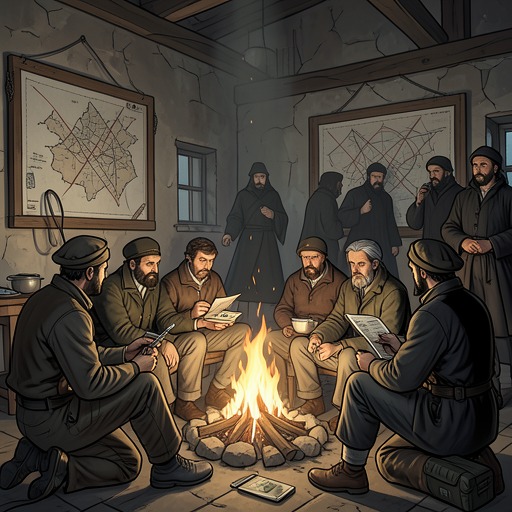
Takaluhalu moved the capital to Kazan, a trading city in Aquafa that had escaped the plague. There he transferred his authority to Kazan’s young Aquafaese ruler, securing a pledge that the diverse peoples of the realm would retain local autonomy. This transfer began the Kingdom of Aquafa: its founding is directly linked to Otawalle’s flight from the epidemic and to Takaluhalu’s decision to relinquish his crown.
The surviving Otawalle established a Sacred Territory in a mountain-ringed valley and continued to develop medicine and other fields. Their later institutions preserved knowledge beyond the bounds of Takaluhalu’s former kingdom. His political retreat therefore did not end Otawalle’s influence, even as sovereignty passed to a new ruler.
Legacy and Significance
The narrative holds together two consequences of Takaluhalu’s choice. By abandoning the capital and destroying its bridge, he helped contain a disease that had spread beyond the city; by leaving behind the sick and those unwilling to flee, he also abandoned people under his rule. The account does not resolve that tension by presenting the exodus as either pure deliverance or simple betrayal.
Takaluhalu’s decision marks the transition from Otawalle’s ancient political order to Aquafa and explains why Otawalle’s survivors thereafter sustained their learning without a country of their own. Hohsalle frames the story’s remaining hope in practical knowledge: the disease did not spread from person to person, and symptoms appeared quickly after an infected animal’s bite. In this retelling, the king’s legacy is inseparable from both the human cost of the exodus and what it taught later generations about the epidemic.