The Human Body as a Forest
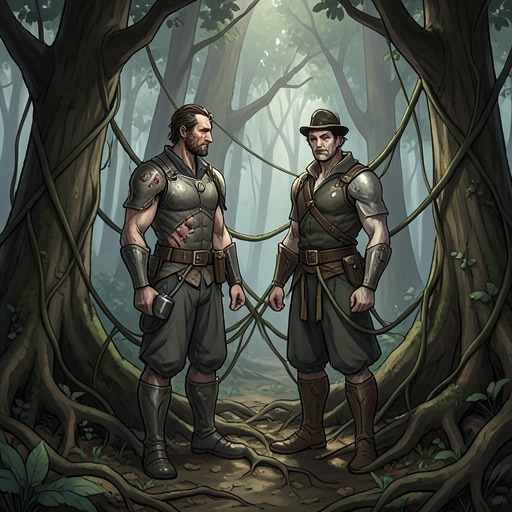
The Deer KingThe Human Body as a Forest is Suohl’s way of describing the body as a living community rather than a sealed, solitary entity. He imagines innumerable small lives inhabiting a person, much as animals, insects, grasses, mosses, and birds inhabit a forest. In both settings, one kind of life may cause harm while others sustain the larger whole. The analogy offers a way to think about illness as a disturbance within a living system, and it stands against medical and religious doctrines that treat disease chiefly as defilement or an occasion to accept death.
The Analogy and Its Setting
Suohl introduces the idea while speaking with Van about what happens inside a sick body. People know their bodies less well than they know other people, he observes, because the processes within them cannot ordinarily be seen or heard. His comparison begins from this gap between living in a body and understanding its inner workings: the body is familiar as one’s own, yet its hidden life remains difficult to perceive.
Suohl says that the human body resembles a forest, then connects the image to Van’s experience of seeing countless lights while he was in an otsufah state and running with the Rochai. Suohl does not claim to know exactly what the lights are. He has seen them while riding Granny Crow and guesses that everything alive glows in this way. The image supplies a point of contact for an otherwise invisible world without turning his uncertainty into a settled explanation.
A Community of Small Lives
In Suohl’s account, a person is made up of countless little lives together. He qualifies the idea of the body as a container: it is not simply that a body “keeps” creatures, but that many lives within it collectively form a person. The forest makes that relation easier to picture. Birds roost among trees; insects feed on leaves and may make trees wither; birds also eat insects, and their droppings enrich the soil. No single element explains the forest by itself. Its condition emerges from the interactions among its inhabitants.
Suohl applies the same pattern to illness. Tiny lives inhabit the body, some present from birth and others possibly entering later. He proposes that sickness occurs when some of these creatures cause trouble, as insects do when they damage trees. The analogy therefore makes disease a problem of relations and activity within a living community. It does not establish the identities of the creatures or offer a complete account of how each illness begins; Suohl explicitly says he does not know whether all are present from birth.
From the Image to Infection
The conversation turns from analogy to the possibility of something entering a body. Suohl offers familiar examples of responding to contamination: removing a muddy thorn and sucking the wound, or allowing a cut from a dirty blade to bleed a little to wash out what is harmful. Van connects that account to the possibility that a bite from a sick dog might introduce something dangerous through saliva. Suohl recognizes that Van has indeed been bitten by a Rochai and says that this explains what he has been trying to understand.
The exchange links Suohl’s forest image with a practical question about infection without making the analogy a precise diagnosis. A body can be understood as a habitat, and sickness as a disruption within it; contact with an animal may be one route by which something harmful enters. The comparison also encourages attention to processes that are not visible from the outside, even when their effects become apparent in the patient.
Conflict with Medical Doctrine
The analogy matters in a story where competing accounts of illness shape what people are willing to do for the sick. Under the Pure Heart Creed, animal milk is considered defiling and believed to make people bestial. The doctrine distinguishes followers from communities absorbed into the empire who do not follow the creed and have long consumed reindeer milk. In another dispute, Utalu argues that faithful believers should not contract rabies from a rabid animal, while Lona maintains that defilement can reach a person regardless of intention. Lona concludes that when rabies cannot be cured, accepting it as heaven’s will is the proper response, and he rejects introducing animal blood to prevent it as a departure from the Heavenly Path.
Suohl’s account belongs to a different approach to medical knowledge. A Pure Heart Creed priest-doctor, Mana, says that identifying the specific cause of disease is not necessary: the patient’s body reveals the problem, which he understands as defilement to be addressed by removing its obstacles. Otawalle medicine instead investigates disease and its causes. The tension is more than a dispute over terminology. When Hohsalle asks Lona whether he would reject a way to prevent rabies, their exchange exposes how religious commitments can make prevention unacceptable even where a means of prevention exists.
Knowledge, Care, and the Forest
The book places this difference in a wider institutional struggle. Hohsalle and Limuelle once cured Emperor Natalu’s wife after the Zolian priest-doctors had considered her incurable. Natalu asked them to remain as palace physicians and teach Otawalle medicine, but their offer provoked the priest-doctors’ opposition; Otawalle medicine remained officially branded heresy even a decade after her recovery. Hohsalle later understands that the divide is not merely political friction over authority: the two traditions begin from fundamentally different premises about what medicine is for.
Limuelle argues that studying the particulars of a chaotic world is how knowledge advances, while the priest-doctors’ teachings provide an answer that enables patients and families to accept death. He insists that Otawalle physicians will not give up on patients, especially because contagious disease can spread when hope is abandoned. To him, gaining the priest-doctors’ cooperation could free Otawalle medicine from constraints and allow its knowledge and resources to reach Zolians across social ranks. Against this background, the forest analogy is a compact alternative to fatalism: illness is not simply a verdict to endure but a change within a complex living system that can be observed and addressed, even when its hidden inhabitants remain only partly understood.