Toga District
The Deer KingThe Toga region is the mountainous western edge of Aquafa, a homeland whose people became caught between Zol’s annexation and the empire’s unequal frontier policies. Its rugged terrain enabled the Lone Antlers to resist Zolian forces for nearly two years, but the clans’ struggle was also over whether they could remain in their homeland at all.
Frontier and Political Status
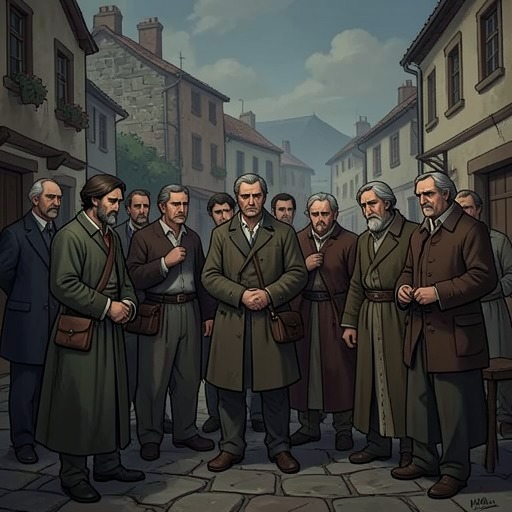
The mountain clans had fought to protect Aquafa’s borders from incursions by the Kingdom of Mukonia. Under the King of Aquafa, they were regarded as independent communities and retained loose autonomy in return for allegiance. When Aquafa allied itself with Zol and became an imperial province, its inhabitants gained ordinary-citizen status, but the clans of the Toga region did not: despite speaking Aquafa’s language and having defended its borders, they were not recognized as Aquafaese by the new regime.
Zol delayed its full attention to the region until it had established stable government in central Aquafa. The former king sent messengers to the clans to negotiate a guarantee of safety in exchange for allegiance, but his reduced authority meant he could plead for their lives without determining their political status. That question belonged to imperial management of the frontier, where the clans’ former independence posed a problem for the new order.
Resistance and the Mountain Campaign
The empire’s policy was to relocate lower-caste populations to other conquered territories. The prospect of losing their homeland and being made to survive in unfamiliar places led the Gansa elders to devise a strategy of feigned resistance: they hoped a demonstration of strength would make the clans useful enough to remain. If Zol accepted their submission and recognized their knowledge of the mountains as a defense against Mukonia, they might negotiate more favorable terms as a buffer on the empire’s western flank.
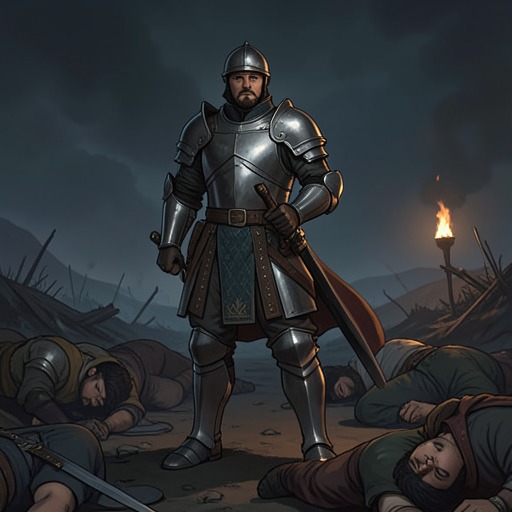
The Lone Antlers made that strategy possible. This ancient band of death warriors accepted men whose lives had been disrupted by calamity, including outsiders who joined the Gansa. Its members were exempt from the clan’s ordinary rules so long as they pledged to shield it, even at the cost of their lives. Repeated epidemics and incursions had devastated communities in the mountains, and men who had lost families to war or disease joined the band in unprecedented numbers. When the elders approached Van, leader of the Lone Antlers, he and his men accepted the mission.
For almost two years, the riders used the region’s steep, rugged mountains and forests to draw in Zolian troops, strike from cover, and outmaneuver horsemen with their pyuika. Their tactics made the riders feared and prompted enemy commanders to consider retreat and offer favorable truce terms to the tribal elders. While negotiations continued, the Lone Antlers maintained the appearance of defying the elders and fighting to the end; once their purpose was fulfilled, the band fell. The campaign turned the region’s difficult terrain into a military advantage, but its cost was borne by the warriors who served as the clans’ shield.
Settlement, Livelihood, and Administration
The region’s frontier status was part of a wider imperial system of population control. Poor farmers and herders from the edges of Zol were ordered to settle newly conquered territory, establish Zolian-style communities, and raise the crops and livestock preferred by the empire. These settlers were an unarmed vanguard intended to reshape conquered places through farming, construction, and contact with native populations. Although they received lower taxes and full ownership of land they cleared, exile from their original homes remained a source of grief.
Different rules also shaped life in the Oki Valley and the Toga Mountains. In Tohma’s family, the head tax applied to every reindeer; lower rates for people with Zolian blood benefited only Kiya and Tohma. Ohma tried to ease the pressure by selling reindeer and raising pyuika, which were taxed less, but his family lacked the knowledge to breed them successfully and faced economic hardship. This household’s circumstances show how ancestry, livestock, and tax classification could combine to determine the prospects of a family living in the region.
Imperial administration also made the frontier’s nomadic communities legible to the state. Officials kept detailed records of groups in remote areas, including their locations, population sizes, and ages. Yotalu suggested these records could help locate Broken Antler Van, while acknowledging that people could hide in the woods during tax visits. The same administrative reach that classified outlying populations for taxation thus offered a means of tracking them.
Significance
The Toga region is both a homeland and a contested frontier: its inhabitants had once defended Aquafa’s borders while retaining local autonomy, but incorporation into Zol left them outside the ordinary citizenship accorded to the province’s population. Their terrain gave the Gansa a bargaining strategy, and the Lone Antlers’ campaign helped secure truce negotiations, yet the broader imperial system continued to sort people by status, ancestry, taxation, and usefulness to settlement or defense. The region’s political history is therefore written not only through battles, but through the competing claims of belonging, residence, and imperial administration.