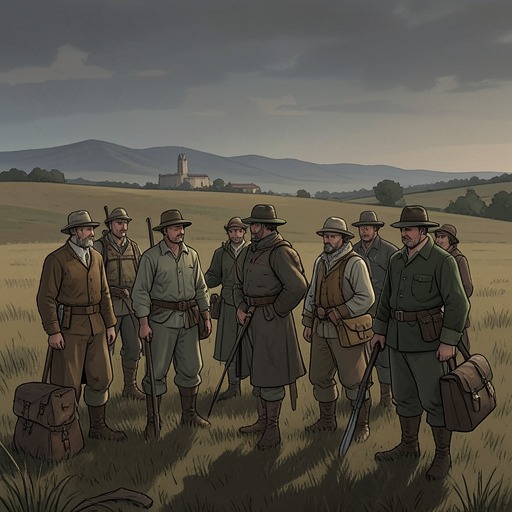
Zol’s annexation of Aquafa
The Deer KingZol’s annexation of Aquafa was not simply a change of rulers: it preserved the kingdom as an imperial province while extending Zolian control through unequal citizenship, frontier relocation, settlement, taxation, and resource use. The arrangement spared central Aquafa the full ravages of war, but left mountain clans and displaced peoples exposed to policies that could cost them their homeland and means of survival.
Conquest and Unequal Status
Aquafa became a province of the Empire of Zol after shrewdly allying itself with the invaders. That accommodation secured the Aquafaese ordinary-citizen status, but it did not extend equally to the mountain clans of the Toga region. Although those peoples spoke Aquafa’s language and had defended its borders against incursions from the Kingdom of Mukonia, Zol did not regard them as Aquafaese citizens. Under the former king, they had retained a loose autonomy in their affairs in exchange for allegiance; imperial rule denied them that recognized place in the new order.
Zol’s attention turned to the final stage of annexation only after it had spent years establishing stable government in central Aquafa. The King of Aquafa sent messengers to the clans offering to negotiate a guarantee of safety in return for their allegiance. But the king, now ruler of a province rather than an independent realm, could only plead for their lives. He could not determine their status: the empire treated the question as part of its management of the frontier.
Frontier Rule and Resistance
Zolian policy called for lower castes to be relocated to other conquered territories. For the Toga clans, exclusion from ordinary citizenship therefore meant more than a lesser legal standing: it threatened forced departure from their ancestral land and an impoverished life in unfamiliar surroundings. The Gansa leaders concluded that open submission offered no acceptable terms, and devised a strategy of feigned resistance. They hoped that a demonstration of strength would persuade the Zolians to accept them as useful allies and permit them to remain as a vanguard guarding the empire’s new western flank against Mukonia.
The Lone Antlers made that calculated resistance possible. This ancient band of death warriors was made up of men who had been denied ordinary lives and had sworn to serve as a shield for the Gansa, giving their lives if necessary. Its members were exempt from the clan’s usual rules, and outsiders fleeing calamity could join them as clansmen. Repeated epidemics and incursions had devastated parts of the Toga Mountains over decades; men who had lost families to war or disease joined the band, swelling its ranks to unprecedented numbers. Their existence gave the elders a force with which to stage a hopeless battle and a possible basis for bargaining, even though the strategy depended on the empire recognizing the value of people it had already excluded.
Negotiation and Imperial Administration
The annexation also established a lasting political bargain between Aquafa and its conquerors. The last ruler of the Ancient Kingdom of Otawalle, King Takaluhalu, moved the capital to Kazan, a trading center in Aquafa left untouched by the epidemic that had weakened his kingdom. He transferred authority to the young Aquafaese ruler in exchange for a pledge to preserve local autonomy for the realm’s diverse peoples. This transfer marked the beginning of the Kingdom of Aquafa, while the surviving Otawalle withdrew to a mountain valley and devoted themselves to medicine and other fields.
The Otawalle retained influence after relinquishing formal government through the Inner Circle, an information network that supplied successive Aquafa rulers. When the current king capitulated after only a few skirmishes, many suspected that the Otawalle had warned him of Zol’s overwhelming military strength and recommended negotiation over war. Their technical expertise subsequently made them valuable to the empire: Zol relied on their construction skills and knowledge in mining and metallurgy, even as distrust of the secluded people persisted. Aquafa’s accommodation thus combined political dependence with some autonomy, while the Otawalle’s usefulness gave a conquered population an influential, if uneasy, place in the imperial order.
The empire’s rule also relied on information about the people it governed. Zol’s tax-collection officers recorded nomadic groups in outlying areas including the Oki Valley and Toga Mountains, categorizing communities and gathering figures for their population and ages. Those records later offered Hohsalle a potential means to search for Van, although some people evidently evaded the collectors by hiding in the woods. The census-like reach of taxation could therefore serve administrative ends beyond revenue, making dispersed frontier populations legible to imperial officials.
Settlement, Land, and Livelihood
Frontier colonization extended imperial rule through settlers as well as officials. Poor farmers and herders from the edges of Zol were ordered to move into newly conquered territories, establish Zolian-style communities, grow familiar crops, raise livestock, and mingle with local people. They formed an unarmed vanguard intended to transform the conquered territory into Zolian land. The policy offered settlers lower taxes than they would have paid at home and full ownership of the land they cleared, advantages for people previously bound to landlords. Yet the order took them away from their native homes, and the prospect of never returning caused lasting grief. The policy imposed costs on both sides of the frontier: settlers were displaced in the service of expansion, while indigenous communities faced changes to land, livelihoods, and political belonging.
On the Yukata Plains, imperial settlement altered the balance between people, animals, and crops. The Zolians requisitioned the small, powerful fire-horse stud animals that had once served Aquafa’s cavalry and turned the plains into pastures for sheep brought by immigrants. They also introduced rye and beans suited to cultivation in the cold region. Rye could become toxic to fire horses; after horses died from eating it, the displaced Ahfal Oma attacked an immigrant village. Zolian soldiers suppressed the uprising, its instigators were executed, and the Ahfal Oma were driven from their homeland. The incident joined ecological disruption to political dispossession: a change in land use endangered the animals on which the plains people depended, and the ensuing conflict ended in their expulsion.
The effects of these policies continued in households that had little power over them. Ohma’s family paid a head tax on every reindeer, while reduced rates for people with Zolian ancestry applied only to Kiya and Tohma. In an effort to survive, Ohma sold reindeer and tried raising pyuika, which were taxed less heavily, but his lack of breeding knowledge meant the effort failed. Oki families who bought pyuika on credit faced a similar trap: if breeding failed, their debt and taxes could drive them into destitution; if it succeeded, Zolian soldiers stood to gain from the animals. Even the possibility of a successful venture could therefore carry a political cost for the people who had staked their livelihood on it.
Consequences and Historical Significance
Annexation brought a measure of stability to central Aquafa, preserved some local autonomy, and incorporated the Otawalle’s expertise into imperial projects. Its benefits were distributed unevenly. The Aquafaese received ordinary-citizen status, while the Toga clans remained outside that category and faced relocation; frontier settlers received land and lower taxes but could not return home; and local peoples bore the consequences of new crops, grazing practices, taxes, and competition over animals and territory.
The story presents imperial expansion as an administrative and ecological process as well as a military one. Negotiations determined who counted as a citizen; tax records made remote communities visible to officials; resettlement changed who lived on the frontier; and imported livestock and crops altered how land could be used. The annexation’s central contradiction is that a negotiated surrender could spare Aquafa a devastating war while still exposing many of its peoples to displacement, cultural pressure, and precarious livelihoods. What appeared from the center to be orderly incorporation remained, at the margins, an unsettled struggle over belonging and survival.