Zolian Rule over Aquafa
The Deer KingZolian Rule over Aquafa was a system of imperial incorporation that made the former kingdom a province but did not grant its people equal standing throughout the conquered territory. Its reach extended beyond formal allegiance: citizenship classifications, relocation, frontier settlement, taxation, and changes to farming and herding reshaped local livelihoods and the landscape. Those pressures recur in the histories of the Toga mountain clans, the Ahfal Oma, and families in Oki.
Annexation and Unequal Status
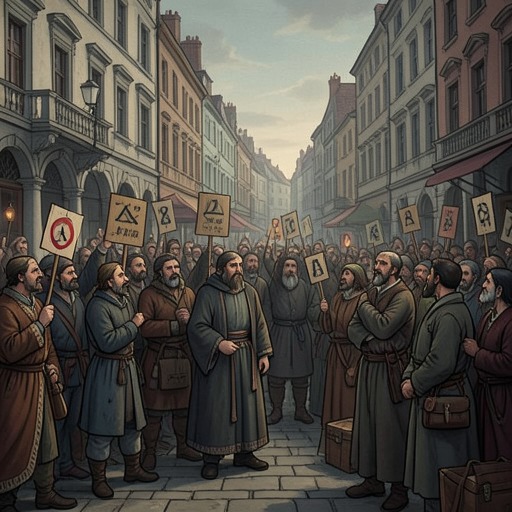
Aquafa allied itself with the Zolian invaders and became part of the empire, securing ordinary-citizen status for its people. The mountain clans of the Toga region, however, were not recognized as Aquafaese, although they spoke Aquafa’s language and had helped defend its borders against incursions from Mukonia. Under the former kingdom they had retained a measure of autonomy in return for allegiance; under Zolian rule, their distinct status left them exposed to a different imperial policy.
After consolidating control in central Aquafa, the empire turned to the Toga Mountains. The King of Aquafa sent messengers to negotiate on the clans’ behalf, but, as the ruler of a province rather than an independent kingdom, he could only plead for their safety. He could not determine their legal status. Zolian frontier policy treated the classification of conquered peoples as an imperial matter, and the clans’ exclusion from ordinary citizenship put their continued residence in their homelands at risk.
The Gansa elders considered a strategy of feigned resistance. They hoped that demonstrating the clans’ strength and usefulness as allies might secure acceptable terms: the mountain people knew the terrain and could serve as a buffer against Mukonia. The plan depended in part on the Lone Antlers, a band of warriors drawn from men whose ordinary lives had been lost and from outsiders who joined the clan. The elders’ calculation shows how conquest narrowed political choices: resistance was imagined not simply as refusal, but as a way to negotiate a less destructive form of submission.
Frontier Settlement and Administration
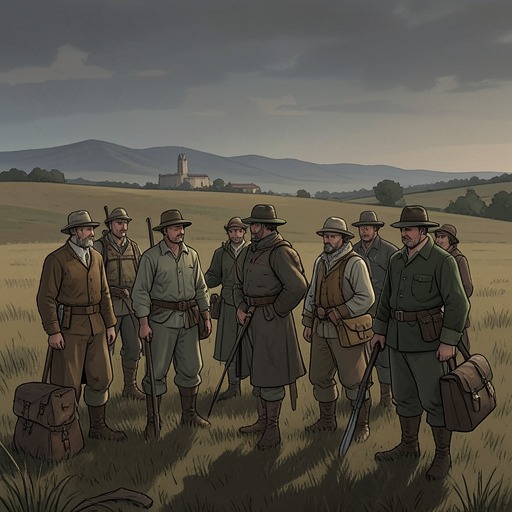
Imperial expansion also relied on moving people from within Zol to newly conquered frontiers. Poor farmers and herders from the edges of the empire were ordered to settle these areas, build communities in Zolian fashion, cultivate familiar crops, raise livestock, and mix with local populations. They served as an unarmed vanguard, helping make conquered territory Zolian before the transformation was fully apparent. Lower taxes and ownership of cleared land could benefit settlers previously bound to landlords, but those advantages came with the grief of being unable to return home.
The empire’s administrative reach included remote nomadic communities. Zolian tax officers recorded groups in places such as the Oki Valley and Toga Mountains, categorizing populations and keeping information about where people lived and their ages. Such records helped officials manage taxation and made it possible to search for people who might otherwise remain difficult to locate. The same system that made distant populations legible to the state also supported later efforts to find Van, who could evade tax officers by hiding in the woods.
Imperial rules also affected household economies. Oki families paid a head tax on each reindeer, while tax relief for people with Zolian ancestry applied only to the Zolian members of mixed families. Ohma tried to reduce the pressure by selling some reindeer and raising pyuika, which were taxed less heavily, but the family lacked the knowledge needed to breed them successfully. The failure threatened a livelihood already close to collapse; the supposed opportunity to change herding practices therefore carried serious financial risk.
Land, Livestock, and Displacement
The southern Yukata Plains, once associated with the Ahfal Oma and their fire horses, became pasture for sheep brought by Zolian immigrants. Zolian authorities requisitioned the region’s stud horses after the conquest, while immigrant farmers introduced rye and beans. These changes altered both land use and local subsistence. Rye could thrive in poor soil, but it was toxic to the fire horses; after horses died, Ahfal Oma angered by the loss attacked an immigrant village. Zolian soldiers quelled the uprising, its instigators were executed, and the Ahfal Oma were driven from the plains.
The displacement scattered the Ahfal Oma. Some lived among the Ofal Oma in the highlands, while others raised horses for caravans or moved northwest to make a living in unfamiliar places. Their bitterness toward the Zolians also helped make Oki, where many Zolian immigrants had settled and intermarried with local people, a place they avoided. The consequences of settlement were thus not limited to a change in crops or ownership: they disrupted a people’s connection to their homeland and influenced where they could imagine living afterward.
The ecological conflict remained contested. Tomasolle argued that the plains’ vegetation and animal life had their own balance, so converting them to sheep pasture and rye fields was bound to disturb it. The director, by contrast, noted that black rye suited the poor soil better than wheat and might make the plains more prosperous. The disagreement places imperial improvement and local ecological knowledge in direct tension: a crop’s hardiness could be counted as economic promise even when the transformation had already harmed the fire horses and helped trigger expulsion.
Rule’s Continuing Effects
Zolian power shaped relationships as well as territories. Kiya’s family had been displaced from the northern outskirts of Zol and resettled; after disease and accidents left her kin struggling, Ohma’s family helped them. Their relationship grew through mutual assistance, and Kiya later became Ohma’s wife. Yet her Zolian ancestry brought no broad security to their household: the tax advantage applied only to her and Tohma, while the family’s attempt to shift from reindeer to pyuika placed its future at stake.
The pressure of imperial policy could also turn neighboring groups against one another. Traders who withheld knowledge of mohoki, a plant essential to managing pyuika movements and breeding, may have hoped that Oki families’ efforts would fail. The consequences would fall chiefly on those families, who had sold reindeer and taken on debt to buy the animals, rather than on Zolian soldiers. If breeding succeeded, soldiers stood to benefit from a new source of mounts; if it failed, the Oki risked destitution. Van recognized this imbalance and could not accept the prospect of Zolian soldiers riding pyuika.
The account of Zolian rule therefore connects imperial administration to intimate and material losses: a clan’s uncertain right to remain in its homeland, a settler’s inability to return to hers, a displaced people’s departure from the plains, and a struggling family’s wager on unfamiliar animals. Tax records and citizenship categories made populations manageable to the state, while settlement and agricultural change remade the land. The effects persisted in conflicts over belonging, livelihood, and who would bear the cost of imperial expansion.