
Anarres and Urras Compared
The DispossessedThe novel steadily complicates Shevek’s first judgments by placing the beauty, hardship, freedom, and injustice of each world beside the other.
increasing Bearing strength in each event
 decreasing
Bearing strength in each eventdecreasingA Moon Built by Settlers
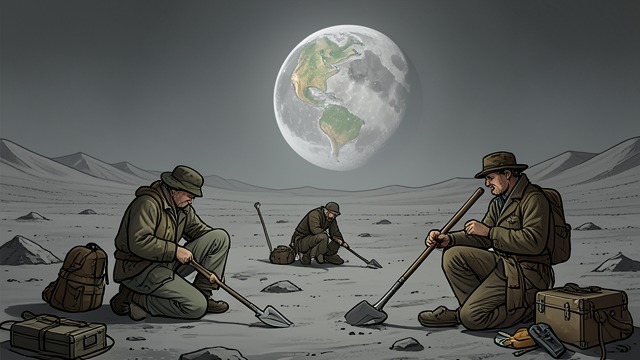
The Costs of a New World
A chosen desert
The settlers leave a fertile world for a barren moon in order to build a society without political and economic domination. Their choice rejects abundance as a guarantee of justice.
A fragile independence
Anarres develops a complex society under ecological limits, yet remains tied to Urras through trade. Its independence is real but incomplete.
The Green Valley
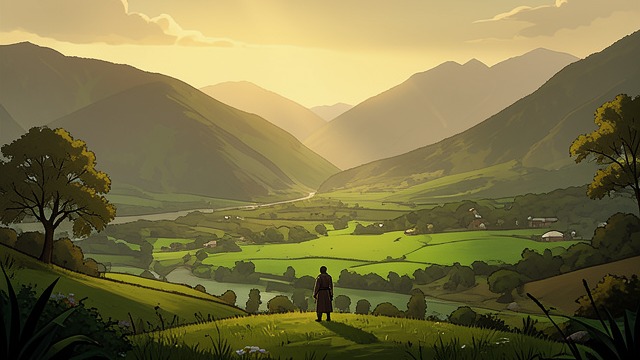
Beauty as a Challenge
Abundance overwhelms him
Shevek sees farms, forests, and hills and thinks that this is what a world should look like. Urras appears to possess the life and color missing from Anarres.
A first judgment revised
The beauty is genuine, but it does not prove that the society is just. Shevek must learn to see the landscape and the social order together without reducing either to the other.
The Polished City Tour
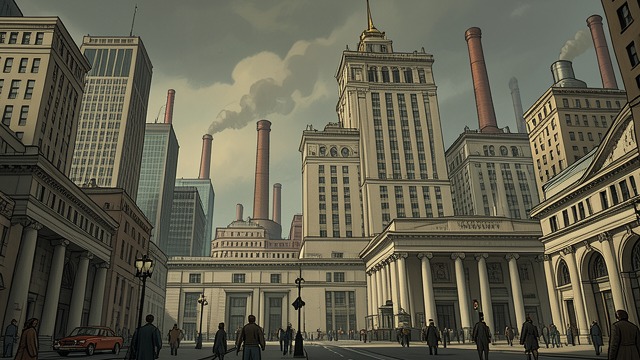
A World Carefully Presented
Efficiency on display
Shevek is shown factories, institutions, farms, and public buildings that demonstrate Urras’s technical capacity and material comfort. He admires the skill and cooperation behind them.
What remains unseen
The tours do not show workers’ hardship or ordinary poverty. The contrast between visible achievement and hidden inequality gradually unsettles his initial admiration.
The Old Town Revealed
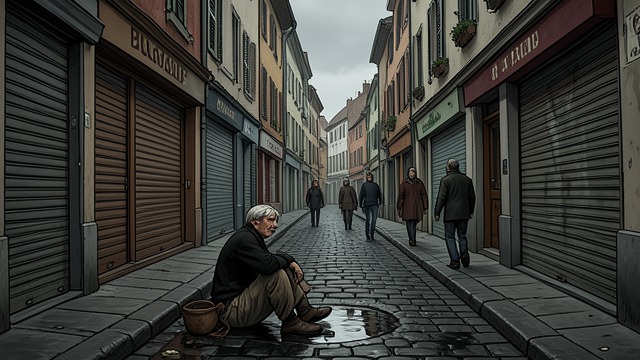
The Hidden Cost of Paradise
Poverty made immediate
Shevek walks through Old Town and encounters a sick man in the gutter, shuttered shops, and people too hurried or wary to help. These realities resemble the suffering he had been taught to expect.
Neither image is sufficient
The beauty of Urras remains real, as does its misery. Shevek must include both in his understanding rather than letting the polished world or the slum erase the other.
Keng’s Earth
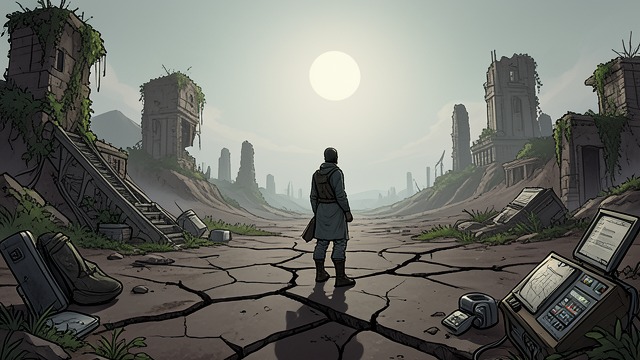
Two Different Deserts
A world damaged by its people
Keng describes Terra as a ruined planet whose inhabitants survived through extreme centralization and control. Its history is not Anarres’s chosen austerity but ecological and social failure.
A wider comparison
Shevek and Keng see Urras from radically different histories. Their exchange prevents either Anarresti or Terran experience from serving as a universal measure of what another society can become.
During the historical account of Anarres’s settlement
During Shevek’s first morning on Urras
During Shevek’s early weeks as a university guest
After Shevek leaves the university to seek the underground
During Shevek’s conversation at the Terran Embassy
