
Anarres and Ecological Scarcity
The DispossessedThe harsh ecology of Anarres shapes its social design, its dependence on cooperation, and the emotional cost of survival during the drought.
increasing Bearing strength in each event
 decreasing
Bearing strength in each eventdecreasingA Desert Instead of Eden
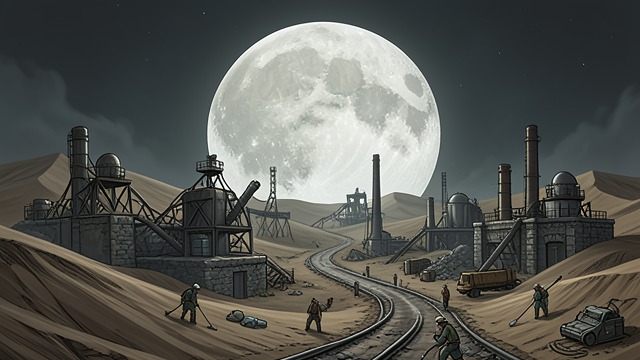
The Moon’s Actual Conditions
A misleading name
Astronomers call Ans Hos the Garden of Mind, but the settlers find a dry, windy world with thin air and little animal life. The promised landscape is a myth against which the actual planet must be measured.
Civilization by adaptation
People build roads, industries, and interregional networks rather than retreating into isolated subsistence. Their society depends on complex cooperation because no community can easily provide everything it needs.
The Dust Reforested
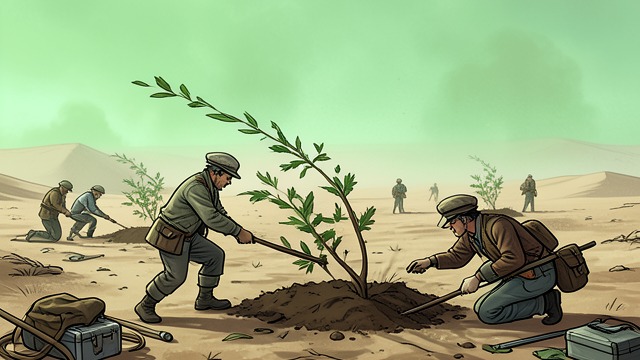
Repairing a Damaged Landscape
A landscape of fine dust
The Dust was once forested, but prolonged drought killed its trees and dried the soil. Workers plant seedlings in an effort to restore fertility.
A small sign of possibility
Shevek sees a faint green veil across the pale desert after the work is done. The project joins ecological repair to collective labor and gives the landscape a future without promising easy success.
A Narrow Ecology
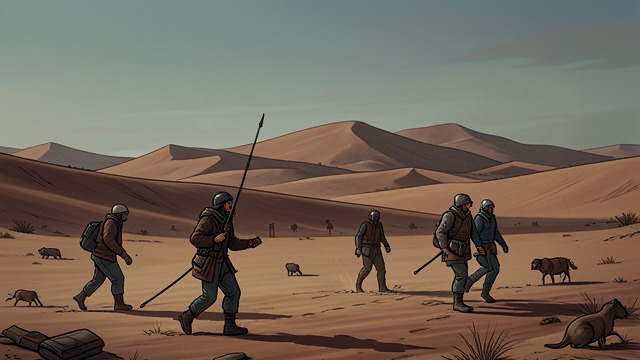
Life in Limited Networks
Few land animals
Takver explains that Anarres’s land ecosystems are sparse while its oceans hold complex webs of life. Shevek learns to value forms of existence that do not need to justify themselves to human purposes.
An intimate difference
The planet’s ecology shapes food, work, and imagination. Its limits are not merely a hardship but a condition that has formed the Anarresti way of life.
Drought and Distribution
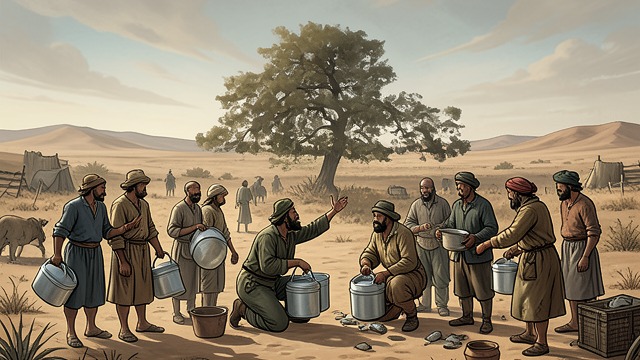
A Planetwide Emergency
Water redirected
Water is prioritized for crops and essential production, while food is rationed and transport is reorganized. The crisis affects regions unevenly and intensifies the need for coordination.
Cooperation under strain
People volunteer and share, but shortages also create conflict about who receives food and which work must continue. Ecological scarcity exposes the ethical limits of a system that cannot produce enough for everyone.
What Abundance Cannot Prove
Comparing Worlds Carefully
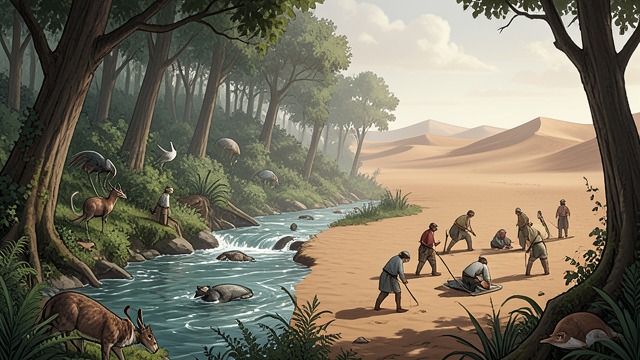
A world of water and animals
Urras has forests, abundant water, fertile land, and diverse life. Shevek recognizes that Anarres is materially poorer and ecologically narrower.
Scarcity is not a moral verdict
He learns that environmental abundance does not make a society just, just as scarcity does not make Anarres’s social ideals false. Each world must be understood in both its material conditions and its political choices.
During the historical account of the first settlement
When Shevek is eighteen, during the West Temaenian project
During Shevek and Takver’s early life together
From year 163 through the famine years
During Shevek’s first season on Urras
