A-Io wartime research and travel restrictions
The DispossessedA-Io wartime research and travel restrictions are the rules that take effect when A-Io officially goes to war during the conflict in Benbili. They subject research to classification, constrain publication, and limit travel—especially for non-nationals—making the state of war a practical boundary around Shevek’s work and movement. Their significance lies in the contrast between officials’ casual account of administrative safeguards and the restrictions’ direct effect on what Shevek can study, publish, and do.
Background and Scope
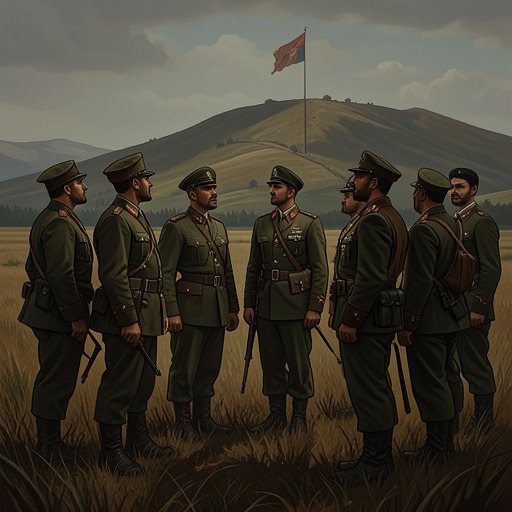
A-Io’s representative explains that the country and Thu will fight in Benbili, not invade one another. He presents this overseas military action as a police measure that maintains a balance of power, while acknowledging that the two countries are officially at war. That formal status activates what he calls the old restrictions, despite his assurance that war will not bring fighting into the heart of either high civilization.
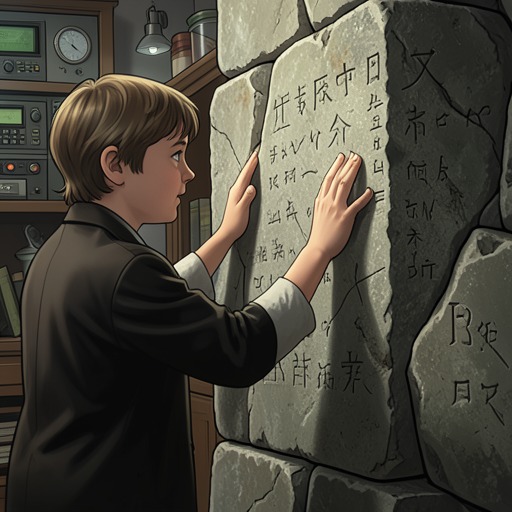
The measures concern research and movement. Work conducted at the College of Noble Science may be classified; publication may be delayed when higher officials judge a paper dangerous because they do not understand it. Travel is also limited, particularly for non-nationals. Shevek is told that, for as long as the state of war lasts, he is not supposed to leave the campus without the Chancellor’s clearance. The restrictions are thus presented as temporary, but their duration is tied to an open-ended condition: the continuation of the state of war.
Application to Shevek
The announced travel limit conflicts with Shevek’s intention to meet people beyond the university. When he says that Pae has forbidden him to leave campus and that officials could stop him if he takes the train, Efor suggests arranging a taxi instead. The exchange makes the rule’s immediate force clear: leaving is possible, but it risks interception and requires a route around the ordinary means of travel.
The research controls fit into a broader pattern of difficulty in communicating across institutional boundaries. On Anarres, Shevek’s letters to Urrasti physicists and mathematicians face approval barriers: Port managers distrust correspondence that might be coded, while Sabul will approve letters to physicists only within his own area of Sequency physics. These are not the same rules as A-Io’s wartime restrictions, but together the episodes contrast two systems in which control over communication can hinder intellectual exchange—formal state classification in A-Io, and administrative or informal gatekeeping on Anarres.
Borders, Exceptions, and Consequences
The embassy offers Shevek another way to cross the limits imposed on him. The Terran representative explains that the embassy answers to the Council of World Governments, not to A-Io, and that the castle is regarded as Terran soil. Shevek consents to her telling the authorities that he is there. The diplomatic fiction of a patch of Earth eleven light-years away gives him a place to seek protection outside A-Io’s ordinary jurisdiction, while the representative’s account makes clear that the embassy’s position is meant to be recognized by the wider Council.
The restrictions belong to a larger pattern of authority exercised through access and boundaries. Anarres’s settlement terms, for example, prohibit anyone arriving from Urras from disembarking beyond the Port of Anarres. This is a distinct rule, not part of A-Io’s wartime regime, but the comparison underscores how political arrangements on both worlds regulate movement at their borders. In A-Io, war narrows a foreign visitor’s freedom to leave a campus; at Anarres, settlement terms determine where arrivals may land.
Significance
The rules turn the declaration of war into more than a statement about relations between states: it changes the conditions under which research can circulate and a visitor can move. Classification and publication delays make knowledge vulnerable to administrative judgment; travel clearance makes Shevek’s presence on campus a matter of permission. The official description of these measures as routine sits uneasily beside his need to find ways around them, revealing how an exception associated with war can reshape ordinary life without requiring an invasion at home.