Anarres–Urras radio contact
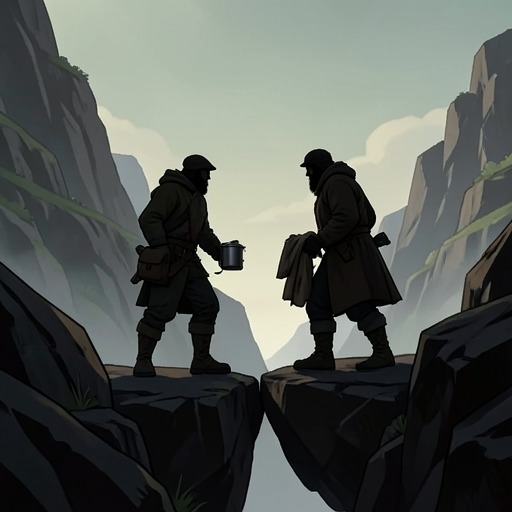
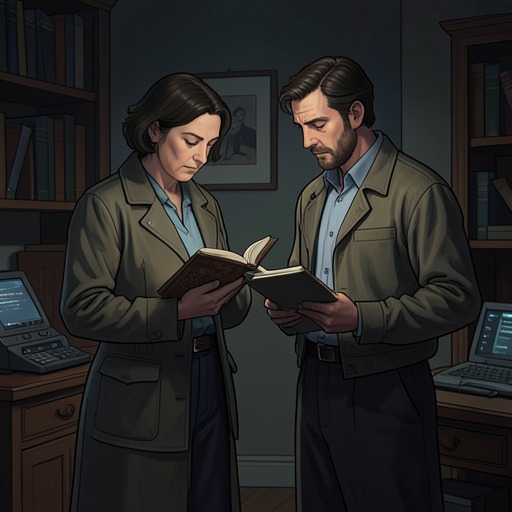
The DispossessedAnarres–Urras radio contact is an independent communications project that breaks the long political silence between the planets and forces Anarres to confront what openness might cost. Organized by Bedap and the Syndicate of Initiative against the PDC majority’s recommendation, it carries information in both directions, becomes a source of public controversy, and opens the possibility of bringing visitors to Anarres. For Shevek, contact is not merely technical: it is part of a larger effort to dismantle isolation and make knowledge a common gift rather than a commodity or instrument of power.
The Initiative and Its Opposition
By the time Bedap presents the Syndicate of Initiative’s project to a PDC council, the group has been in radio contact with Urras for about twenty decads. Bedap proposes inviting a small group of Urrasti to Anarres, extending communication from broadcasts to face-to-face contact. The project has proceeded without the approval of the PDC majority or the Defense Federative, and against growing protests from the Brotherhood.
The broadcasts and their publication have made the Initiative’s actions visible well beyond its own membership. Bedap recalls that he and Shevek had first discussed how a frustrated physicist might print his work and communicate with physicists on Urras; once radio contact was established, the Urrasti proved more eager to exchange information than the organizers expected. Reports of those exchanges, in turn, provoked a more virulent opposition on Anarres than Bedap had anticipated. Attention from both planets leaves him wondering whether the Initiative’s members are traitors, even as their purpose is to open communication.
Rulag, an engineer and the Initiative’s determined opponent, treats the proposal to receive visitors as a danger of a different order from broadcasting. She argues that the group has acted irresponsibly by persisting against advice and protest, and that its broadcasts disclose Anarres’s weakness to a powerful enemy. Her imagined progression—from a handful of visitors, to profiteers inspecting the planet, to armed ships and occupation—turns the question of contact into a question of collective survival. She grounds her case in the Terms of the Settlement, which bar Urrasti from leaving their ships except for the original Settlers, and warns that opening the door could undo the security on which Anarres has relied.
Contact Across Unequal Worlds
The radio project takes place against a broader imbalance in how the two planets communicate and represent one another. On Urras, Shevek encounters newspapers that turn his arrival into a spectacle: one calls him the “FIRST MAN FROM THE MOON!” and attributes to him a declaration of brotherhood that he says he never made. Pae explains that the paper’s reporters had not been allowed near him and had invented the quotation. The episode shows that connection does not ensure that a speaker’s words will be heard accurately; established media can substitute a convenient image for the visitor’s actual speech.
Pae also contrasts A-Io’s press with the state-controlled paper from Thu. A-Io’s newspapers may be sensational and poorly informed, while Thu’s government publication is better written but reports only what the Central Presidium permits. These competing forms of control make the radio contact politically charged: information can circulate, but its meaning remains vulnerable to ownership, censorship, and distortion.
The material conditions on Anarres sharpen the stakes of communication. PDC coordinates long-distance mail, calls, travel, and shipping; correspondence is limited, often delayed, and generally unsealed by convention because carrying a private message consumes shared labor and materials. In a society where people can move and seek friends where they are, personal letters are relatively few. The radio project thus introduces a new scale and immediacy of exchange into a system in which even ordinary long-distance communication is coordinated as a collective resource.
Shevek’s Political Purpose
Shevek understands his presence on Urras as a negotiation with a society organized around buying and selling. Arriving without money or gifts, he calls himself the “Beggarman” and explains that, because he cannot buy what he needs, his hosts must give it if they choose to keep him alive. His empty hands make the contrast between Anarresti sharing and Urrasti commerce concrete; the same contrast later shapes his account of scientific exchange.
When Chifoilisk warns him that A-Io’s hospitality serves a profit economy rather than disinterested science, Shevek replies that he came to bargain. He wants his people to come out of exile, free exchange between Urras and Anarres, and the walls between them brought down. He believes A-Io fears him less than Thu because A-Io has forgotten the revolution and assumes that possessions can make people content within confinement. Contact is therefore bound to a political objective: exchange must challenge isolation rather than simply serve the interests of the powerful.
That principle culminates in Shevek’s offer to give his theory to Urras, Hain, and the other worlds. He rejects selling it to the propertarians and argues that no one country should be able to use it to gain power, wealth, or military advantage over others. The proposal recasts communication as a gift made for the common good, and connects the radio project’s exchange of reports to a far-reaching demand for open access to knowledge.
Consequences and Significance
Anarres–Urras radio contact changes the terms of debate inside Anarres. Before the broadcasts, Urras could remain a distant danger described through inherited fears; once information is received, discussed, and published, the possibility of learning how the other world actually works becomes a practical political question. Bedap acknowledges that the exchanges drew more interest from Urras and more hostility at home than the organizers had expected. Rulag’s warning shows the counterargument at its strongest: openness might expose Anarres to domination, but refusing contact preserves ignorance as well as safety.
The proposed visit brings that tension to a threshold. A few people arriving on a freighter would make the boundary between the worlds physically permeable, where radio waves and published reports had already crossed it informationally. The dispute is not resolved by treating communication as harmless: the same channels can enable solidarity, disclose vulnerability, or be used by states and property-holders to gain advantage. The radio contact matters because it makes Anarres decide whether its founding promise can survive contact with the world it has kept outside—and whether isolation protects freedom or slowly turns protection into a closed door.