Atro
The DispossessedAtro is the leading living physicist on Urras when Shevek arrives, an elderly scientist whose respect for Shevek is personal and intellectually earned. He welcomes him warmly, gives him the long-delayed Seo Oen Prize, and argues that Shevek’s theory should benefit their world first. Their friendship makes the conflict between scientific comradeship and national ownership intimate: Atro values Shevek, yet hopes to turn his work into proof of Cetian superiority, while Shevek ultimately insists that knowledge must be given to all.
Identity and Introduction
Atro is introduced among the Urrasti scientists who visit Shevek after his arrival in A-Io. Shevek recognizes him as the physicist whose theories he has long engaged with through correspondence. Their greeting is unusually familiar: Shevek kisses Atro’s cheek, and Atro embraces him in return, welcoming him to Urras as home. Atro’s half-blindness and age do not diminish his presence; he is accustomed to respect and possesses the kind of intellectual authority Shevek recognizes.
Atro presents Shevek with the Seo Oen Prize, awarded nine years late. He retrieves the small gold cube from the many pockets in his layered clothing and explains that the prize money is already in Shevek’s account. Shevek holds the solid-gold award without moving, an encounter that places the material signs of Urrasti recognition beside his own unfamiliarity with money and ownership. Atro, by contrast, sees the prize as overdue recognition for a physicist whose work has already overturned established thinking.
Their exchange quickly turns to science. Atro recalls how Shevek’s Principles of Simultaneity changed the field and asks what he has been working on since. When Shevek says he has brought no new papers, Atro presses him about his General Temporal Theory. He also urges Shevek not to be distracted by the work of physicists from other worlds: in Atro’s view, Hainish and Terran scientists misread their physics and abandon it. His pride in his own intellectual tradition shapes both his scientific judgment and his politics.
Scientific Comradeship
Atro is the foremost living physicist on Urras, but his importance to Shevek is not simply professional. He has been the first Sequency physicist to adopt Shevek’s approach to time, and he fought for Shevek’s theories against the establishment of scientific respectability. That struggle lasted for years before the uncut Principles of Simultaneity appeared and the Simultaneists won recognition. Atro regarded the fight as the high point of his life: he would not defend anything less than truth, but he loved the contest itself even more.
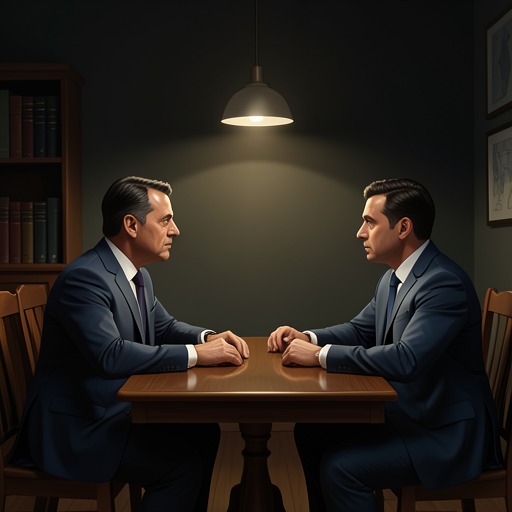
The bond persists after Shevek’s arrival. He visits Atro once or twice a week at the pleasant house on the edge of the campus, where Atro lives with two servants of his own age. Atro is nearly eighty and calls himself a monument to a first-class physicist. His interest in Shevek appears to be personal comradeship, not just curiosity about a celebrated visitor. Shevek takes pleasure in being addressed simply by his name, and feels closer to Atro than to anyone else he has met on Urras, even though Atro’s aristocratic outlook remains difficult for him to understand.
Their collaboration also leaves a complicated mark on publication. Atro tells Shevek that a book made from their ideas has been translated, edited, and polished over decades, with transitions supplied where Shevek had left gaps. Shevek recognizes that the finished work consists entirely of his and Atro’s ideas. He then proposes publishing his paper on Reversibility in an Urrasti journal so Atro can read it, because Atro remains committed to an understanding of causation that Shevek’s work challenges. Scientific exchange between them is real, but it takes place within institutions that control how work is edited, circulated, and received.
Class, National Identity, and Political Difference
Atro’s background helps explain why his values resist easy classification. He can trace his genealogy back eleven hundred years through generals, princes, and great landowners; his family still owns an estate of seven thousand acres and fourteen villages in Sie Province. He speaks with provincial turns of phrase and clings proudly to archaisms. Yet wealth impresses him little, and he speaks contemptuously of his government as demagogues and crawling politicians. His respect cannot be bought, though he freely grants it to those he considers worthy.
This combination makes Atro an enigma to Shevek: an aristocrat who scorns money and political power, but remains invested in inherited status and national distinction. In their conversations, Atro defends a competitive view of existence and warns against the language of common humanity and mutualism. He wants Shevek to recognize a special obligation to their own people, whom he calls the Cetians, and to protect their advantage over Hainish and Terran societies. His affectionate friendship with Shevek does not dissolve these boundaries; it becomes one of the means by which he tries to persuade Shevek to accept them.
Atro’s nationalism becomes most explicit when he discusses Shevek’s theory. He expects other worlds eventually to obtain the scientific truth, but wants them to pay for it. What he seeks, he says, is not money but recognition of Cetian science and the Cetian mind. If transilience is mastered, he believes, it will give their people a place of superiority in any interstellar civilization. He imagines the theory as a great gift that should be offered only when Urras can enter that civilization as a noble power. Shevek listens and reassures him with a touch on the arm, but does not promise the loyalty Atro asks of him.
The difference between them is also visible in how they understand social life. Atro describes Odonianism as womanish because, in his view, it excludes the virile virtues of courage, flag-loyalty, and warfare. Shevek answers that Anarres has no flags. When Atro argues that people close ranks when the country is threatened, Shevek asks whether the people themselves approve of the war and who must fight it. Atro replies that ordinary men are conscripted and that their purpose is to fight for their country. Shevek’s muted question about the dead children Atro’s argument leaves behind goes unheard. Their affection coexists with a deep disagreement over whose interests war serves and what courage means.
War, Authority, and Shevek’s Choice
During the war over Benbili, Atro calls the conflict a large-scale operation and speaks of its strategy. The popular papers have ceased their earlier excitement and now repeat government bulletins, leaving Shevek puzzled by the absence of moral judgment. Atro answers his questions through national status and military duty: A-Io cannot allow Thu to prevail, and the common soldier is a resource through which the country became a leader. His confidence in the national cause contrasts with Shevek’s attention to the people required to fight.
Atro has also explained the military chain of command, in which orders pass from sergeants through successive ranks to generals who answer only to the commander in chief. Shevek rejects it as a coercive and inefficient organization. Atro argues that war breeds courage and manliness, but his defense leads him to acknowledge that guerrillas organized from below can be effective when people believe they are fighting for something of their own. Later, as Shevek shelters an injured demonstrator, he reconsiders the purpose of the army: its rigid hierarchy, he concludes, is suited to enabling soldiers to kill unarmed people when ordered. The contrast between Atro’s account of discipline and Shevek’s encounter with its consequences sharpens the political divide between them.
When Shevek asks whether the war is over, Atro explains that fighting continues while Thu holds the eastern provinces. He dismisses invasion between the rival powers as folly and describes the war as a police action that preserves the balance of power. At the same time, he acknowledges that an official state of war brings restrictions: research may be classified, publication delayed, and non-nationals such as Shevek may be barred from leaving campus without clearance. Atro presents these rules as manageable and says he can help Shevek evade them. The offer shows his habitual willingness to outwit authorities, but it also exposes the conditions under which Shevek’s scientific freedom is limited.
As Shevek comes to understand that A-Io may use his work for profit, political advantage, and military power, Atro’s hopes become part of a larger crisis. Shevek tells Chifoilisk that he came to bargain with the system because he wants the people of Anarres to come out of exile and wants free exchange and human solidarity between the worlds. Atro’s dream of Cetian precedence is not Shevek’s objective. Shevek eventually asks whether there is such a thing as a gift rather than a sale, and insists that he wants to give his theory to Urras, Hain, and the other worlds so no one country can turn it into private power. Their difference is not a rejection of their scientific comradeship, but a decisive disagreement about what that comradeship obliges Shevek to do.
Narrative Significance
Atro is neither a simple opponent nor a representative of unqualified generosity. His friendship with Shevek is sincere: he has risked his standing to defend Shevek’s ideas, values intellectual truth above money, and treats the younger physicist as a comrade. Yet he tries to bind the theory to a national story of superiority and inherited identity. The same man who resists being bought would have others pay for access to knowledge, not for his own enrichment but to secure recognition for his society.
That contradiction makes Atro a crucial counterpoint to Shevek’s ethic of sharing. Their exchanges distinguish personal respect from political agreement, and scientific truth from the uses to which states may put it. Atro can welcome Shevek home, fight beside him intellectually, and still ask him to reserve the fruits of his work for his own people. Shevek’s decision to offer the theory without national restriction marks the limit of Atro’s influence and turns their debate over physics into a debate over possession, solidarity, and the purpose of knowledge.