Elbow
The DispossessedElbow is a mill town in the Dust whose phosphate production, dependence on transported food, and experience of famine make it a concentrated example of Anarres’s ecological and social vulnerability. Shevek is posted there during the drought and later recalls the ration-list work that led him to leave: in Elbow, survival could be converted into an administrative decision, but refusing to make that decision did not end the system that required it.
Setting and economic role
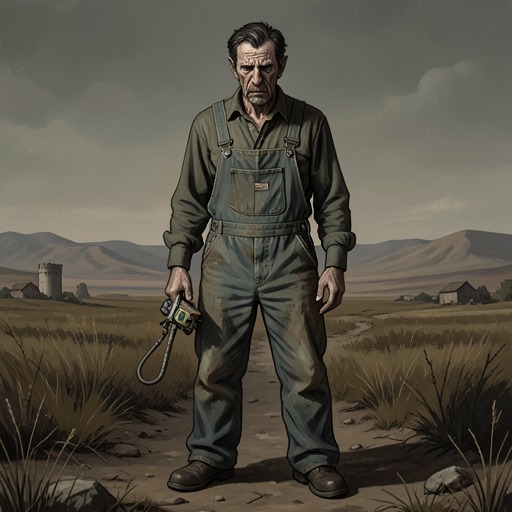
Elbow lies in the Dust, the broad, sparsely inhabited interior of Anarres. The Dust had once been forested with holums, but long droughts and a hotter, drier climate killed the trees and reduced the soil to windblown grey dust. The region’s mining settlements stand apart from the more fertile coastal communities, and attempts to restore the land through reforestation reflect the scale of the ecological damage. Elbow’s location thus joins its immediate hardship to a larger landscape altered by persistent drought.
The town is a mill community rather than a farm settlement. It manufactures concrete and foamstone near lime deposits and a navigable river, but depends on transport for food. During the crisis, the mills also continued to matter because they supplied phosphates. That dependence made Elbow part of an interlocking system: industrial production required workers and materials, while food had to arrive from elsewhere along transport lines already strained by emergency demands.
The wider economy of Anarres is not wholly independent of Urras. Freighters arrive eight times a year with fossil fuels, machine parts, electronic components, and new plant strains, and depart carrying metals and other mined resources. The trade is widely resented, yet Anarresti debates repeatedly return to the argument that ending it might invite invasion. Elbow’s mining and industrial role sits within this uneasy arrangement, where the costs of isolation, resource extraction, and ecological scarcity are borne locally.
Emergency posting and famine
During the drought, Shevek is assigned from the North Central Institute of Science in Abbenay to Elbow’s first phosphate mill as an indefinite emergency posting. The assignment carries him from scientific work into a region where the immediate pressures of labor and food distribution dominate daily life. The drought’s effects are not abstract: water is directed toward keeping crops alive, food reserves are limited, and the transport network cannot meet every demand.
The transport federative presses its vehicles and workers into service, but provision trains take priority and delays accumulate. On one journey, Shevek’s train is held for twenty hours after a dispatch error and a wreck on the line. The mill town where it stops has no surplus food. Its 160 residents face the prospect of going without if they feed the 450 travelers, so the stranded passengers receive nothing and fast for sixty hours before reaching a station with a stocked refectory. The episode shows how scarcity can defeat the ideal of sharing without any single community having enough to spare: the town’s refusal is a decision made under the threat of hunger, not evidence that food exists in reserve.
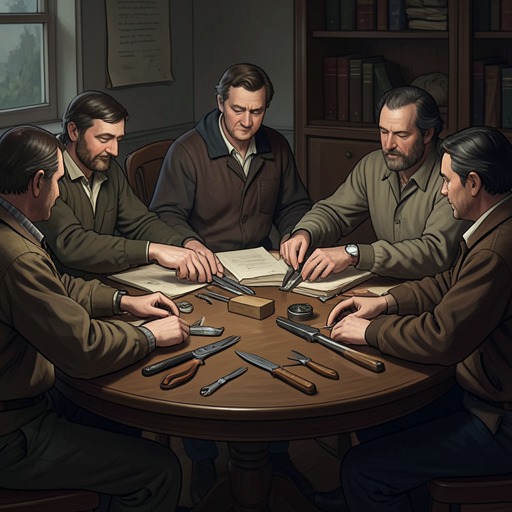
Later, a fellow passenger tells Shevek about having worked as Elbow’s mill worklister during the second year of the drought. The mill syndicate reduced rations according to work capacity: full-time workers received barely enough for their labor, those on half time received three-quarters, and people too ill or weak to work received half. That rule trapped the sick in a vicious circle, since the reduced ration could keep them alive while leaving them unable to recover and return to work.
Ration lists and departure
The former worklister describes the personal consequence of administering those rules. While working long days at a desk, he received full rations and was expected to place already sick people on half rations. He came to understand his task as making lists of who would starve. The account turns bureaucratic classification into a direct ethical burden: the list is not merely a record of need but an instrument that distributes the chance to survive.
He quit the work and went to Grand Valley. His refusal, however, did not abolish the rationing practice; someone else took over the lists at the mills in Elbow. Shevek’s later conversation with him makes that succession central to the town’s significance. Conscience can interrupt an individual’s participation, but in a system of scarcity the vacant position remains, ready to be filled by another worker.
Elbow also appears in the history of Tirin, whom a fellow traveler remembers meeting there before Tirin went to Segvina for therapy. Tirin had been a janitor at the mill, and the speaker doubts that he was then able to choose freely. The recollection places another life within the town’s labor system, although the evidence does not establish that his experience was directly caused by the famine or by the ration-list policy.
Significance
Elbow makes the consequences of ecological scarcity legible through work, transport, and allocation. Drought damages the land; food shortages strain the transport network; and the mills’ need for labor turns ration levels into judgments about whose bodies are considered able to work. The town’s crisis is therefore neither solely environmental nor solely administrative: natural limits become social hardship through the systems that move food, organize production, and assign rations.
Its moral force lies in the gap between personal refusal and structural change. The worklister leaves rather than continue deciding who receives inadequate food, but the lists continue. Elbow is a place where the ethic of mutual aid meets decisions made under severe constraint, and where the question of how to distribute scarcity cannot be separated from the question of who is made responsible for doing so.