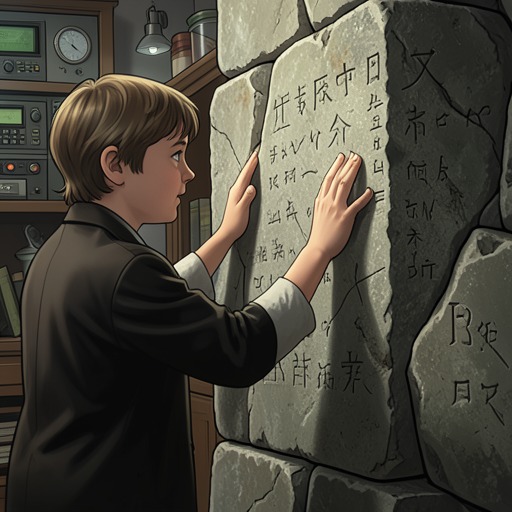
Fort in Drio
The DispossessedFort in Drio is the former prison where Odo spent nine years after the Insurrection of 747, and where she wrote the Prison Letters and the Analogy. Its unexpected survival as a dark ruin gives Shevek a brief, distant encounter with that history: the fort is not merely a lost site from the past but a visible persistence of confinement and political memory.
History and association
The fort dates from the era of the kings and was later used as a prison. During his visit to Urras, Shevek asks to see it because of Odo’s imprisonment there. He recalls that she spent nine years in the fort after the Insurrection of 747, writing both the Prison Letters and the Analogy during that confinement. The building therefore links Odo’s political work to the coercive institution that held her.
The surviving ruin
Shevek’s companions initially tell him that a castle of that kind would have been demolished when the Foundation rebuilt the town. Pae likewise says that Drio had been remade and the old structure wiped away. But as their car follows the riverside highway toward the turnoff to Ieu Eun, they pass a bluff above the Seisse River and see the fort: heavy, ruinous, and marked by broken towers of black stone. Its dark mass sharply contrasts with the Space Research Foundation’s bright domes, factories, lawns, and paths.
Shevek’s encounter
Chifoilisk identifies the building as the fort, while Pae assumes it must be empty. Shevek declines the offer to stop. He has seen what he came to see and does not need to search its ruined halls for the cell where Odo was held; he already knows what a prison cell is like. As the car passes beneath its looming walls, the fort’s endurance becomes the point of the encounter: although the surrounding town has been rebuilt, the prison remains.
Narrative significance
The scene makes political memory architectural. The fort persists despite assurances that it has been erased, just as the history of Odo’s imprisonment cannot be reduced to a demolished site or an obsolete past. Seen from a moving car rather than entered, it remains a stark, unresolved presence: Shevek recognizes its meaning without needing to cross its threshold.