Palat
The DispossessedPalat, an engineer on Anarres, is Shevek’s father and his principal parent during childhood. When Rulag is posted to Abbenay, Palat accepts that Shevek will remain in the children’s dormitory and says he will move back into a dorm himself. His work does not bring the same opportunities as Rulag’s, but his gentleness, reliability, and willingness to spend time with his son become central to Shevek’s early life. Years later, Palat dies while helping children trapped in a damaged learning center; Shevek remembers him not as an abstraction or a statistic but as a person who repeatedly made room for care and companionship.
Identity and Background
Palat is a long, thin, sad-looking engineer who works in construction and maintenance. He and Rulag are partners, and both are engineers, but the Central Institute of Engineering wants Rulag rather than him. Palat acknowledges the difference without bitterness: he believes she has important work to do and does not present his own career as a claim that should determine where the family lives.
His life reflects Anarres’s mobile labor system. After leaving the children’s dormitory arrangement, he takes a short maintenance posting at the Water Reclamation Plant in Drum Mountain, then plans a period of rest at the beach in Malennin. When he later visits Shevek, he is staying in Wide Plains, where he is working as a construction engineer for the community. The postings separate him from his son for weeks at a time, but Palat explains his plans plainly, and Shevek trusts him.
Raising Shevek and Teaching Through Companionship
When Rulag is assigned to Abbenay, Palat agrees that Shevek should remain in the nursery, whose staff already know him. He will move into a dormitory rather than take the child with him. The decision belongs to a social arrangement in which children are cared for collectively, but the scene also makes clear that Palat’s attachment is personal: he takes the distressed child into his arms after Shevek cries over being moved from a patch of sunlight, and comforts him gently.
Palat maintains their relationship through visits, even when work keeps him away. Shevek waits six decads—sixty days—for his father to return from a maintenance posting and planned leave. Palat arrives in Wide Plains looking sadder than before, and the two take pleasure in each other’s company. Their reunion is not ceremonial; it is part of the dependable pattern that allows Shevek to trust him.
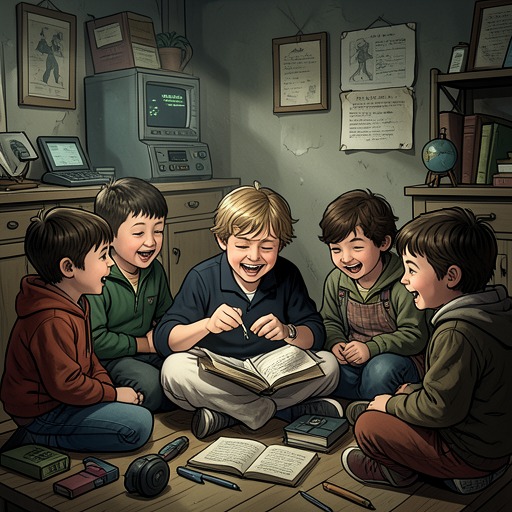
One visit becomes a shared lesson in how each of them thinks. Palat brings a pocket-sized book of logarithmic tables, its cover marked with the Circle of Life. Shevek has imagined that a book made entirely of numbers would embody justice and an underlying order that words cannot quite preserve. Palat explains the logarithms and demonstrates their use with his slide rule; Shevek, in turn, shows his father the Square and explains its arrangement. Their exchange makes mathematical curiosity a form of mutual sharing rather than one-way instruction. When they realize how late it has become, they return together through the wet streets, and at the dormitory they kiss quickly, laughing.
Work, Death, and Memory
Palat’s engineering work places him at the learning center during an earthquake in Wide Plains. He is helping others get children out of the damaged building when a second quake brings the structure down. Thirty-two people are killed. Shevek had left about ten days earlier to begin training at the Regional Institute, and Palat’s death reaches him as an event from which he was absent, not a final exchange between father and son.
Eight years later, Rulag tells Shevek that Palat died in the collapse. Her description of him as one of thirty-two, a statistic, draws a quiet correction from Shevek: there would have been more deaths if Palat had not gone into the building. The distinction gives the death its human measure. Palat’s work and his decision to help rescue the children are inseparable, and the number of victims does not cancel the lives his actions helped save.
Relationships and Significance
Palat’s relationship with Rulag is shaped by partnership and divergent work assignments. Rulag says she was willing to continue their partnership and tried to have him posted to Abbenay, but no opening appeared in his line of work, and he would not move without a posting. Their separation was therefore not simply a rejection of family life: the available work and Palat’s insistence on having an appropriate assignment helped determine where each could live. Rulag later recognizes that Palat stayed with Shevek through the years when close personal contact mattered, and describes him as supportive and parental in a way she was not.
For Shevek, Palat’s importance lies in the contrast between dependable affection and long absence. He cannot always be present, but he comes when he has said he will, and their time together includes trust, play, and the exchange of ideas. Palat’s death extends that pattern beyond the family: he is killed while trying to reach children in danger, and Shevek sees this as more than a statistic. His life therefore joins the novel’s ideals of social responsibility and personal attachment without making one a substitute for the other.