Shevek–Palat relationship
The DispossessedShevek and Palat share a loving, if intermittent, father–son relationship in which separation is treated as a practical fact rather than a reason to withdraw affection. Palat cannot keep Shevek with him when Rulag is posted to Abbenay, but he remains attentive to his son, and their visits become occasions for trust, tenderness, and intellectual exchange.
Separation and early attachment
When Rulag is assigned to Abbenay, Palat agrees that Shevek should stay in the nursery full-time and says that he himself will move back into a dormitory. The matron expects the labor-allocation system to send Palat after Rulag because they are partners and both engineers. Palat explains that the Central Institute of Engineering wants Rulag, while he is not considered as capable; he believes she has important work to do. The decision leaves him apart from both mother and child, but he does not contest Shevek’s placement or ask that the boy’s needs be subordinated to his own.
The relationship’s earliest image is one of unequal awareness: the infant Shevek is absorbed in a patch of sunlight, unaware that his father watches from the anteroom. When another baby crowds him out of the light, Shevek reacts fiercely. The matron tells him that the sun is not his possession and sets him aside; Palat then picks him up and comforts him, his own voice shaking with emotion. His response joins gentleness with recognition that the child is struggling to accept the social rule of sharing. Even at this early stage, Palat offers comfort without pretending that he can give Shevek exclusive possession of what he wants.
Trust across long intervals
As a child, Shevek learns to wait for Palat’s visits. At eight, he is described as skilled at waiting, a habit first learned while waiting for his mother to return and later reinforced by waiting for turns and shares. His father’s visits are infrequent: Palat takes a short maintenance posting at the Water Reclamation Plant in Drum Mountain, then plans time at the beach in Malennin. He explains these plans to Shevek, who trusts him. After six decads—sixty days—Palat comes to the children’s dormitories in Wide Plains, still marked by sadness.
The narration notes the difference between what Palat has arranged and what he actually longs for: his planned time away with another partner is not what he wants most; he wants Rulag. When he sees Shevek, however, he smiles, and the pain in his expression does not prevent them from enjoying each other’s company. Their affection is not founded on constant proximity. It survives a long gap because Palat returns and Shevek believes that he will.
A shared language of inquiry
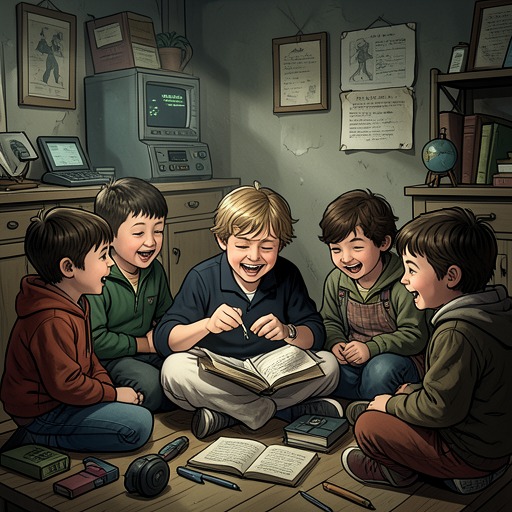
Their closeness becomes especially vivid in a visit to the domicile common room. Shevek asks whether Palat has ever seen a book made entirely of numbers. Palat produces a pocket-sized volume of logarithmic tables, and Shevek recognizes in its columns the ordered pattern he has imagined as a foundation of justice. He asks what the numbers are for, and Palat, an engineer, explains logarithms and demonstrates a slide rule. Shevek answers by showing his father the Square and how its arrangement works.
This exchange makes their connection reciprocal: Palat brings the tools and knowledge of engineering, while Shevek offers his own emerging way of seeing structure. Their lesson unfolds amid ordinary communal life—other residents playing a game, seeking a room, and listening to rain on the roof—rather than in a private household set apart from others. When they realize how late it has become, they run back to the children’s dormitory and receive a perfunctory scolding from the vigilkeeper. They kiss quickly, laughing, before Shevek watches Palat walk away. The scene gives their limited time together a distinctive shape: serious curiosity, playfulness, and a parting that is affectionate but temporary.
Relationship and the novel’s larger contrasts
Palat’s care helps establish that Shevek’s childhood is not simply a story of abandonment. His parents’ separation and the dormitory system mean that family life is discontinuous, yet Palat’s visits provide a dependable bond. The father’s sadness and his son’s trust coexist; neither cancels the other. Their relationship is built through attention and shared activity rather than ownership.
That distinction resonates with the novel’s treatment of non-possession. As a baby, Shevek cries that the sunlight is his, and adults teach him that use does not create ownership. Palat’s later relationship with him embodies the same ethic in personal form: he cannot keep his son constantly by his side, but he returns, comforts him, explains what he knows, and accepts what Shevek has to teach in turn. The result is a bond that is real without being possessive, and tender without requiring uninterrupted closeness.