Tirin
The DispossessedTirin is Shevek’s childhood friend and, in Shevek’s later judgment, a born artist and natural rebel. His satirical play turns Anarres’s rejection of property into a comic spectacle, but its reception also marks the beginning of his estrangement from the society around him: publicly reprimanded, repeatedly assigned physical labor, and eventually recorded as receiving therapy on Segvina Island, he becomes a figure through whom the novel tests whether informal social pressure can reproduce the coercion an anarchist society officially rejects.
Identity and Early Arguments
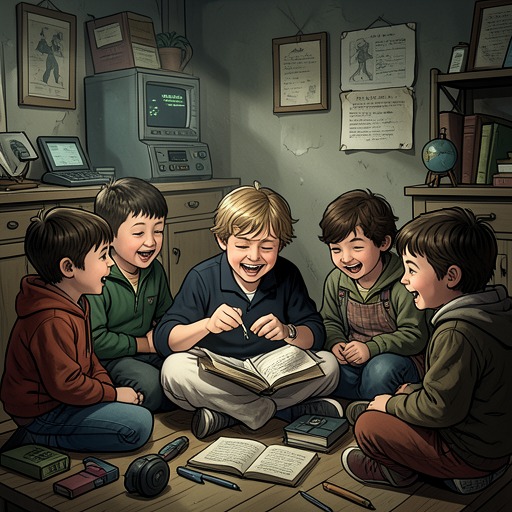
As a teenager at the Northsetting Regional Institute, Tirin is one of a group of bright friends who question what they have been taught about Urras. Looking up at the Moon, he imagines people there looking back at Anarres and calling it their Moon. The reversal makes the two planets’ relationship newly visible: each world occupies the center of its own perspective, while the other appears distant and strange.
Tirin extends that questioning to the information available about Urras. He asks whether the images students see are contemporary or predate the Settlement, and challenges the claim that Urras has remained unchanged and morally degraded for a hundred and fifty years. If its propertarian societies were as sick as Anarresti teaching suggests, he reasons, why have they not collapsed? He also resists treating an entire population as morally uniform: people vary on Anarres, so some people on Urras might be decent regardless of their society’s structure.
His argument is not simply a defense of Urras. Tirin asks why fear should be accompanied by hatred, and whether hostility toward the other world helps prevent Anarrestis from wanting to visit it. The possibility unsettles Shevek, who responds that responsibility to other Odonians is itself freedom and that leaving Anarres would mean abandoning that responsibility. Tirin objects that Shevek has answered a living question with a load of arguments, leaving the person beneath them unheard. Bedap, too, maintains that Tirin’s underlying point remains: they should know whether they know the truth about Urras.
The Play and Its Reprimand
Years after Shevek has left Northsetting, Tirin writes and stages a play at the Summer Festival. Its premise brings an Urrasti onto Anarres hidden aboard a Moon freighter, where he tries to conduct life through buying, selling, and accumulating gold. As the gold piles up, the character becomes unable to move freely and builds a palace, styling himself the Owner of Anarres. The comedy also turns the logic of purchase against intimacy: the owner tries to make a transaction where the other person does not want one. The play’s joke is not merely that an Urrasti behaves absurdly on Anarres; it makes the property system itself look absurd when transplanted into a society organized around non-ownership.
Bedap remembers the play as funny and crazy, but says that people who misunderstood it treated it as anti-Odonian. Tirin was publicly reprimanded at a syndicate meeting, a practice once used to cut an overbearing foreman or manager down to size. In Bedap’s account, its use had changed: rather than checking a boss, it now told an individual to stop thinking for himself. Tirin took the reprimand badly, came to feel that everyone was against him, and began speaking critically and bitterly to anyone who would listen.
The play’s later recollection preserves both its limits and its force. Takver calls it silly and witty; Shevek agrees it may have worked better on stage than on the page and notes that Tirin was only twenty when he wrote it. Yet she remembers him as funny and alive in the role of the Urrasti, while Shevek says Tirin kept rewriting the same play and never wrote another. His artistic impulse survives in repetition, but the evidence offers no later body of work to balance that single, recurring creation.
Postings, Therapy, and Disputed Responsibility
After finishing at the Institute, Tirin qualifies as a mathematics instructor and requests a posting. Divlab assigns him to a road-repair crew in Southsetting. Shevek remarks that Tirin had avoided outdoor work since he was ten and considers the assignment fair; Bedap’s account, however, places it within a deteriorating sequence. Tirin protests the posting as an error, but the computers repeat it, and he goes.
Bedap says that Tirin wrote to him several times as he was reposted, always to physical labor in small outpost communities. Tirin eventually wrote that he was quitting his posting and coming back to Northsetting to see Bedap, but he never arrived and stopped writing. Bedap traced him through the Abbenay Labor Files and found a final entry: therapy on Segvina Island. The record tells Bedap where Tirin went, but does not explain why. He wonders whether Tirin committed a serious offense or what else could account for admission to the Asylum; Shevek answers that people request a posting there and describes it as a refuge for those seeking safety from pressure and retribution.
That disagreement becomes personal when Bedap insists that Tirin never asked to be sent there and says that the society drove him to the point of needing refuge. Shevek rejects the easy assignment of blame to an unnamed persecuting group: if “they” drove Tirin mad, he asks, is Bedap accusing the social organism itself? Bedap replies that if Shevek can dismiss Tirin as a work-quitter, there is nothing more to say. His grief checks Shevek’s righteous certainty, and the two fall silent. The scene leaves the cause of Tirin’s admission unresolved while making clear that abstract defenses of social arrangements cannot settle what happened to a particular friend.
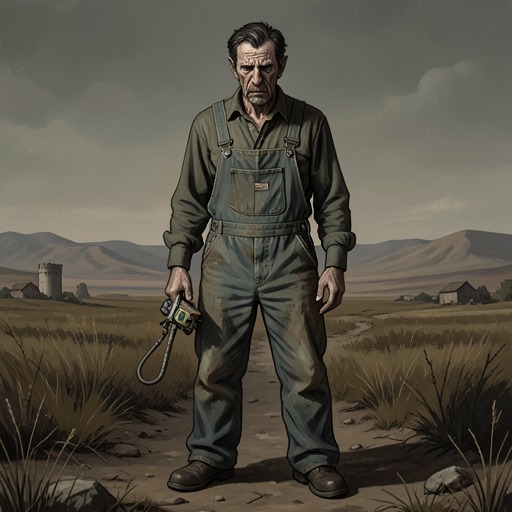
Years later, Shevek says he saw Tirin in Southwest. Takver recalls that Tirin had been a mill janitor in Elbow before therapy, but doubts that he could still choose freely by then. She knows Bedap believed Tirin had been bullied into requesting treatment; she herself is unsure, and doubts that the Asylum deliberately drove him over the edge. Her account distinguishes the disputed circumstances of his institutional placement from the visible devastation Shevek attributes to Tirin when he sees him again.
Shevek’s Retrospective Judgment
Shevek eventually interprets Tirin not chiefly as a failed worker or a person who could not withstand ordinary social life, but as a creator whose defining impulse was to turn things upside down. He calls him an “inventor-destroyer” and a satirist who praises through rage. This view connects the childhood dissenter, the author of the property-owner comedy, and the adult whose repeated conflict with communal expectations ends in isolation and apparent ruin.
In conversation with Takver, Shevek makes the larger social claim explicit. Anarres, he argues, has created conventional laws of behavior even without formal laws or police: people fear being called lazy or dysfunctional and fear their neighbors’ judgment more than they trust their own freedom to choose. He sees Tirin as evidence that social approval can exclude a person and then condemn him for standing outside it. Shevek calls Tirin a real Odonian and a free man, while acknowledging that Tirin was extremely vulnerable. The judgment is not a settled diagnosis of every stage in Tirin’s decline; it is Shevek’s painful recognition that a society founded on freedom can punish the person who exercises it in an unfamiliar form.