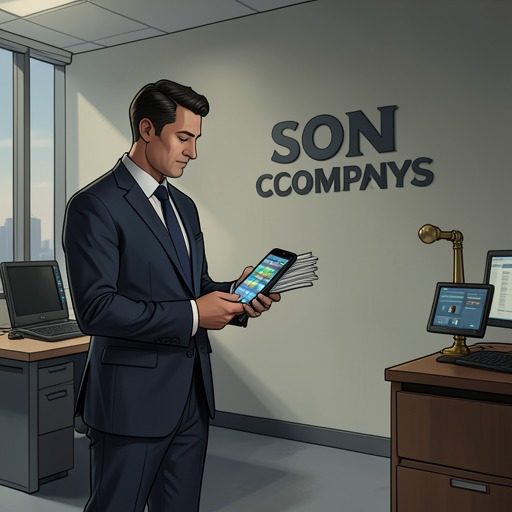
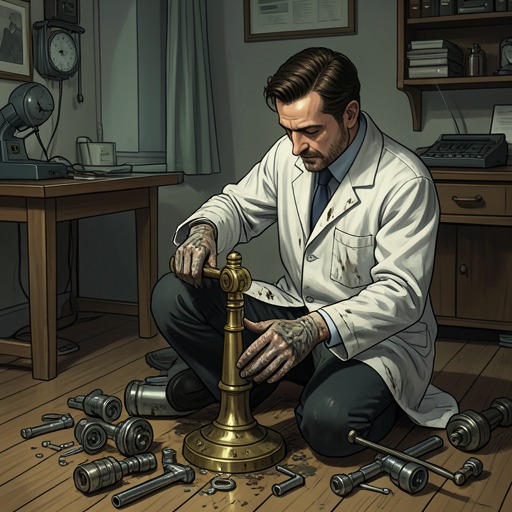
Winter shortly before the Six Weeks War
Pete’s Summer Door
[Dan Davis](entity:character-recall-character-dan-davis-733a595485c2) lives in a farmhouse in Connecticut, accompanied by his male cat, Petronius; he calls the cat [Pete](entity:character-recall-character-pete-20a13c365688) (the cat). Whenever it snows outside, Pete (the cat) refuses to go through the cat hole, insisting that there are so many doors in the farmhouse, one must
3 December 1970
A Drunken Search
In [Los Angeles](entity:location-recall-location-a4be76fb5f5a), [Dan Davis](entity:character-recall-character-dan-davis-733a595485c2) put Pit (the cat) in a overnight carry-on bag, drinking Scotch whiskey and licking his broken heart. He recently lost his business and the engagement to Bella Daking, and believed that as long as he slept until the year 2000, the distance
3 December 1970
A Shared Sleep Contract
[Dan Davis](entity:character-recall-character-dan-davis-733a595485c2) told the salesperson of the mutual insurance company, Mr. Powell, that he wanted both himself and Peter (the cat) to enter cryosleep. The company could preserve the cat, so Dan Davis negotiated a lower fee for Peter (the cat), and arranged for the care of both
3 December 1970
The Doctor’s Warning
During the physical examination, the doctor noticed that [Dan Davis](entity:character-recall-character-dan-davis-733a595485c2) had drunk a lot of alcohol and refused to let him enter the cryosleep while intoxicated. The doctor gave him an injection to wake him up and ordered him not to drink, eat, or have breakfast the next day before returning. This sc
From Dan’s youth through the late 1960s
The Man Who Built Hired Girl
[Dan Davis](entity:character-recall-character-dan-davis-733a595485c2) recalled his childhood, education in engineering, and his experience serving in the U.S. Army during the six-week war. He avoided the destruction of the Sandia Weapon Center by going out on a mission. Pit (the cat) was taken away by Miles Kintner and his stepdaughter
Soon after Hired Girl’s early success
Belle Joins the Firm
after bell dakin achieved early success, bel dakin joined the company as secretary and bookkeeper, quickly becoming an indispensable person in the office. dan davies was fascinated by her, gave her company stock as an engagement gift, believing that after the company stabilized, they would get married; miles g
During Hired Girl’s first years
The Flexible Frank Project
[Dan Davis](entity:character-recall-character-dan-davis-733a595485c2) began developing the [Flexible Frank](entity:object-recall-object-flexible-frank-238e9a5ccab7), a versatile home automatic machine designed to perform various household chores. He used Sossen memory tubes, programmable programs, and carefully designed safety devices, hoping to reduce the burden of repetitive household tasks and free women from heavy housework. Miles Ginty wanted
Before the November 1970 board meeting
Pete Rejects Belle’s Plan
When [Dan Davis](entity:character-recall-character-dan-davis-733a595485c2) and Bell Daking discussed where they would live after marriage, Bell Daking suggested spaying Peter (the cat) so that it would be more suitable for living in an apartment. Dan Davis was greatly shocked by this suggestion, believing it fundamentally showed that she did not understand the nature of
18 November 1970
Miles’s Expansion Proposal
At the shareholder meeting, Miles Kentry proposed to take FlexFrank away from [Dan Davis](entity:character-recall-character-dan-davis-733a595485c2), expand the hired girls' business nationwide, and sell the controlling interest to the Mannix Enterprise Group. Dan Davis, on the other hand, advocated for product licensing and for the company to return to a small research
18 November 1970
Belle’s Deciding Vote
[Dan Davis](entity:character-recall-character-dan-davis-733a595485c2) thought that Bell Daking would follow their previous agreement and vote to give him the shares as a wedding gift, supporting him in keeping control. However, she voted with Miles Kintner, which passed the expansion proposal with a majority. When Dan Davis protested, Bell Daking announced that they
Early morning, 19 November 1970
Dan Locked Out
Before dawn, [Dan Davis](entity:character-recall-character-dan-davis-733a595485c2) returned to the factory intending to take Frank Flexible away, but found that the gates and factory doors had been changed. The guard refused to let him in and warned him that he had received orders not to allow Dan Davis entry to the plant. A letter given to Dan Davis claimed
The day after Dan is locked out
The Lawyer’s Hard Advice
[Dan Davis](entity:character-recall-character-dan-davis-733a595485c2) consulted with a shrewd, money-oriented lawyer. The lawyer agreed that Miles Kintner and Bell Daking had outwitted him in their schemes, but believed there was no way to prove it. The documents had Dan Davis's signature, and the only witnesses to his account were
3 December 1970, before visiting Miles
Dan Chooses to Fight
After a night of drunken revelry and reflection, [Dan Davis](entity:character-recall-character-dan-davis-733a595485c2) realized the doctor's warning had made him reconsider his death. He decided not to avoid the issue anymore, but to go find Miles Kintler and Bell Daking to confront them and find out exactly how they had deceived themselves. Before driving
Night of 3 December 1970
The Confrontation at Miles’s House
[Dan Davis](entity:character-recall-character-dan-davis-733a595485c2) confronted Miles Kentry and Bell Daking, accusing them of forging his employment contract and patent transfer documents, stealing his notes, and using his engagement gift to seize control of the company. Miles Kentry refused to admit to anything; Dan Davis pressed Bell Daking on the suspicious timing of her
Night of 3 December 1970
Belle Uses the Zombie Drug
When [Dan Davis](entity:character-recall-character-dan-davis-733a595485c2) pressed Bell Daxin about her past and whether her marriage to Miles Kentry was legal, she knocked over the glass he was holding and then stabbed him with a syringe. When the effects of the drug took hold, Miles Kentry caught Dan Davis; he remained conscious but became
1970年12月3日夜
皮特在屋内的搏斗
Peter noticed Dan's helpless situation and cried out anxiously. When Miles tried to shove him into the travel bag, the cat attacked; Bell picked up the fireplace poker and swung it at him, but Peter scratched her legs, forcing her to retreat. Miles and Bell were both injured, and Peter escaped
1970年12月4日中午前
伪造保险计划
Bell searched for the belongings of Dain, found his mutual insurance company documents, which included his plan to enter cryosleep with [Pete](entity:character-recall-character-pete-20a13c365688). She realized that the psychiatrist might eventually remove the drug's effects, so she convinced Miles to use Dain's own plan to get rid of him from their lives
1970年12月4日
丹被重新编程
Bell told the drug-controlled Dan that she was his sister, and that she and Miles were his best friends, and that he wanted to sleep forever. She injected him with drugs to make him believe that Peter had been sent to live with Richie. These false memories worked because Dan could answer questions but could
1970年12月4日
首次长眠
In the sanctuary, Bell described Dan as a patient who had taken sedatives and claimed to be his sister. The staff checked him and then prepared to put him into cryosleep; he drifted between his memories, dreams, and fragmented operations under the influence of the drugs. Dan's dreams depicted this
2000年12月13日
在未来醒来
Dan awoke in the sanctuary of Sotter, having spent thirty years in hypothermia. Doctor Albrecht explained the standard procedures for resuscitating a client. Dan learned that the world had changed, yet his body had not aged. The eager beaver automaton brought him breakfast
2000年12月至2001年初
未来的新世界
Dan studied the new century, learning its vocabulary, technologies, and the scale of social changes. Zero-gravity technology, automated services, and a completely new urban system fascinated him; at the same time, the crowded cities, strange customs, and the pain of losing his former life also made him feel
2000年12月
自动化废车场
Tan found a job at a scrap yard, standing by the switch, watching the automated machines crush new cars into scrap. He asked why it was so wasteful to destroy unused cars, and the supervisor gave him a lesson, explaining the relationship between price support, employment, and the steel industry. This
2001年初
值得生活的未来
Tan found that the Greater [Los Angeles](entity:location-recall-location-a4be76fb5f5a) has become a vast and fast-paced city, with newly planned districts and technologies unimaginable in 1970. Zero-gravity technology and the eradication of common diseases impressed him. He began to realize that the future is not just a place one has to
2001年初
口述听写机的构想
Tan was studying engineering knowledge when he imagined an automatic secretary that could convert spoken English into correctly spelled and properly formatted letters. He thought that by combining memory techniques, sound encoding, and a mechanism that could make choices based on context, he could handle the irregularities of English. This idea reminded him that
2001年3月5日
雇来的姑娘公司拒绝录用
Tan applied for a job at the company hired girls, but was rejected by the human resources department because he had not worked in engineering for thirty years and was said to be too old. Tan insisted that his physical age was only thirty, but the HR staff still evaluated him based on his birth year
2001年3月至4月
丹重返旧公司
At the hired girl company, Dan was allowed to use tools, industry journals, and engineering facilities. He met parts engineer Chuck Friedenberger; Chuck helped him understand current technological levels and reminded him not to develop valuable ideas before determining the ownership of the results. Dan kept his best designs in his heart
2001年5月3日
贝尔以舒尔茨太太的身份来电
After receiving many letters over several months, Dan finally answered the phone call from Mrs. Schultz and recognized Bell's voice. He agreed to meet her not in hope of reconciliation, but because he believed she might know where Richie was. Dan had basically given up on revenge, because he knew revenge could not
2001年5月3日傍晚
贝尔毁掉的重逢
Tan found Bell living in a run-down apartment, which seemed old and frail. She said Miles died less than two years after Tan disappeared, and she complained that Miles left the inheritance to Richie, scheming against her. Tan asked where Richie was, and Bell only gave some confused fragments: she had
2001年5月
追查海尼克信托
Tan checked public records to find Miles' death certificate and asked the accounting department of the hired girl company to trace his former shares. He found out that a larger portion of the shares generated dividends into a trust established for a person named Heinick; the smaller portion of Bell's shares was transferred to S
2001年5月
专利署着丹的名字
Tan received the patent records of urgent beaver and drawing Tan. Both basic patent inventors are listed as [Daniel Boone Davis](entity:character-recall-character-daniel-boone-davis-fb98442b944b), confirming his achievements shaped the automation industry; however, he temporarily cannot explain why these patents were applied for or developed during his disappearance. His professional pride was restored, but these records
May 2001
A Possible Amnesia
Tan asked [Dr. Albrecht](entity:character-recall-character-dr-albrecht-dd2e4686e3e0) about whether cryosleep could cause memory loss, because he was worried he might have forgotten part of his life. Dr. Albrecht listed other possibilities, including psychological suppression, trauma, suggestion, hypnosis, and alcohol, and invited Tan to discuss it face
May 2001
The Classified Time Machine
Over beers, Dan tells Chuck that he wishes he could travel back to investigate what happened before his first cold sleep. Chuck reveals that a classified experiment at the [University of Colorado Boulder](entity:organization-recall-organization-97dc20d8ac0e) produced temporal displacement as a by-product of [NullGrav](entity:object-recall-object-nullgrav-01f8567242e1) research.
Chuck explains the device’s constraints: it cannot determine whether a mass goes forward or backward, cannot reliably set the destination, and offers no assured return. He also warns that the experiment requires enormous power and that a traveler could emerge where the apparatus did not yet exist. Dan recognizes the risks but remains captivated by the possibility of recovering the truth firsthand.
Late May 2001
Twitchell’s Coins
Dan travels to [Boulder](entity:location-recall-location-1e9d4bafe44a) and gains access to retired physicist [Hubert Twitchell](entity:character-recall-character-hubert-twitchell-35205a2bdba6) by pretending to research a book about unsung scientific geniuses. Twitchell shows him a temporal displacement apparatus and sends two marked coins away, keeping one coin that will reappear a week later.
The demonstration convinces Dan that the effect is real, but Twitchell refuses to send a person through the device. He describes an earlier experiment with [Leonard Vincent](entity:character-recall-character-leonard-vincent-b93b2c1a165c), who disappeared during a displacement of five hundred years and may have gone into either the future or the past. Twitchell’s regret makes the human cost of the technology immediate.
Late May 2001
Dan Challenges the Device
Dan asks Twitchell to displace him, but the physicist refuses. Dan proposes a full rehearsal using his own weight balanced by metal weights, so he can learn the procedure without actually being sent anywhere.
Twitchell configures the apparatus for a displacement of thirty-one years and three weeks. Dan claims that the machine is a hoax and dares the proud scientist to press the switch. Twitchell, stung by the insult, activates the device while Dan is still inside the cage.
3 May 1970
Dan Lands in 1970
Dan falls onto a wooded hillside near [Boulder](entity:location-recall-location-1e9d4bafe44a) and discovers that he has arrived in 1970, thirty-one years before the time he left. John and [Jenny Sutton](entity:character-recall-character-jenny-sutton-d2e681a371ed), members of the [Denver Sunshine Club](entity:organization-recall-organization-denver-sunshine-66946caa193d), find him wearing unfamiliar clothes and question his presence on their property.
Dan first claims to have suffered amnesia, then confides that he is from the future. John does not believe him but agrees to treat the story as privileged communication and helps him avoid drawing attention. Dan’s arrival gives him a chance to alter the circumstances that led to the loss of [Pete](entity:character-recall-character-pete-20a13c365688) and the betrayal by Belle.
3 May 1970
Gold in the Mountains
John discovers the gold wire Dan had carried from the future. Dan says he bought it legally in his own time, but he understands that possession of gold is restricted in 1970. John advises him to claim that he found it in the mountains, and later turns its bullion value into usable cash through licensed buyers.
With money secured, Dan rents a modest workshop in [Denver](entity:location-recall-location-0fb3748a48a3). He begins rebuilding [Drafting Dan](entity:object-recall-object-drafting-dan-42e0a72ce2d3) and [Flexible Frank](entity:object-recall-object-flexible-frank-238e9a5ccab7), now redesigning the latter as an all-purpose machine he names [Protean Pete](entity:object-recall-object-protean-pete-566ab6b7ae6d). The gold converts Dan’s knowledge of the future into the resources he needs to act in the past.
May to September 1970
The Workshop and the Timeline
Working largely alone, Dan builds the drafting machine first, then develops [Protean Pete](entity:object-recall-object-protean-pete-566ab6b7ae6d) from the principles behind [Flexible Frank](entity:object-recall-object-flexible-frank-238e9a5ccab7). He relies on standard components and works long days, spending scarce money on tools and professional finishes while racing toward the date of his original departure.
The Suttons provide companionship and occasional refuge at their club. Dan avoids revealing too much about the future, though he knows that these inventions will eventually become influential. His work is not only a business venture; it is a deliberate attempt to recreate the inventions that history already attributes to him.
Summer 1970
A Brush with Miles’s Acquaintance
While buying a servo motor, Dan runs into Mort, a California acquaintance who assumes Dan is in [Denver](entity:location-recall-location-0fb3748a48a3) on company business. Dan invents a cover story about a married woman and persuades Mort not to tell Miles that he has been seen.
The encounter shows how easily an apparently small social connection could expose Dan’s presence in the past. He is not simply rebuilding machines; he must also keep his actions from disrupting the sequence that brought him to 2001.
Summer 1970
The Young Twitchell
Dan meets [Hubert Twitchell](entity:character-recall-character-hubert-twitchell-35205a2bdba6) in a drugstore and recognizes the physicist who will later send him back in time. At this point Twitchell is young, confident, and not yet the disappointed, alcohol-sodden man Dan encountered in 2001.
Dan avoids telling him that they will meet again or that his temporal experiment will change Dan’s life. Their ordinary conversation reminds Dan that he is moving through a past he has already experienced once, and that his knowledge of what comes later must be handled carefully.
Summer to autumn 1970
Building a Case Against Belle
Through John’s law office, Dan hires a detective agency to investigate Belle’s background. The report finds a long history of marriages, changing names, and a felony conviction for a confidence scheme, confirming that the woman Dan trusted has spent years exploiting people.
Dan decides not to alert authorities, partly because the old crime is no longer an immediate matter and partly because he is focused on getting back to the future. The information will later help him protect Ricky from Belle’s influence and challenge the disposition of Miles’s estate.
Late September 1970
Jenny Sees Protean Pete
Exhausted and behind schedule, Dan intends to cancel a weekend with the Suttons, but John and Jenny come to his workshop. Dan demonstrates [Drafting Dan](entity:object-recall-object-drafting-dan-42e0a72ce2d3) and [Protean Pete](entity:object-recall-object-protean-pete-566ab6b7ae6d), and Jenny immediately sees the household uses of the versatile automaton.
John recognizes the commercial importance of both machines and warns Dan that there is far more work than he can finish alone before his deadline. Dan admits that he needs help organizing patents, financing, and a company, even though he is reluctant to trust another partner after what happened with Miles.
Autumn 1970
The Sutton Partnership
John agrees to manage the legal and business work surrounding Dan’s inventions, while Jenny helps prepare descriptions and paperwork. Dan asks that their company be called [Aladdin Autoengineering Corporation](entity:organization-recall-organization-aladdin-autoengi-2d353870b4fd), use an [Aladdin](entity:organization-recall-organization-aladdin-8b98cdf317c4)-lamp trademark, and be based in [Los Angeles](entity:location-recall-location-a4be76fb5f5a) rather than [Denver](entity:location-recall-location-0fb3748a48a3).
Dan trusts John with the company’s structure and ownership, insisting only on the choices he believes essential. Unlike his arrangement with Miles, this partnership is founded on candor and mutual confidence. It makes possible the business that will later manufacture [Eager Beaver](entity:object-recall-object-eager-beaver-bf5695df081f) and [Drafting Dan](entity:object-recall-object-drafting-dan-42e0a72ce2d3).
Autumn 1970
The Deadline Draws Near
Dan works through the final months before his original cold-sleep date, completing the machines and preparing patent applications. He borrows three thousand dollars from John to cover costly components; John refuses collateral and tells Dan to repay him whenever he can.
The approaching deadline makes Dan’s double existence impossible to ignore. He is preparing to return to a future where the inventions already exist, yet he must first establish their beginnings in the past. His business plans are aimed not at personal wealth alone but at preserving the work and its rightful origin.
2 December 1970
Dan Tells John the Whole Story
On the eve of his return, Dan tells John the full account of the future, the time displacement, the thirty-year sleep, and the events that led him back. He describes his arrival near [Boulder](entity:location-recall-location-1e9d4bafe44a) and explains that he must leave immediately to reach the moment he originally disappeared.
John still calls Dan a lunatic but accepts the friendship between them and promises to judge the account when the future arrives. He and Jenny drive Dan to the airport, where Jenny says goodbye. Dan departs for [Los Angeles](entity:location-recall-location-a4be76fb5f5a), carrying the inventions and the knowledge of what is about to happen.
Night of 3 December 1970
Dan Retrieves Flexible Frank
Dan returns to Miles’s house at the time of the original confrontation and watches for his own car. After it arrives, he uses a spare key to move it into the alley and breaks into the garage, where [Flexible Frank](entity:object-recall-object-flexible-frank-238e9a5ccab7) is stored under a sheet.
He removes the machine and recovers the notes and drawings Miles had hidden inside its chassis. By dismantling the prototype and carrying away its parts, Dan prevents the stolen work from remaining in Miles and Belle’s possession. The recovery also confirms that Belle’s later, confused account of Frank’s disappearance had a basis in events she did not understand.
Night of 3 December 1970
Pete Escapes the House
As Dan dismantles [Flexible Frank](entity:object-recall-object-flexible-frank-238e9a5ccab7), [Pete](entity:character-recall-character-pete-20a13c365688) begins wailing inside Miles’s house. Dan realizes that the same battle he once heard while drugged is unfolding again, but this time he can wait outside and hope to see the cat escape.
The screen door is hooked, so Dan cuts the hook just in time for Pete to crash through it. Dan stays hidden and lets Pete finish his war cry and calm himself before calling him over. At last, Pete recognizes Dan and jumps into his arms, ending the abandonment that had haunted Dan throughout the future.
Early morning, 4 December 1970
The Ride to Ricky’s Camp
Dan drives [Pete](entity:character-recall-character-pete-20a13c365688) toward the Girl Scout camp near Big Bear, discarding the remaining pieces of [Flexible Frank](entity:object-recall-object-flexible-frank-238e9a5ccab7) and its notes along the way. At the camp, he explains to the staff member that he must deliver an urgent family message to Ricky.
The camp official is wary of an unfamiliar adult seeking a child, but Pete’s calm acceptance helps establish Dan’s credibility. Ricky hears Dan’s voice, recognizes him, and rushes to meet him, overjoyed that he has brought Pete.
4 December 1970
Ricky Rejects Belle’s House
Ricky tells Dan that she will not return to Miles’s home after his marriage to Belle. Her grandmother is coming from [Brawley](entity:location-recall-location-a1ee94d71331), and Ricky says she is her grandmother’s legal ward because Miles never adopted her.
Dan is relieved that Ricky has a possible escape from Belle, but he worries that camp rules may prevent her from leaving with her grandmother. He advises Ricky to present the departure as an ordinary outing and to take only the essentials, so that the adults cannot easily block her plans.
4 December 1970
The Stock Transfer to Ricky
Dan gives Ricky his [Hired Girl](entity:object-recall-object-hired-girl-3248a6085a25) shares, intending to secure her future and make amends for the years in which he failed to recognize her distrust of Belle. Ricky refuses the money at first, believing that Dan is leaving her behind just as he did when he became engaged to Belle.
When Dan promises that she can join him in the future by taking the [Long Sleep](entity:expression-recall-expression-long-sleep-eead4bb8ec3a) at twenty-one, Ricky agrees to consider it. Dan writes the stock transfer directly on the certificate, correctly using her legal name, [Frederica Virginia Heinicke](entity:character-recall-character-frederica-virginia-a387c2b8194d), and has the camp official notarize it. This time the assignment is made in a form designed to withstand the fraud that defeated his earlier attempt.
4 December 1970
A Promise Across Thirty Years
Dan tells Ricky that he will sleep for thirty years and asks her to awaken at the [Riverside Sanctuary](entity:organization-recall-organization-riverside-sanctu-2fc90639bf2d) on 1 May 2001. He prepares written instructions for her and promises that he and [Pete](entity:character-recall-character-pete-20a13c365688) will be waiting, whether or not she chooses to join them.
Ricky asks whether Dan will marry her if she comes. He answers yes, and the two exchange a class ring as an engagement token. Dan also gives her an envelope intended to expose Belle’s history if Miles dies, then leaves for the insurance office with Pete and the hope that their separation will end in reunion.
4 December 1970
A New Cold-Sleep Contract
Dan reaches Powell’s office and insists that Mutual Assurance accept his business despite his missing papers and his previous cancellation. He pays cash and demands a fixed awakening date, refusing the usual allowance of a month on either side.
Powell reluctantly revises the contract to 27 April 2001. Dan completes the medical check, which finds him in better condition than the day before, and holds [Pete](entity:character-recall-character-pete-20a13c365688) as the cat receives his sedative. The two enter cold sleep together, now bound to a future date that will let Dan find Ricky before her scheduled awakening.
27 April 2001
The Second Awakening
Dan wakes from his second [Long Sleep](entity:expression-recall-expression-long-sleep-eead4bb8ec3a) with [Pete](entity:character-recall-character-pete-20a13c365688) beside him, without the confusion that marked his first revival. A note from John confirms that the Suttons have prospered and that John has honored Dan’s request not to meet him immediately.
Dan records a new engineering idea before turning to the urgent promise he made to Ricky. After checking out, he travels to [Riverside](entity:location-recall-location-72b480f85933) and asks to be present when Frederica Heinicke wakes. Her instructions have ordered the sanctuary not to awaken her until Dan arrives.
1 May 2001
Ricky Wakes at Riverside
At the [Riverside Sanctuary](entity:organization-recall-organization-riverside-sanctu-2fc90639bf2d), Dr. Rumsey tells Dan that Ricky’s instructions say she is not to be awakened until he appears. When she opens her eyes, she recognizes [Dan and Pete](entity:relation-recall-relation-daniel-b-davis-pete-5f7fe714e9a5) at once, then raises her arms as [Pete](entity:character-recall-character-pete-20a13c365688) leaps onto the bed in welcome.
Ricky’s choice to wait for Dan turns their childhood promise into an adult reunion. The thirty years that separated them have not erased their bond, and Dan’s long effort to reach her finally leads to the future he had hoped for.
1 May 2001
The Wedding in Yuma
Dan and Ricky travel through [Brawley](entity:location-recall-location-a1ee94d71331), where her grandmother’s stored books are collected, then continue to [Yuma](entity:location-recall-location-e9a3fb1658b2). There Dan signs his full name in the county register, making the identity of the inventor behind the old patents explicit.
They marry at the courthouse, with [Pete](entity:character-recall-character-pete-20a13c365688) serving as best man and hastily found witnesses completing the ceremony. They leave immediately for a guest ranch near [Tucson](entity:location-recall-location-3e81e53465ef), where Ricky settles into married life and Pete fights the resident tomcat for dominance.
After May 2001
Dan’s Engineering Company
With Ricky’s [Hired Girl](entity:object-recall-object-hired-girl-3248a6085a25) shares giving her the largest individual stake, Dan helps reshape the companies that grew from his inventions. [McBee](entity:character-recall-character-mcbee-213114d01f1d) is eased into an emeritus role, Chuck becomes chief engineer, and John remains in charge of [Aladdin](entity:organization-recall-organization-aladdin-8b98cdf317c4) while maintaining control through preferred shares and bonds.
Dan chooses to run a small independent engineering company and license completed designs rather than manage a large corporation. He writes to Twitchell to explain that the experiment worked and apologizes for having doubted him, though Twitchell never replies.
Near the ending
The Time Loop Explained
Dan tries to explain time travel to Ricky through the example of a guinea pig sent backward and encountered before its departure. Ricky finds the account confusing, and Dan realizes that the explanation does not resolve every feature of their history, including why he failed to notice his own second withdrawal in the newspaper.
He concludes that the world may follow one self-consistent timeline in which free choices, time travel, and feedback all coexist. The possibility that he might have noticed the notice never becomes an actual contradiction; the chain of events that brought him to Ricky depends on his not doing so.
Near the ending
The Unfound Traveler
Dan wonders whether [Leonard Vincent](entity:character-recall-character-leonard-vincent-b93b2c1a165c), displaced by Twitchell centuries earlier, became Leonardo da Vinci or found another way to survive in the distant past. He imagines the frustration of carrying knowledge that cannot be rebuilt without the accumulated tools and discoveries of later generations.
The speculation connects Dan’s own time jump to a wider, unresolved history of temporal displacement. He recognizes that time travel is not a convenient commercial tool: without control over direction, destination, and return, one successful journey could still leave a traveler stranded.
The novel’s closing days
The Door into Summer
Dan concludes that he has found his Door into Summer in the life he shares with Ricky and [Pete](entity:character-recall-character-pete-20a13c365688). He remains optimistic about the future and believes that practical invention can steadily improve human life, while acknowledging that Pete is growing old and will one day need his own [Long Sleep](entity:expression-recall-expression-long-sleep-eead4bb8ec3a).
Dan builds a cat bathroom for bad weather, but Pete still prefers the outdoors and continues testing every door for summer. The final image returns to the novel’s opening faith: even after betrayal, loss, and impossible journeys, a better place may lie beyond the next door.