Cold-sleep procedure
The Door into SummerCold-sleep procedure is a method for placing a person in prolonged biological stasis and later restoring them, developed from wartime research and adapted for commercial use. The procedure makes decades-long suspension possible, but it does not suspend legal vulnerability: a sleeper remains alive yet helpless, and safe custody depends on institutional contracts and financial arrangements that can fail.
Development and Basic Method
Cold sleep grew out of research into chilling the human body until its activity slowed almost to nothing. Before the Six Weeks War, this was a laboratory technique or a last-resort therapy; wartime logistics and medical research turned it into a means of preserving people for later use. After the war, insurance companies began selling cold-sleep services commercially.
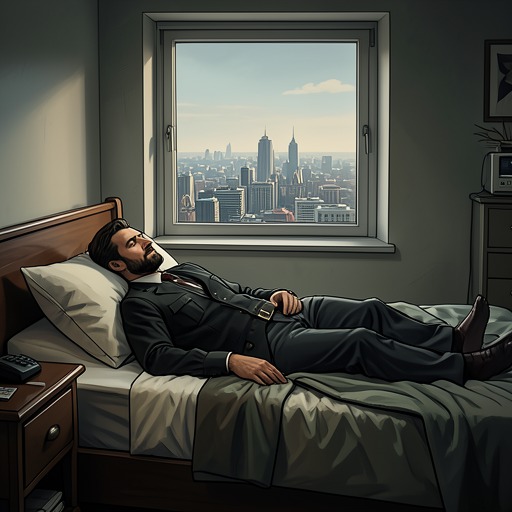
The described procedure begins by drugging the subject and then hypnotizing him. The body is cooled and held precisely at four degrees centigrade, the temperature at which water reaches maximum density without forming ice crystals. This controlled temperature is central to the method: the subject is not simply frozen, but maintained in a carefully regulated state of suspended metabolism.
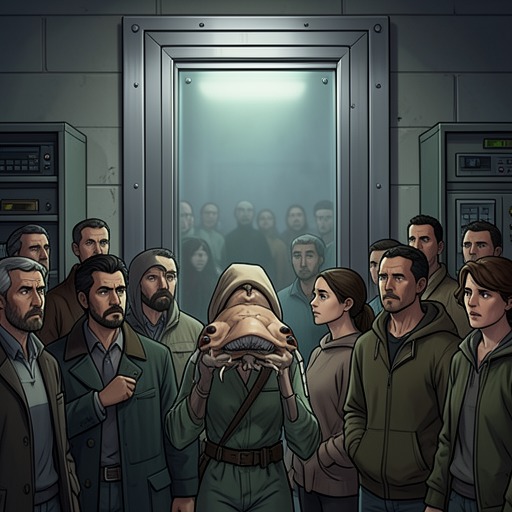
Revival can be accelerated with diathermy and a posthypnotic command. The rapid method can bring a sleeper around in ten minutes; at Nome, the record cited was seven. Such speed carries a cost, however: it tends to age the tissues and may leave the revived person somewhat stupid. When time permits, a minimum of two hours is preferable. The military term for using the quick method is a calculated risk, a phrase that makes clear that revival speed trades against the sleeper’s condition.
Duration, Risk, and Later Practice
The procedure’s long-term limits changed as experience accumulated. Thirty-five years was the longest period for which the institution in the novel had experience, dating back to its first commercial client, placed in subtemperature in December 1965. The narrator’s own thirty-year suspension made him the longest sleeper the physician had revived at that point, and the physician says that accepting him for so long had been a grave risk because the science was less developed.
Later practice had become more ambitious: current clients had contracts extending as far as a century and a half. The physician speculates that a thousand-year jump might be survivable if a subject could be held at the narrator’s temperature for a year and then dropped to minus two hundred in a millisecond. This is presented as a future possibility, not an established procedure; the physician qualifies it with uncertainty even while saying the subject would live.
Legal Custody and Financial Safeguards
Cold sleep changes a person’s legal position as well as their bodily state. A client in cold sleep is legally in chancery: alive, but unable to act for themselves. Court consent is therefore required, alongside the physical examination. In the narrator’s case, the paperwork was prepared in quadruplicate across nineteen documents, and a messenger carried it away while he underwent examination; he never saw the judge.
Commercial custody was structured to protect the helpless sleeper. The Sanctuary’s contract with the insurer covered hypothermia, custody, and revivification, with the entire fee paid in advance and held in escrow by the superior-court division handling chancery matters. Payments went to the Sanctuary quarterly as services were earned. The Sanctuary was a separate corporation from the insurance company, and its custodial agreement was distinct from the contract governing the sleeper’s estate.
Failure of Protection and Significance
The separation between bodily custody and estate management proved consequential. After thirty years, the revived narrator was told that he had no assets: Master Insurance had gone broke, and the stocks he believed he owned had disappeared. The Sanctuary’s advance payment and escrow arrangement had protected the provision of his care, but they had not protected his property from the insurer’s collapse and systematic looting.
Cold-sleep procedure thus preserves biological continuity without guaranteeing continuity of legal or economic life. The sleeper can awaken in the same body, yet find that the financial identity entrusted to institutions has been erased. The method’s promise of a future return rests on precise temperature control and careful revival, but the conditions that make the return livable depend on courts, contracts, and organizations beyond the sleeper’s control.