Sandia Weapons Center
The Door into SummerSandia Weapons Center is the New Mexico military research post where Dan Davis works as a sergeant-technician during the Cold War, developing expertise that later feeds into his civilian inventions. The place is both a site of military labor and a starting point for the personal and technical history behind Hired Girl: Davis leaves it determined to work for himself, while his friendship with Miles Gentry and his bond with the young Frederica and Pete take shape around his service there.
Military Service and Wartime Context
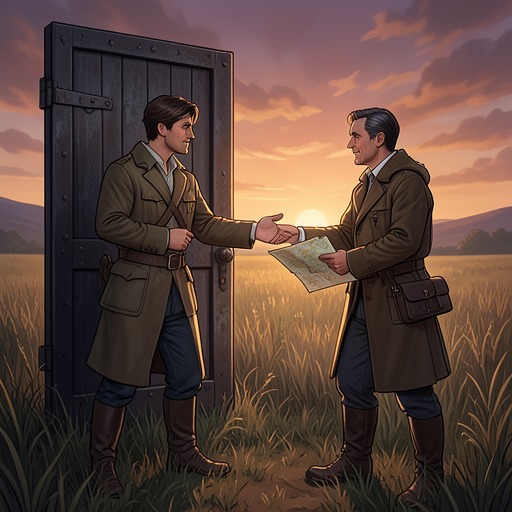
Davis arrives at Sandia with a mechanical-engineering degree but has chosen not to seek a commission. His father’s insistence on personal liberty and self-reliance has left him wanting neither to give nor take orders; he plans to serve his hitch and get out. At Sandia he is a sergeant-technician, working on the assembly of atomic bombs while thinking about what to do when his military service ends.
The Six Weeks War makes the post part of a much larger military system. Davis is away in Dallas drawing a fresh supply of Schrecklichkeit on the day Sandia disappears; the fallout moves toward Oklahoma City, and his absence allows him to survive and later draw his GI benefits. He recalls that military planners had hidden divisions at Thule and elsewhere, and that research teams had turned cold sleep from a laboratory trick or last-resort therapy into a means of preserving personnel for later use. Sandia thus belongs to a wartime world in which research, logistics, and military manpower are bound together, even as Davis’s own survival depends on being elsewhere.
Technical Knowledge and the Turn to Independence
While on the government payroll, Davis absorbs as much electronics, linkages, and cybernetics as his security clearance permits. That knowledge becomes practical capital after the war: when cold sleep enters the insurance market and he and Miles go into business, Davis brings engineering expertise while Miles contributes legal and business experience. They establish a small factory in an Air Force surplus building in the Mojave Desert to produce Hired Girl, a household automaton designed by Davis.
Davis’s account makes clear that his later engineering depends not on a single isolated flash of invention but on learning, available components, and the conditions of production. He assembles the first Hired Girl from existing ideas and devices, including a floor-cleaning pattern, a guided-missile memory circuit, and mechanisms adapted from equipment such as hospital floor polishers and atomic-plant handling arms. His experience at Sandia helps explain the breadth of his technical interests, while his decision to leave government employment expresses the independence that motivates the enterprise.
Sandia’s Personal Legacy
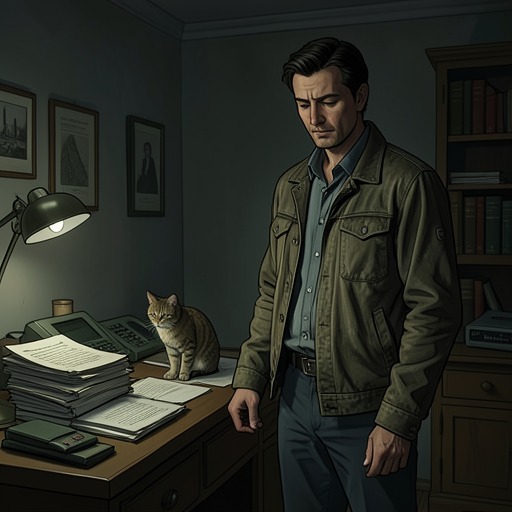
Sandia is also where Davis’s relationship with Miles’s family begins. Miles, a veteran recalled to duty, lives off post with a family in Albuquerque so that his stepdaughter Frederica can have a home after her mother’s death. Davis leaves Pete in the care of Frederica, whom he and his companions call Picky rather than by her formal name. When Davis cannot take Pete with him to Dallas, Frederica takes the cat along with Miles, and the three are away during the catastrophic weekend.
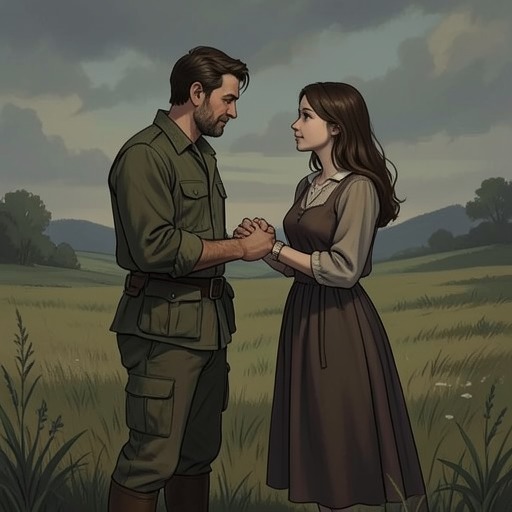
Davis later remembers Frederica as his six-year-old friend at Sandia, solemn-eyed and wearing hair ribbons, who liked Pete and treated him properly. The two shared responsibility for the cat, and Davis understood their childhood promise that they would marry and care for Pete as a game—though he recognizes that Frederica may have taken it more seriously. His memories of Sandia therefore connect professional beginnings with a childhood bond whose meaning changes as the characters grow older.
Narrative Significance
Sandia’s importance lies in the way it joins military research, personal autonomy, and domestic technology. Davis’s service gives him access to technical knowledge, but it does not make him embrace a career inside government or a large corporation; he carries what he learned into a small, self-directed business. The transition from weapons work to household automation is not a simple rejection of technology. Rather, the same interest in mechanisms and control is redirected toward machines intended to perform repetitive domestic work.
The location also frames the origin of Davis’s ties to Miles, Frederica, and Pete before the war separates and reshapes their lives. Its disappearance during the conflict marks the abrupt end of the world in which those ties formed, while Davis’s later recollections keep the place present as both a technical apprenticeship and a personal point of departure.