Sawtelle Consolidated Sanctuary
The Door into SummerSawtelle Consolidated Sanctuary is the cold-sleep facility that receives Dan Davis when Miles Gentry and Belle Gentry take him there, and later becomes the setting where he learns that the financial future he expected to wake into has vanished. Its custodial arrangements are designed to protect a client who remains legally alive but cannot act for himself; the contrast between that protection and the failure of Dan’s separately managed estate makes the sanctuary a measure of how little bodily continuity can guarantee across decades.
Facility and Custody
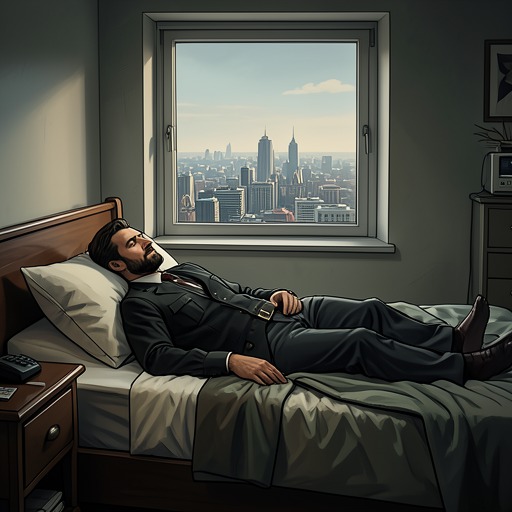
The sanctuary is part of a broader cold-sleep system used by insurance companies that do not operate their own facilities. Miles and Belle drive Dan to the Consolidated Sanctuary at Sawtelle; Dan sleeps during the trip and wakes when Belle speaks to him. Miles remains in his car while Belle accompanies Dan inside, where the receptionist confirms his identity and Belle asks whether the representative for Master Insurance is present.
The arrangement reflects the legal status of cold-sleep clients. Before Dan entered cold sleep, he understood that a client in that condition was legally in chancery: alive, but helpless, and therefore requiring court consent. On revival, sanctuary staff explain that the custodial contract covers Dan’s hypothermia, custody, and revivification. Master Insurance has paid the fee in advance, and the funds are held in escrow by the superior-court division handling chancery matters, then paid to the sanctuary quarterly as earned. The arrangement is presented as protection for both the institution and its vulnerable client.
Revival and Reorientation
After revival, the sanctuary offers Dan four additional days of recuperation and reorientation at no extra charge under the custodial contract. A staff member explains that he may come and go during that period. Dan declines the offer to return, saying he expects to visit only to say hello someday. The brief exchange establishes the sanctuary as more than a place of medical custody: it also manages the transition back into ordinary life, while leaving the revived client room to decide when to engage with the outside world.
That transition includes barriers to contact. The sanctuary does not allow visitors or telephone calls to a revived client until the client chooses to accept them. Dan has an unopened message from Mrs. Schultz waiting at the main office, but he does not know who she is and simply puts the message in his blouse. The restriction protects the client’s control over contact, yet also leaves Dan initially cut off from people seeking him. His dry observation that the receptionist is a machine, rather than the pretty girls he remembers, registers how unfamiliar the institution and its surrounding world feel after his long absence.
The Name in the Records
During his first days awake, Dan reads the newspaper and finds his own name under the new headings of sanctuary “commitments” and “withdrawals,” alongside births, deaths, marriages, and divorces. The entry for Sawtelle gives him a feeling of belonging: after decades asleep, the public record confirms that he has occupied a place in this society, even if only as a cold-sleep client.
The sanctuary’s institutional presence thus has a double meaning. Its record makes Dan legible within a system that classifies the movements of people in cold sleep, while his personal experience of revival remains disorienting and incomplete. The administrative category gives him a place, but does not restore the life, assets, or relationships that he expected to find there.
Custody and the Lost Estate
The limits of the sanctuary’s protection emerge when Dan asks about his finances. Its representative distinguishes the sanctuary from Master Insurance: the sanctuary is a separate corporation, and its custodial contract is separate from the contract for management of Dan’s estate. The escrowed funds secure the services the sanctuary owes him; they do not insure the investment portfolio entrusted to the failed company.
Dan initially believes he still owns stocks, pointing to a newspaper that reports their strong performance. The representative tells him that he has no assets of any sort because Master Insurance went broke. The company’s collapse followed the Panic and formed part of the wider collapse of the Mannix Group, but the representative says Master Insurance was systematically looted and gutted before its failure was discovered. The people responsible were beyond extradition, and, he adds, the same outcome could not occur under current laws.
This distinction gives Sawtelle’s custodial promise its sharpest significance. The sanctuary has performed its role: it has kept Dan safe through hypothermia and revived him under a contract backed by escrow. But it cannot make the corporation holding his estate survive, or make Dan’s legal and economic position continuous with the person who entered cold sleep. He wakes alive and under care, yet without the property he had expected to find waiting for him.